

Audio By Carbonatix
Residents in parts of Weija-Gbawe say community-led dredging efforts helped prevent flooding for four years until the latest spillage from the Weija Dam submerged homes and displaced hundreds, with local leaders accusing authorities of neglecting long-standing maintenance concerns.
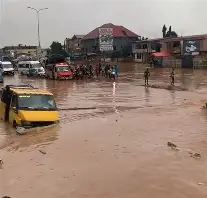
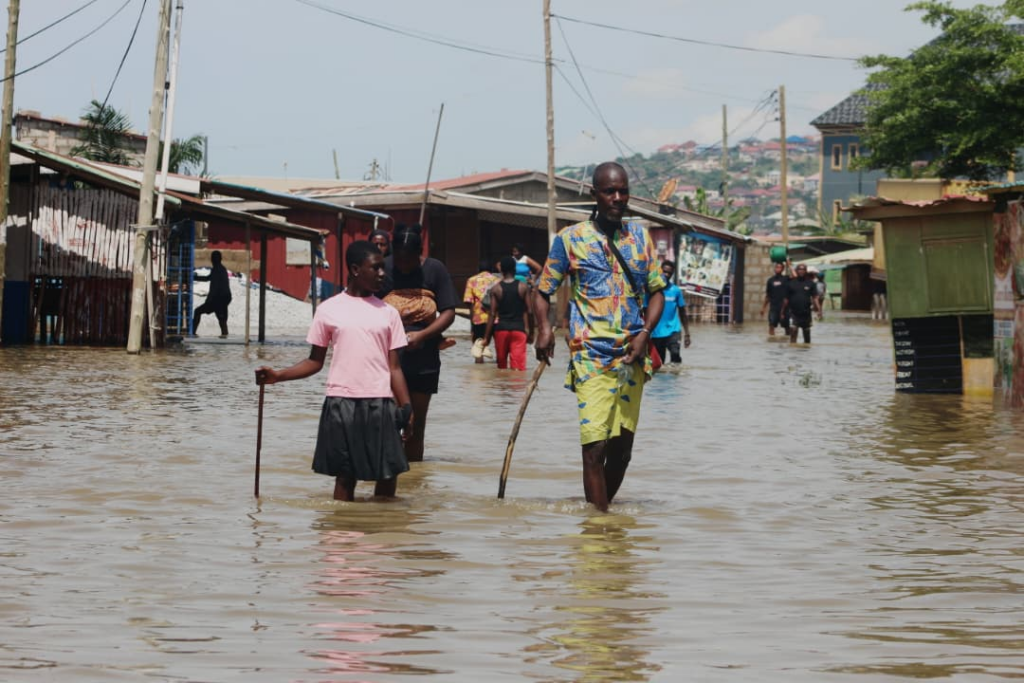
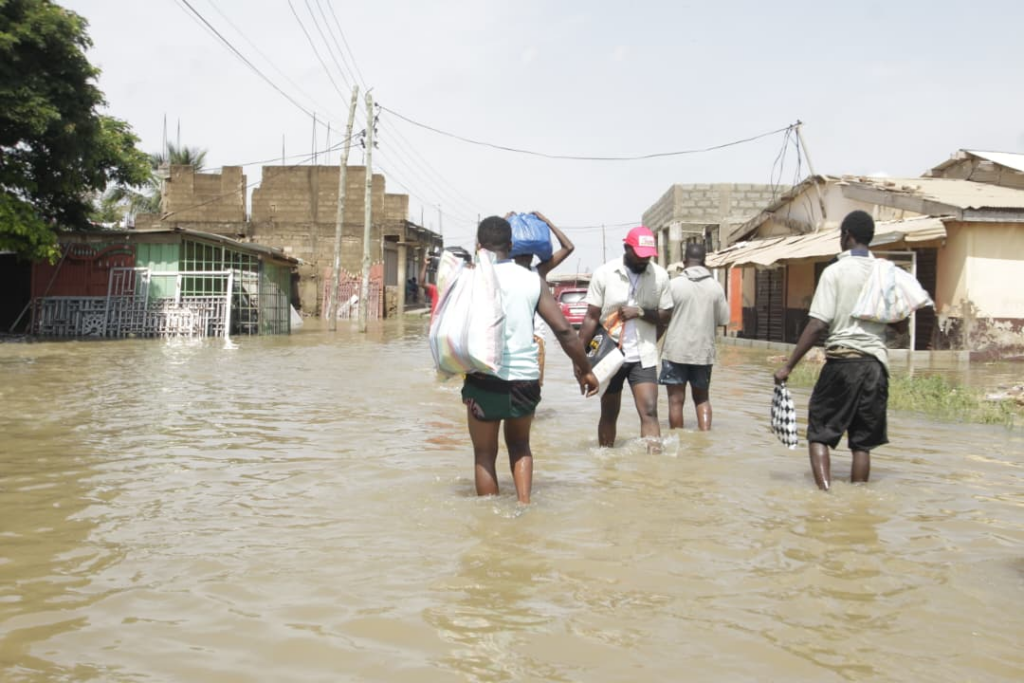
Although the rains had subsided by Thursday, residents in several affected communities were still wading through knee-level floodwaters, relying on canoes to move belongings, access food, and evacuate vulnerable residents.
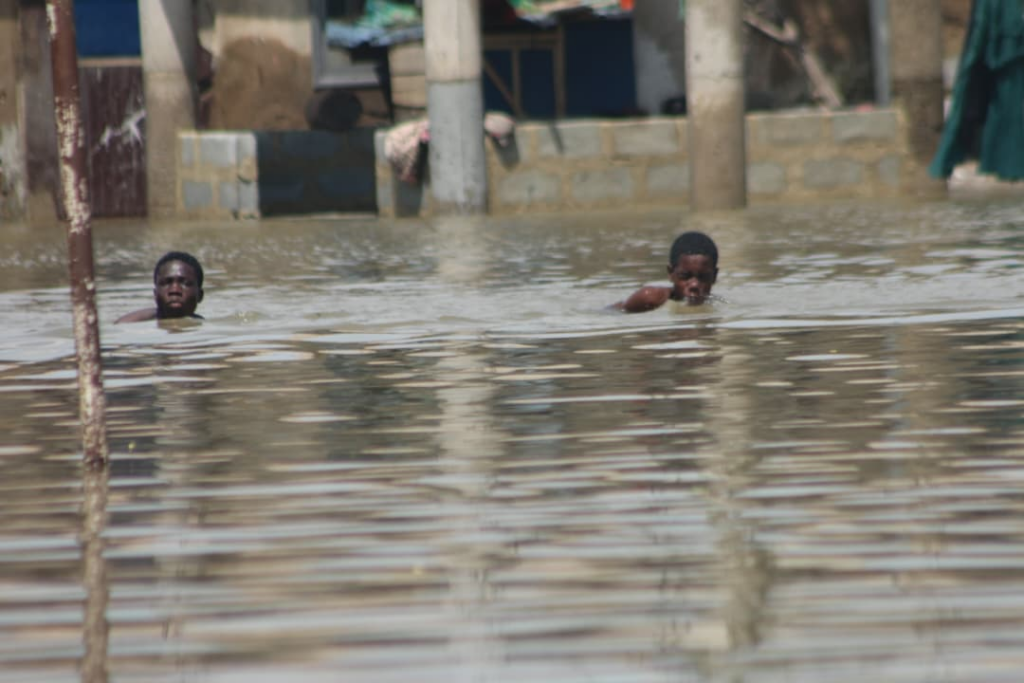
The latest flooding follows the opening of spill gates at the Weija Dam after water levels exceeded the maximum operating threshold of 48 feet, prompting Ghana Water Limited (GWL) to undertake what it described as a controlled spillage to protect the dam’s structural integrity. Communities including Tetegu, Sampah Valley and Choice have been among the worst affected.
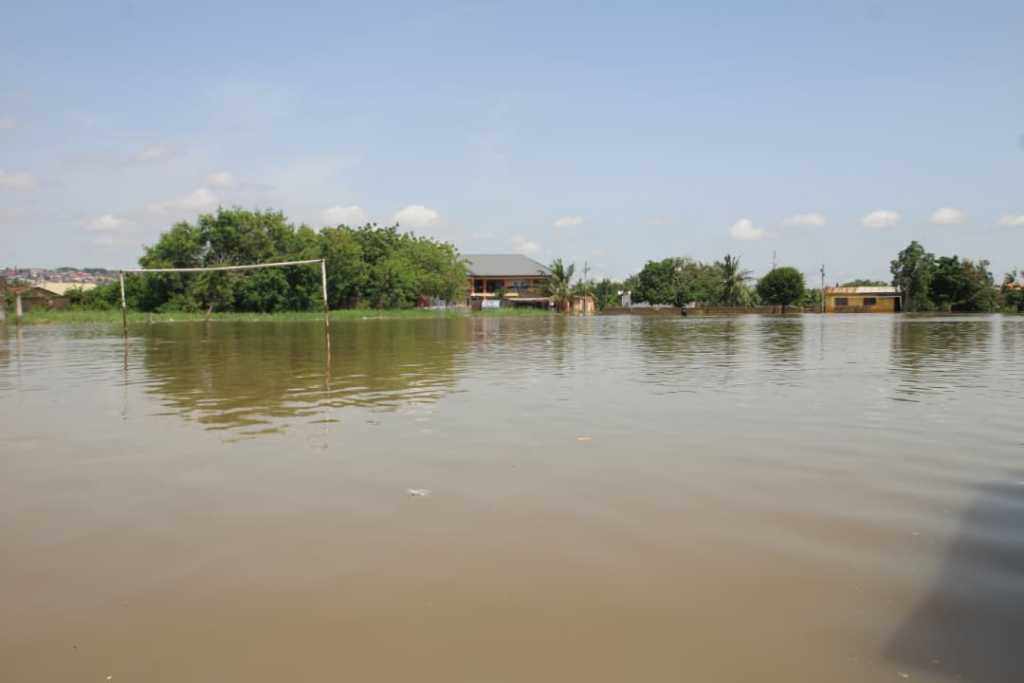
Assembly Member for the area, Mawuenyega Atukpa, said residents had resorted to emergency community support measures as many households remain stranded.
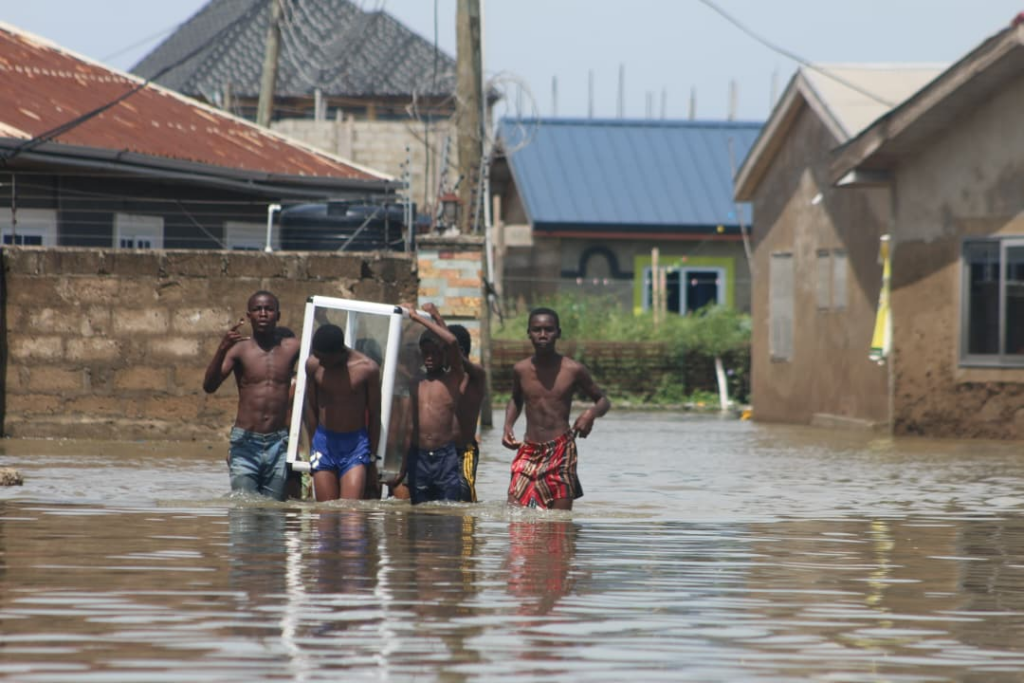
“So, we are seated here to help people carry their stuff from their homes and also help people with the canoe, especially in the flooded areas, so that the water doesn't carry them away,” he said.
“Some people also send us to buy foodstuffs for them, so we buy them and deliver them with the canoe to their homes.”

He added that some families had lost nearly everything to the floods.
“Some people also do not have anything to eat because the water carried everything away. So, we also provide people whose homes and belongings have been flooded with food and other items.”

“There haven't been any flooding issues for the past four years, and this was because we, the community folks, agreed to dredge the dam ourselves since the Ghana Water Company was not paying attention to it, and we used that as an embankment for the whole community,” he said.
“The parts that we couldn't work on are where the water has now flowed through and caused flooding.”
He further claimed that a major challenge lies in the handling of the estuary, insisting that floodwaters struggle to drain when it remains blocked.
“One major challenge is that when the Ghana Water Company is about to spill water from the dam, they do not check whether the estuary is open or not. They just go ahead and spill it,” he alleged.
“When the water flows and doesn't get enough space to pass through, then it comes back into the community, and we end up suffering.”

According to him, previous community efforts to open the estuary had yielded immediate results.
“When this happened four years ago, and we went to open the estuary, within two hours the place became dry,” he said.
The Assembly Member also accused GWL of failing to communicate adequately before the latest spillage.
“Secondly, the Ghana Water Company Limited did not give us any prior notice that the dam would be opened for them to spill water and that the water level would rise to that extent,” he claimed.
“They did not inform anybody because we have an information centre here where we make announcements anytime the spillage is about to happen. But this time around, they did not inform us.”
His claims mirror concerns already raised by local authorities, with the Municipal Chief Executive for Weija-Gbawe also publicly stating that the Assembly was not given prior notice before the spillage, affecting preparations and response efforts.
However, GWL has maintained that the spillage became necessary after rising inflows pushed water levels above safe operating limits, warning residents in downstream communities to move from flood-prone areas as more rainfall is expected upstream.

Mr Atukpa is now calling for long-term engineering solutions rather than periodic interventions.
“So, my humble plea is that the estuary should be constructed in such a way that it remains permanently opened,” he said.
“Also, the government should make sure that the maintenance component, which is dredging the dam, is properly implemented because the sand in the water becomes too much.”
He also highlighted the lack of drainage infrastructure in the area.
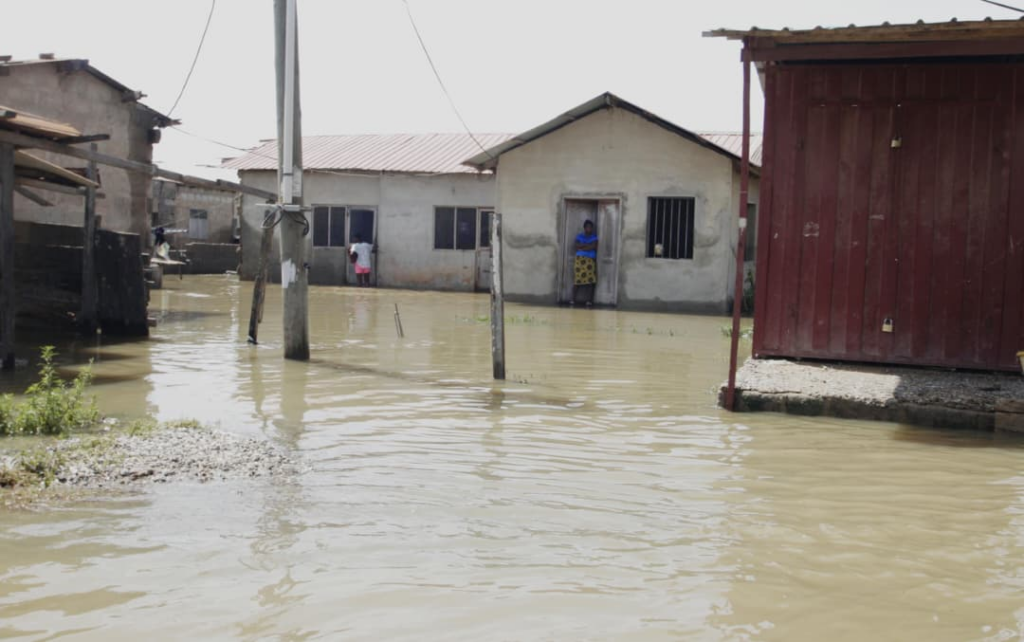
“The area itself also needs gutters. We have no gutters, and so we plead with the government to help us provide some.”
Meanwhile, emergency response agencies continue evacuation efforts as residents count their losses, with many homes, roads, and businesses still submerged days after the spillage. Authorities have already ordered evacuations in vulnerable downstream communities as floodwaters continue to rise in some areas.
Latest Stories
-
Ghana eyes stronger trade ties as Australia hosts multicultural trade and investment forum
2 minutes -
Margaret-Marie Krakue
4 minutes -
Ayariga announces plans for live broadcast of MMDAs’ meetings on local radio stations
7 minutes -
Mrs Anna Tackie
9 minutes -
Ghana links Afghan heroin and Brazilian cocaine to global drug markets – Global Organised Crime Index
17 minutes -
NHIA launches nationwide inter-school quiz to deepen students’ knowledge of NHIS
23 minutes -
Political protection could be masking Ghana’s cocaine trade – Global Organised Crime Index
28 minutes -
AFCON 2027Q: ‘We have to dissolve the GFA’ – Effia MP after Black Stars lose to Gambia
30 minutes -
NPP announces voting schedule and ID requirements for October 3 national elections
32 minutes -
Lupus can mimic HIV symptoms and damage kidneys if untreated – KNUST expert
35 minutes -
Focus on Sickle Cell Foundation seeks to introduce sickle cell education through comics in Ghanaian schools
41 minutes -
NPP rewrites the campaign playbok as opposition reality shapes National Executive contest
42 minutes -
Road safety education will fail without enforcement – NRSA boss
43 minutes -
Daily Insight for CEOs: Finishing Q3 strong and entering Q4 with purpose
44 minutes -
National Ambulance Service begins ‘Operation Restore Fleet’ to restore grounded ambulances
45 minutes