


Audio By Carbonatix
The Finance Ministry’s report on the management of the Energy Sector Support Account has revealed that proceeds from the Energy Sector Shortfall and Debt Repayment Levy were still insufficient to fully cover Ghana's energy sector obligations in 2025 despite the introduction of the additional GH¢1 levy.
In April 2025, Parliament amended the ESLA framework by consolidating several existing levies, including the Energy Debt Recovery Levy, Energy Sector Recovery Levy, Sanitation and Pollution Levy and the Price Stabilization and Recovery Levy, into a single levy known as the Energy Sector Shortfall and Debt Repayment Levy.
According to the Finance Ministry, the consolidation was intended to improve transparency, streamline administration and enhance revenue mobilization.
Two months later, government increased the levy from 95 pesewas to GH¢1.95 per litre.
Finance Minister Dr. Cassiel Ato Forson said the additional GH¢1 would help reduce energy sector shortfalls, clear legacy debts and support a more stable electricity supply.
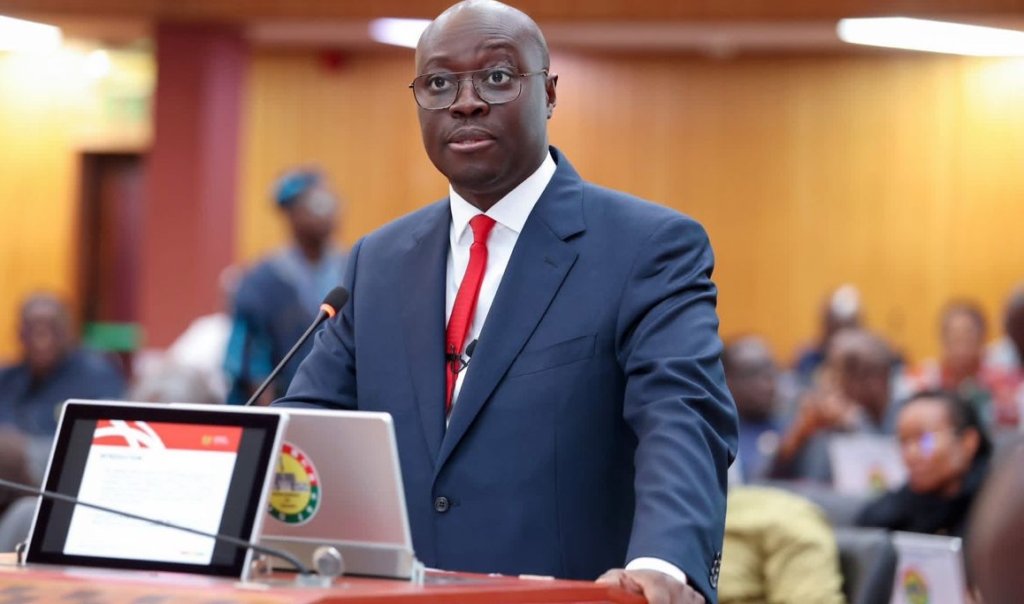
However, the ministry's 2025 report shows that even with the increase, the levy was unable to fully finance the sector's obligations.
Total revenue from the levy amounted to GH¢8.66 billion in 2025.
Yet total energy sector payments in 2025 amounted to GH¢22.67 billion, equivalent to about US$1.9 billion, requiring substantial government support.
The largest payments included GH¢5.46 billion to settle outstanding gas invoices owed to Eni and Vitol for power generation, GH¢4.54 billion to pay legacy debts owed to Independent Power Producers, GH¢6.94 billion to restore the World Bank Partial Risk Guarantee and GH¢5.73 billion for the procurement of liquid fuel and gas to support electricity generation.
With expenditure far exceeding revenue, the Treasury had to step in.
According to the report, an additional GH¢12.85 billion was transferred from the Treasury Main Account through the Controller and Accountant General's Department to support the sector.
Of that amount, GH¢5.16 billion was used to finance ongoing energy sector shortfalls while GH¢7.69 billion went toward the repayment of legacy debts.
The findings are notable because they come at a time when ECG is fully complying with the Cash Waterfall Mechanism and no longer under declaring revenue.
The cedi has also remained relatively stable compared with previous years, reducing one of the major drivers of energy sector shortfalls.
Historically, exchange rate depreciation has been one of the major drivers of energy sector shortfalls because much of Ghana's power generation costs, particularly fuel and gas purchases, are denominated in dollars while electricity is sold to consumers in cedis.
Some of the costs incurred in 2025 may not recur in future years.
The restoration of the World Bank Partial Risk Guarantee was necessary because the facility had previously been drawn down.
Similarly, as compliance with the Cash Waterfall Mechanism improves and government continues to clear legacy debts, some of the accumulated obligations within the sector could gradually decline.
Government is also pursuing private sector participation in ECG's distribution business and undertaking operational reforms aimed at reducing technical and commercial losses within the power sector.
Additionally, a breakdown of the Treasury support suggests that the bulk of the funding was not used to cover current shortfalls.
Of the GH¢12.85 billion provided by government, about GH¢5.16 billion went toward energy sector shortfalls while GH¢7.69 billion was used to repay legacy debt.
This suggests that a significant portion of the support was aimed at clearing historical obligations rather than financing new deficits.
Yet despite these efforts, the 2026 Budget projects energy sector shortfall financing requirements of GH¢15.2 billion, up from about GH¢12 billion in 2025.
One interpretation is that government is attempting to aggressively clear legacy debt while simultaneously meeting current sector obligations.
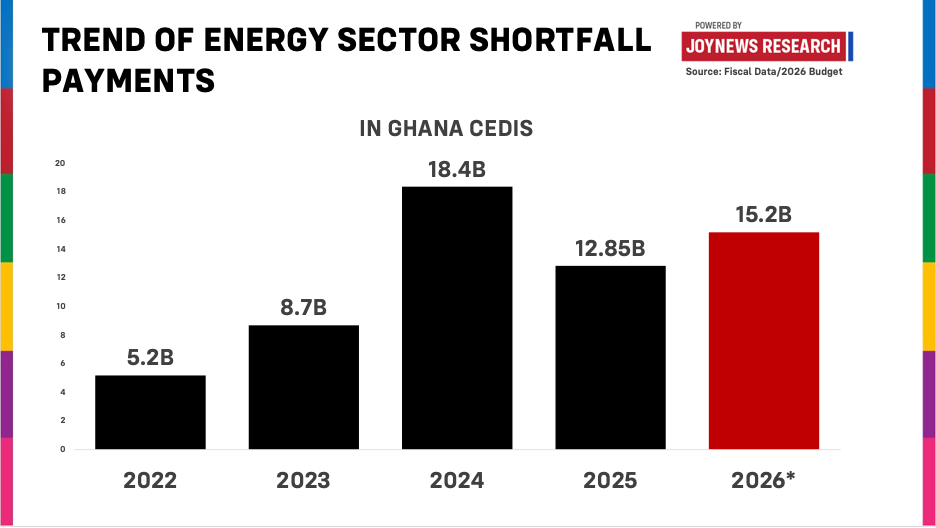
The figures suggest that while the additional GH¢1 levy helped narrow the financing gap, it has not solved the sector's underlying problems.
As Finance Minister Dr. Cassiel Ato Forson acknowledged during the presentation of the 2025 Budget, the deeper challenges remain structural.
They include poor revenue collection, system losses, weaknesses in the implementation of the Cash Waterfall Mechanism, expensive power purchase agreements and inefficiencies across the sector's value chain.
The additional levy has provided some relief.
But the Finance Ministry's own figures suggest that lasting solutions will require deeper structural reforms rather than higher taxes alone.
Latest Stories
-
Dorimon Naa, Wa West DCE lead massive clean-up exercise; threaten sanctions against recalcitrant residents
15 minutes -
Photos From Adom FM Y2K Jam
18 minutes -
Praye Tiatia steals the show at Adom FM Y2K Jam [Watch]
27 minutes -
Boakye Agyarko congratulates John Boadu, pledges support for NPP leadership
38 minutes -
Antwi HiMight thrills fans with Antwi ne Antwi hits at Adom FM’s Y2K Jam [Video]
52 minutes -
Amb. Edward Boateng congratulates Boadu, Kodua on election wins
1 hour -
John Boadu pledges to rebuild NPP from grassroots and restore ‘winning machinery’
1 hour -
Ashaiman Assembly deploys monitoring system to curb dumping in storm drain
2 hours -
John Boadu must rebuild, unite NPP for 2028 – Edward Boateng
2 hours -
Executive intimidation of opposition undermines separation of powers – Prof Oquaye
2 hours -
I have no issue with John Boadu; we’ll work together – Justin Kodua
3 hours -
Adom FM Y2K Jam delivers a night of music, fashion and nostalgia
3 hours -
Lawrence Kobena Nsarko Otoo, Esq
4 hours -
Bel-Aqua intensifies mental well-being campaign ahead of 15th anniversary
4 hours -
From banking to party finances: Alfred Kwadwo Thompson elected NPP Treasurer
5 hours