

Audio By Carbonatix
The Chairman of Advocates for Christ, Edem Senanu, has raised concerns about what he describes as poorly drafted exemptions in the newly passed Human Sexual Rights and Family Values Bill.
He warned that they could create loopholes that undermine the legislation’s objectives.
Speaking on JoyNews’ PM Express on Tuesday, Mr Senanu said that while the bill's successful passage for a second time demonstrated broad national consensus on the issue, aspects of the legislation still required urgent attention.
“Let me say that I have the positive sides, and I have the negative sides,” he said.
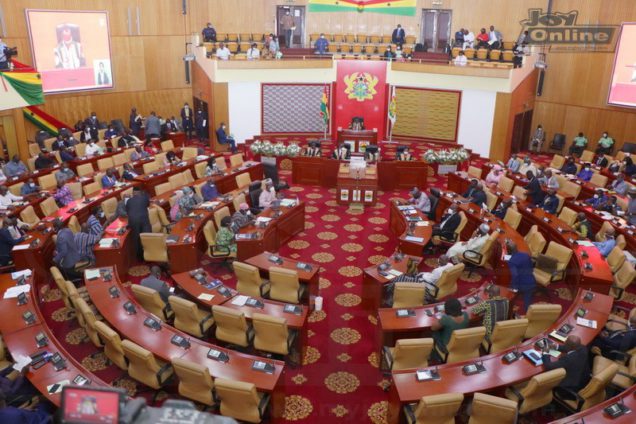
According to him, Parliament’s decision to pass the bill again after the previous attempt failed to secure presidential assent showed that support for the legislation remains strong across the political divide.
“The positive, if for a second time we have arrived at passing the bill, it just tells you that, truly, that unanimity has always been there.”
He noted that many observers had expected the legislation to encounter obstacles when it was reintroduced, but Parliament ultimately completed the process once again.
“After the first time, having to start the whole process again, one would think that it would get stuck somewhere, but to the extent that they completed the same thing a second time, this tells you that there is a consensus in general on the issue.”
However, Mr Senanu questioned how Parliament could have allowed concerns about procedure and quorum to emerge after the bill had already been passed.
“How come the house of procedures and records, I could get it wrong. How would they not recognise that certain steps have not been followed, or the quorum was not there? That raises alarms for me.”
Beyond the procedural concerns, he said his biggest worry lies with the bill's sections dealing with exemptions.
“I took a look at the new version, and then especially the exemptions, the exemptions is one in particular that gets me worried.”
Mr Senanu revealed that even if the bill had been transmitted to the President, he would have supported efforts to have portions of it reconsidered.
“So already in my mind, even if it had gone on to the President, the likelihood we are going to appeal to the President that listens, looking at Article 106, there’s at least one of those exemptions, looking at the number of mental organisations, and whatnot, which is not tight.”
According to him, the language of the exemptions could create legal uncertainty and provide opportunities for conduct that the legislation seeks to prevent.
“It provides a lacuna for the kind of information we don’t want to be out there.”
He argued that Parliament should revisit the provisions and clearly define the categories of information covered by the exemptions to avoid future legal disputes.
“We would still have required that this must come back to parliament to be very clear. Let’s qualify the type of information they are talking about, so that when there’s a case, and we go to court, clear whether there is intent to do something that breaches the law or not.”
Mr Senanu said the bill has now reached the same stage it attained before the last parliamentary term ended and urged Parliament and the President to resolve the outstanding issues.
“The positive side is that we have arrived at where we ended the last time. It’s only between parliament and the president.”
But he maintained that the emerging concerns should not be ignored.
“The bad side is that the issues coming up are things that ideally should not even arise, whether it is a quorum issue, whether it’s a process issue, or whether it is exemptions that have not been properly crafted. These are concerns that we will need to address.”
Latest Stories
-
Arrest everyone in the handling chain of cocaine-linked container – Kofi Bentil
17 minutes -
Saudi Arabia issues first air raid alerts for Riyadh since Houthis escalated attacks
17 minutes -
Oti Police intercept truck with 5,164 suspected narcotic parcels
34 minutes -
We don’t have the capacity to effectively monitor our ports – Oliver Vormawor
43 minutes -
NACOC exclusion from routine sea port checks contributing to rising cocaine trafficking – Akwatia MP
48 minutes -
3.9 metric tonnes of cocaine bust in France a national embarrassment to Ghana – Kofi Bentil
58 minutes -
Kofi Bentil questions Mahama’s meetings with security officials over cocaine shipment linked to Ghana
1 hour -
GES orders SHS heads to stop unauthorised charges, warns of sanctions
1 hour -
Police’s conflicting identities for ‘Ghana Jollof’ embarrassing – Lawyer for remanded nurse
1 hour -
Ghana Jollof case: Nursing officer’s lawyers challenge remand, seek High Court bail
1 hour -
Kofi Adams clarifies government’s position on funding supporters for major tournaments
2 hours -
University of Ghana athletes return from 12th FASU Games after medal success in Cairo
2 hours -
Police cannot access suspect’s phone without court order – Kofi Bentil
2 hours -
Insults are not crimes; we must distinguish them from criminal offences – Kofi Bentil
2 hours -
‘Ghana Jollof’ case: Why continue to use remand to punish people? – Vera Addo
2 hours