

Audio By Carbonatix
The plan
“Let’s have some fun. We got ourselves into the World Cup, now it’s time to have fun together.” – Dailon Livramento
The Blue Sharks of Cape Verde are swimming in completely uncharted waters as they make their World Cup debut, but you wouldn’t want to bet against them. The tiny archipelago off the coast of West Africa only played their first World Cup Qualifier in 2003, but if any team can handle the pressure of a meteoric rise to the top of world football it is Cape Verde. After all, the country’s national slogan – morabeza – roughly translates to “no stress”. They will need that mentality as they take on Spain, Uruguay and Saudi Arabia in group H.
It is an eclectic group of players that makes up the squad assembled by Pedro Leitão Brito, known as Bubista. The 26-man group represents 25 clubs from 14 countries and has more players born in Rotterdam (six) than in Cape Verde’s capital, Praia. But for a nation built on immigration, navigating complex identities and languages isn’t a challenge, it’s something to be embraced.
“Unity among people with different mindsets and ways of life can only be achieved by respecting the uniqueness of each player,” Bubista told the Guardian after qualification was sealed in front of a raucous home crowd in Praia.
A settled World Cup squad has been together for the best part of half a decade. While being physical and happy to defend, the Blue Sharks embrace the island-inspired football that is embodied in such technical forwards as Ryan Mendes, Willy Semedo and Jovane Cabral. “Just because we're a small nation doesn't mean we give up possession,” the Irish-born Shamrock Rovers centre-back Pico Lopes told the On The Whistle Podcast. “We always have that quality and sort of killer instinct we want in the attacking areas.”
Perhaps the only question hanging over the team is the fitness of Logan Costa. The Villarreal centre-back is arguably the one elite player in a team full of nomadic footballers but the French-born defender is yet to play a single minute of football this season after tearing his ACL last summer.
The coach
Bubista comes from a humble background. His father split time between being a lift operator and a shepherd while his mother took care of their 10 children on Boa Vista island. “The family was all [about] education, they put all of their kids through education, even buying a home in Mindelo [on São Vicente island] to put the boys into study,” Bubista’s cousin Paulo Santos has said.
But Bubista’s love for football won out and he went on to play in Portugal, Spain, Angola and captain the Blue Sharks for nearly a decade. Known as “the silent captain” as a player, Bubista is a man of few words and someone who suffers no fools. His iron will and insistence on players speaking only Creole on international duty have seen him forge a successful team over six years at the helm. “It’s the official language of the national team,” Bubista said. “Sometimes the guys try to speak other languages among themselves, but I don’t allow it, to keep our Cape Verdean identity intact.”
Star player
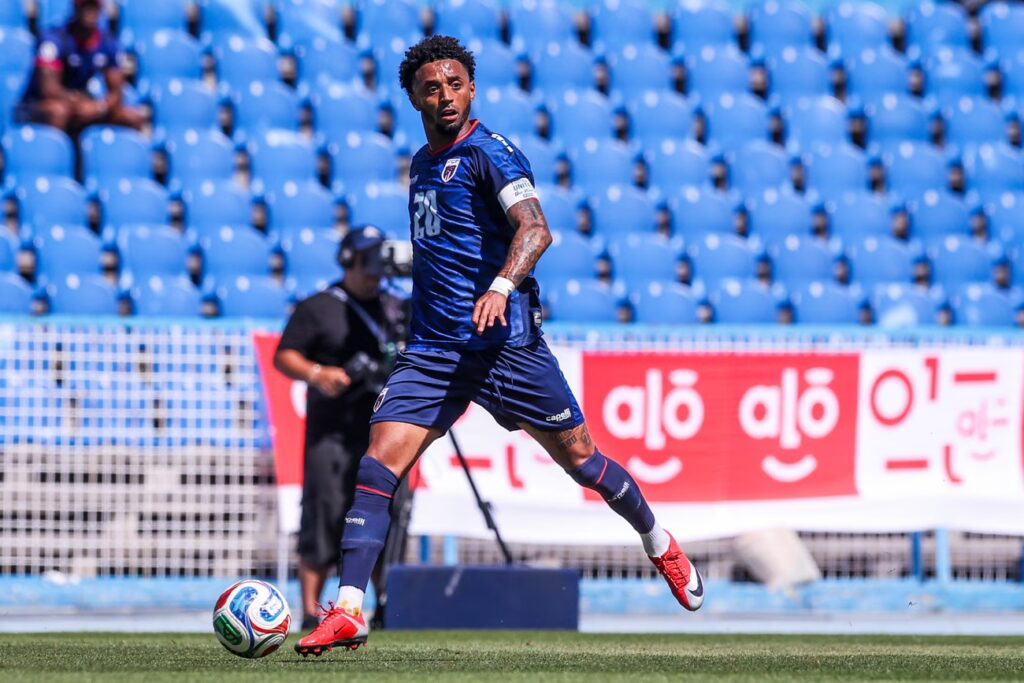
In 2012, the Leicester scout Steve Walsh travelled to the French club Le Havre where he would discover the future Premier League, Champions League and Afcon winner Riyad Mahrez. At the time, though, Walsh was on his way to see the jewel of the famous academy at the time, Ryan Mendes. Before Leicester signed Mahrez, Mendes joined Lille as a replacement for Eden Hazard. A nasty ankle injury slowed Mendes’s club career but for the Blue Sharks he is perhaps the nation’s greatest player. He is the captain, top scorer, most capped player and at the World Cup is set to become the first centurion in Cape Verdean history. At 36, his star may be waning but is still at the heart of the team. “Ryan's been there for so long and he's been doing it every time he's called upon he shows up and he scores goals,” says the Cape Verde defender Pico Lopes.
One to watch
Few players have had an instant impact on a national team than Dailon Livramento. The centre forward only joined the Blue Sharks a little over two years ago but has already cemented his status as a legend. He scored four goals in qualifying, including a brace in Angola, the match winner in the crunch-tie against Cameroon and the opening goal against Eswatini to set the country on their way to the World Cup. He had been the missing piece for a team who have a host of talented wide players but lacked a central presence up front. Born in Rotterdam to the Cape Verdean singer Marizia, he himself is a musician and his brother Jerzy is a part of successful Dutch hip-hop group Broederliefde, who performed on stage at the after party the team held with fans in Praia when qualification was sealed.
Unsung hero
Kevin Pina has made Russia his home, leading Krasnodar to their first Russian league title last season. Given that Pina signed for the Bulls straight from the Portuguese second tier, he is an unknown quantity outside Cape Verde. Alongside Deroy Duarte, Pina forms the midfield engine, doing much of the dirty work that allows the Blue Sharks’ attacking talents to shine. The rangy midfielder isn’t untidy on the ball, however, and is probably Cape Verde’s best player at moving the ball forwards. He may not score many goals but the ones he does chip in with tend to be screamers.
Probable starting XI
(4-3-3) Vozinha - Steven Moreira, Logan Costa, Pico Lopes, Sidny Cabral - Kevin Pina, Deroy Duarte, Jameiro Monteiro - Ryan Mendes, Dailon Livramento, Jovane Cabral
What to expect from fans at games?
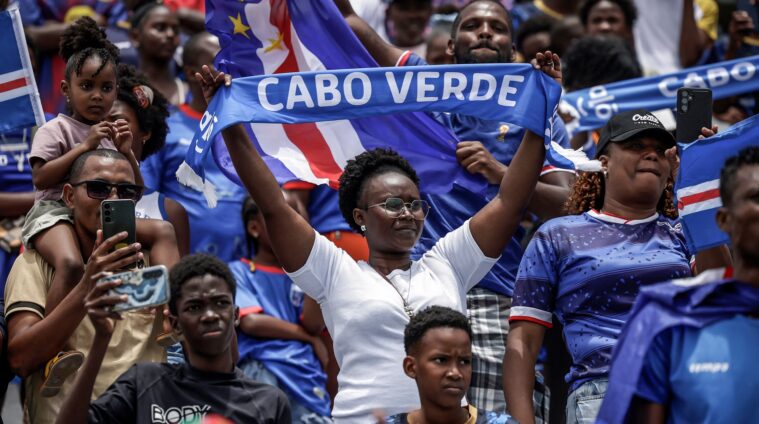
Given the need to stump up a $15,000 bond in order to enter the United States (waived in May for Fifa pass holders, way too late for most people), you would expect Blue Sharks fans to be at a minimum. You’d be wrong. There are more than 500,000 Cape Verdeans living in the US (roughly the same number as on the islands) and they will be there in numbers – and in full colour. Expect blue shirts, blue flags, blue shark-themed hats, great vibes and above all, great music, Cape Verde’s greatest export. From Eugénio Tavares, to Cesaria Evora, to Livramento’s mother Marizia, Cape Verde’s iconic national music, morna, centres on the experience of leaving the islands and representing them abroad, perfectly suited for a World Cup. Soraia Ramos’ nha terra has been adopted as a tournament anthem.
This article is part of JoySports' collaboration with The Guardian. The cooperation enables readers to access team news, previews, and more from all 48 teams that qualified for the FIFA World Cup 2026.
Latest Stories
-
Why ‘Black Box’ AI models fail governance standards in banking
1 hour -
Academic City and partners issue white paper for stronger digital accountability as Ghana loses GH¢19.3m to cybercrime
2 hours -
Blank passports, visa stickers found in office of Ghana Embassy IT officer accused of concealing digital records
2 hours -
Africa’s youth are looking for jobs: The food system may hold the answer
2 hours -
Fidelity Bank advocates stronger systems to unlock Ghana’s trade and enterprise potential
2 hours -
COCOBOD CEO dismisses claims over new Cocoa Bill, says reforms will protect farms and improve sector
2 hours -
Absa, Impact Food Hub empower agribusiness entrepreneurs for growth
2 hours -
Access Bank Ghana secures certification as a Carbon Credit Broker
2 hours -
Accra Mall ignites cultural heat this weekend with vibrant live music celebration
2 hours -
Africa keeps rebuilding its food security every time a shipping lane closes
3 hours -
Keta-Axim water transport route moves a step closer as government commissions feasibility study
3 hours -
Construction of Bolgatanga Airport to begin by end of 2026 – Mahama
3 hours -
Onion traders hail Trade Minister’s intervention as Ghana-Nigeria trade dispute eases
3 hours -
COCOBOD threatens to withdraw LBC licences over cocoa purchases on credit
3 hours -
Western Region needs stronger investment coordination to unlock economic potential — Joseph Nelson
3 hours