

Audio By Carbonatix
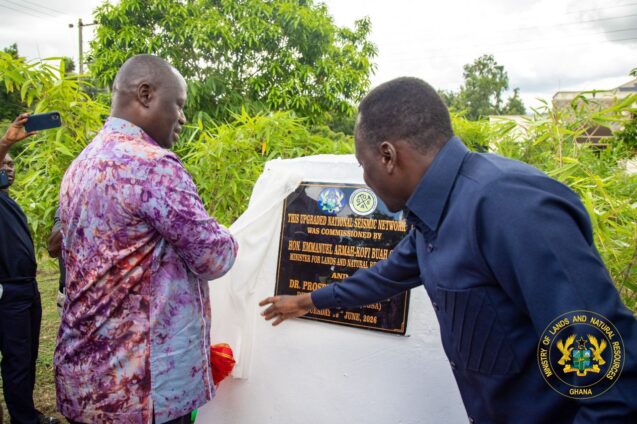
Ghana has significantly strengthened its earthquake monitoring and disaster preparedness capabilities with the commissioning of an upgraded National Seismic Monitoring Network by the Ghana Geological Survey Authority (GGSA) under the auspices of the Ministry of Lands and Natural Resources.
The milestone initiative, unveiled at a ceremony on Tuesday, June 16, 2026, equips the country with modern technology capable of transmitting real-time seismic data, thereby enhancing Ghana's ability to detect, monitor, and respond to earthquake activity.
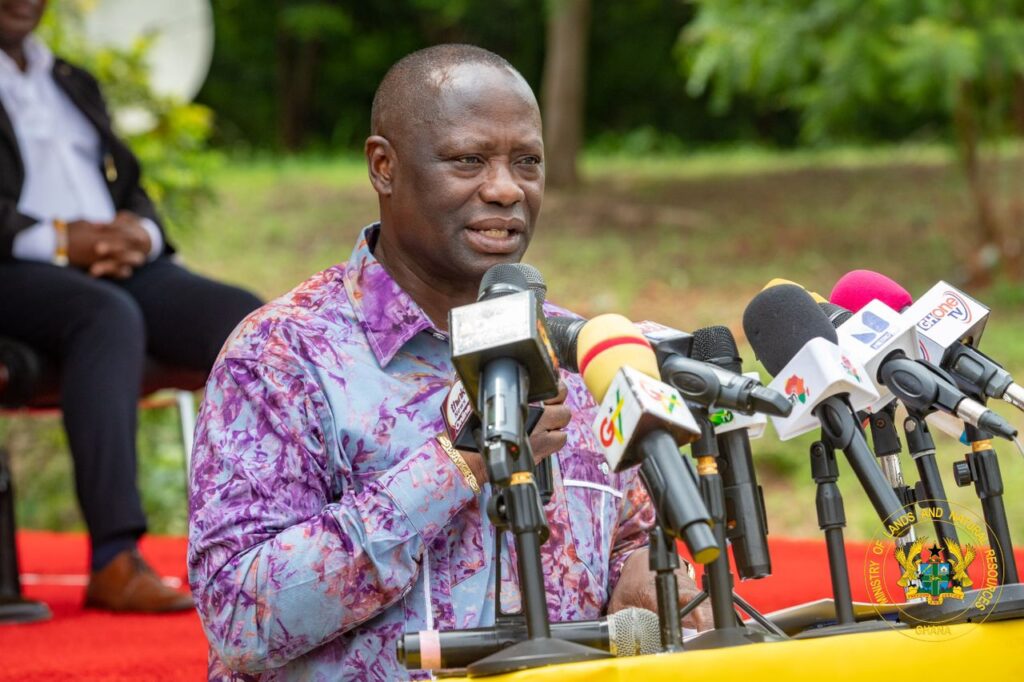
Delivering the keynote address, the Minister for Lands and Natural Resources, Emmanuel Armah-Kofi Buah, stressed that seismic preparedness has become a national imperative, given that critical infrastructure such as Tema Harbour, Kotoka International Airport, and the Akosombo Dam, among other strategic facilities, are located on or near active fault systems.
The Minister noted that earth tremors recorded between 2018 and 2023 serve as a stark reminder that seismic risks remain real and cannot be treated as a distant scientific concern.
Describing Accra as both the nation's economic hub and its most seismically active area, he warned that rapid urbanisation, the proliferation of informal settlements, and weak enforcement of planning regulations could amplify the impact of a major earthquake.

To address these concerns, he announced a series of policy interventions, including mandatory seismic assessments for building permit applications, annual structural audits of critical infrastructure, stricter enforcement of the Ghana Building Code, and enhanced public education on earthquake safety.

In his opening remarks, the Director-General of GGSA, Dr. Prosper Akaba, described the event as a major milestone in Ghana's efforts to improve earthquake monitoring, infrastructure resilience, and public safety.
Dr. Akaba said the newly modernised network incorporates broadband seismometers, strong-motion accelerographs, solar-powered remote stations, advanced telemetry systems, and state-of-the-art data management platforms.

He announced that 20 out of the country's 21 seismic stations have been successfully upgraded and are now transmitting continuous real-time data. The remaining station at Asankragua is expected to be completed once security concerns in the area are resolved.

Both the Ministry and the GGSA expressed confidence that the enhanced network will provide the accurate scientific data needed to improve hazard assessments, strengthen infrastructure design, guide national planning, and ultimately safeguard lives and property across the country.
Latest Stories
-
‘I was born in South Africa’, says beauty queen Chidimma Adetshina facing legal bid to deport her
1 hour -
Prince Harry and Meghan moving back to UK
1 hour -
Ghana’s output expansion largely driven by labour, capital rather than innovation – Opoku-Afari
1 hour -
Ghana is ready for nuclear power adoption – Gov’t affirms
1 hour -
GJA@77: Media-government partnership vital to Ghana’s democracy – Shamima Muslim
2 hours -
LUV FM High School Debate: Opoku Ware and St. Hubert Seminary book quarterfinal spots
2 hours -
Stronger research, industry linkages needed to build a competitive digital economy – Deloitte Technology Senior Manager
2 hours -
Economy experience high but unbalanced growth from mid-2000 to 2022 debt crisis – Former 1st Deputy Governor
2 hours -
Tell Your Story: Political, business and industry leaders to share journey with young Ghanaians
2 hours -
‘Gold cannot save you at 2am’ – Obuobia Darko challenges mining giants to invest in healthcare
2 hours -
Wontumi’s incarceration will not stop his chairmanship bid – Palgrave
2 hours -
Eurobond borrowings over 2007-2021 used for budget financing; Ghana borrowed US$15.59bn – Opoku-Afari
2 hours -
Newborn baby found in dustbin at Kasoa Main Station toilet
3 hours -
Ghanaian skincare brand KAEME wins DHL ESG Excellence Exporter of the Year award
3 hours -
Ho Communique: Democracy Not for Sale
4 hours