

Audio By Carbonatix
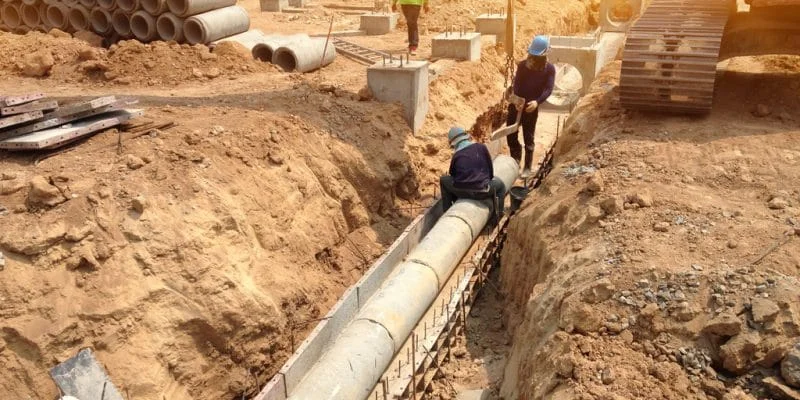
The Greater Accra Resilient and Integrated Development (GARID) Project says delays in releasing payments to contractors have at times stalled engineering works under the World Bank-funded programme, coming days after severe flooding disrupted large parts of Accra.
Speaking on Joy FM’s Super Morning Show, GARID Project Coordinator Ohene Sarfoh said cash-flow challenges, including exchange-rate-related conditions, have at times slowed the processing of contractor invoices.
“Partly because of this… exchange and conditionality and so on, that affected financing at some point reduced drastically [the speed at which] their invoices [were] being processed,” he said.
He added that arrangements have since been made to improve payment processes, explaining that the project now prioritises settling invoices as funds become available.
“As and when we see funds, we quickly pay out, and then they are also working. So it’s an ongoing thing,” he said.
Dr Sarfoh acknowledged that payment delays have directly affected construction timelines, confirming that contractors have at times suspended work.
“At some point, we have experienced some stoppages of work by contractors because their funds have not been paid,” he said.
He explained that while contracts allow up to 60 days for payment of certified invoices, contractors often expect quicker disbursement, creating tensions that sometimes slow activity on site.
“Most contractors would want that once I raise my invoice this week, next week I should get paid. But the contract provides that we can pay within 60 days,” he noted.
The admission adds to growing concerns about financing constraints affecting key flood-control works in Accra, particularly as parts of the capital continue to suffer recurrent flooding.
The clarification comes days after heavy rains on June 28–29, 2026, which submerged roads and communities across the city and left at least three people dead in Alajo following electrocution incidents linked to floodwaters.
President John Dramani Mahama had earlier indicated rainfall levels of about 140 millimetres, significantly above previous recorded peaks.
A recent World Bank review also noted that contractor payments were lagging behind physical progress, contributing to slower-than-expected disbursement of project funds.
GARID, which is Ghana’s flagship urban resilience programme, is designed to reduce flood risks across the Odaw Basin through drainage upgrades, dredging, solid waste management and community infrastructure projects.
As Accra continues to recover from the latest flooding, attention is expected to focus on whether financing delays could further slow completion of critical drainage works.
Latest Stories
-
MTN Ghana webinar urges SMEs to get financial discipline right
10 minutes -
Duvor Klu, Hua crowned champions as J30 Accra Week 1 concludes
22 minutes -
Gov’t to make rural telephony services cheaper by first quarter of 2027 – Sam George
46 minutes -
National Chief Imam remains Ghana’s strongest symbol of interfaith harmony – Mahama Ayariga
1 hour -
Gov’t to upgrade all rural telephony networks to 4G capability – Sam George
1 hour -
‘We’ve never seen a CJ in our judiciary system who is everywhere like MTN’ – Janet Nabla
1 hour -
Lawyers, prosecutors fume over abandoned 26-year-old Upper West High court project
1 hour -
At least two dead in blast at Bolivia military barracks
2 hours -
Tate brothers officially indicted with trafficking and sex crimes in Romania
2 hours -
US envoys arrive in Moscow ahead of Ukraine talks
2 hours -
Health Minister to brief media on Free Primary Healthcare programme on Monday
2 hours -
‘It was inappropriate to make that comparison’ – Dr Pumpuni Asante on CJ’s SOE comment
2 hours -
Photos: Final-day shopping continues at Joy FM Back-to-School Discount Fair
3 hours -
Darkey and Frimpong set up J30 Accra boys’ doubles final
3 hours -
When war takes more than territory: The human cost of conflict
3 hours