

Audio By Carbonatix
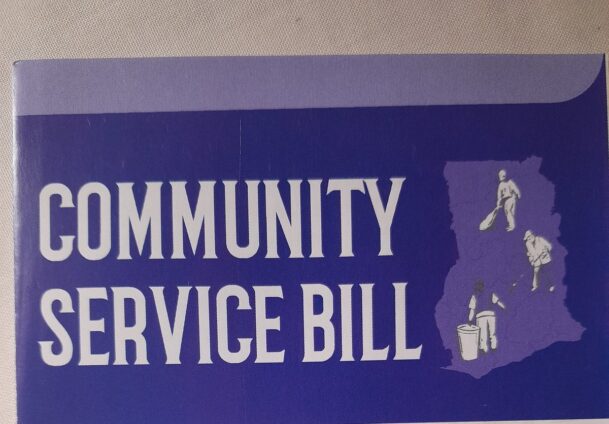
Parliament has passed the Community Service Bill, 2026, paving the way for the introduction of community service as an alternative to imprisonment for persons convicted of specified categories of offences.
The legislation establishes a National Community Service Secretariat and creates a legal framework for implementing non-custodial sentencing options aimed at reducing pressure on Ghana’s prisons.
The Bill was presented to Parliament by the Minister for the Interior, Mohammed-Mubarak Muntaka, on March 4, 2026, in line with Article 106(1) of the 1992 Constitution.
It was subsequently referred to the Parliamentary Committee on Defence and Interior for consideration and a report before its passage.
According to the committee’s report, Ghana’s criminal justice system has historically relied heavily on custodial sentences, contributing to persistent overcrowding in correctional facilities.
The report noted that the situation has placed significant pressure on the Ghana Prisons Service, while increasing government expenditure on inmate feeding, healthcare, maintenance and infrastructure.
The committee said the new law forms part of broader criminal justice reforms by the Ministry of the Interior aimed at expanding the use of non-custodial sentencing.
The objective is to provide courts with additional sentencing options for minor and specified offences while promoting rehabilitation, reducing repeat offending and supporting the reintegration of offenders into society.
The report explained that efforts to establish a structured non-custodial sentencing system began in 2014 when the Ministry of the Interior, with support from the United Nations Children’s Fund (UNICEF), initiated work on a non-custodial sentencing policy.
The Community Service Bill gives legal backing to existing non-custodial sentencing provisions under the Criminal and Other Offences (Procedure) Act, 1960 (Act 30), and the Interpretation Act, 2009 (Act 792).
Under the new framework, courts will have broader discretion to impose community service where appropriate instead of sending offenders to prison.
Parliament’s Defence and Interior Committee said the legislation will strengthen Ghana’s criminal justice system, improve the management of correctional facilities and ensure that imprisonment is reserved for cases where custodial sentences are necessary.
Latest Stories
-
Ghana music industry needs collective public-private investment – UK High Commissioner
42 seconds -
“We don’t have the mindset of sabotage” – NPP on MMDCE election proposal
16 minutes -
From Kumasi to the world: Mirakilouz Beatz’s rise in music production
19 minutes -
Low pay making it harder for universities to attract PhD holders – UTAG-UG
19 minutes -
Julius Emunah parts ways with Hearts of Oak as Managing Director
29 minutes -
Weija Dam flooding will persist without political will to relocate residents – NADMO
30 minutes -
UMB, 3TREES launch paint outlets across constituencies ahead of Ghana’s 70th anniversary
30 minutes -
CSSPS: Education Ministry orders action against alleged payment demands in Ashanti Region
30 minutes -
SSNIT honours 16 stakeholders at 2025 Awards
41 minutes -
Naa Shika Adu presents Vernacular of Play: An art exhibition inspired by sport, identity and social impact
50 minutes -
Ghana wastes up to 50% of fruits and vegetables annually – Agrofresh
1 hour -
CSSPS deploys more personnel to ease delays at resolution centres
1 hour -
Poor transport and storage systems contribute to post-harvest losses in Ghana – Mathias Yabe
2 hours -
Partisan MMDCE elections could stifle development – NDC
2 hours -
TUC urges Mahama to keep constitutional reform discussions open
2 hours