

Audio By Carbonatix
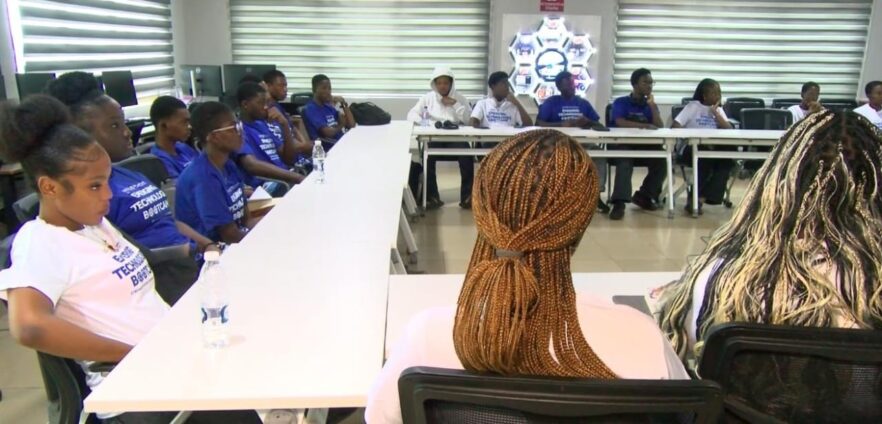
Senior high school students are gaining hands-on experience in artificial intelligence, robotics and other emerging technologies at a technology bootcamp organised by Lancaster University Ghana to equip them with skills for the future of work.
The eight-week programme moves beyond classroom theory by challenging students to identify real-world problems, develop practical solutions and build working prototypes using technology.
Speaking about the initiative, Academic Director of Lancaster University Ghana, Professor Raymond Dziwornu, said the bootcamp is designed to expose students to technologies that are shaping the future while helping them understand how they can be applied to solve societal challenges.
According to him, participants are introduced to robotics, artificial intelligence, smart connected technologies, programming, electronics and 3D printing in an environment that encourages critical thinking, collaboration and innovation.
Professor Dziwornu said the university is also investing in teachers by training educators alongside students to ensure the knowledge gained during the programme is transferred into classrooms across the country.
He explained that the approach is intended to build a stronger innovation ecosystem by equipping both students and teachers with practical technology skills.
Throughout the programme, participants are expected to analyse problems, break them into manageable parts and develop prototypes that offer practical solutions.
Facilitators say the emphasis on computational thinking helps students approach challenges systematically while encouraging creativity and problem-solving.
The initiative is being supported by Stanbic Bank Ghana, which says investing in young people's technology skills aligns with its commitment to innovation and national development.
Head of People and Culture at Stanbic Bank Ghana, Yvonne Emma Agbesi, said exposing students to emerging technologies at an early stage will help prepare them to contribute meaningful solutions within their communities and the wider economy.
She encouraged participants to embrace experimentation and view setbacks as part of the innovation process.
"Innovation is rarely a straight path," she told the students, urging them to push boundaries, explore new ideas and learn from failure.
At the end of the bootcamp, students are expected to showcase prototypes that demonstrate both creativity and practical impact.
Organisers believe initiatives like this are helping reshape education in Ghana by shifting the emphasis from memorisation to innovation, equipping young people with the skills to create solutions for the challenges of tomorrow.
Latest Stories
-
Four pupils to one desk: The painful plight of schools in New Juaben North
25 minutes -
Ipswich launch investigation into racist abuse of Abdul Fatawu
30 minutes -
Arrest of Techiman nurse is purely political persecution – ‘Ghana Jollof’
45 minutes -
Isak nets winner as Liverpool edge Bournemouth
1 hour -
I dare gov’t of Ghana to extradite me; they can never do it – ‘Ghana Jollof’ speaks
1 hour -
Semenyo scores twice as Manchester City beat Sunderland 5-3 in eight-goal thriller
1 hour -
Parliament calls for government-private sector collaboration to improve waste management
2 hours -
Volta Region described as cleanest so far in Parliament’s nationwide sanitation monitoring
2 hours -
Parliament urges MMDAs to enforce sanitation bylaws to curb indiscriminate waste disposal
2 hours -
Mohammed Kudus drops out of Ghana squad for AFCON 2027 qualifiers against Côte d’Ivoire and Gambia
2 hours -
Africa World Airlines unveils first Embraer E190 as part of 10-aircraft fleet expansion
4 hours -
Civilian hospitalised after alleged machete attack by prison officers, inmates
4 hours -
Toobu rejects calls to recall Parliament over 3.9-tonne cocaine shipment
4 hours -
Residents in 5 Northern Regions warned of approaching rainstorm
5 hours -
Constituency Games still a work in progress – Sports Minister
5 hours