

Audio By Carbonatix
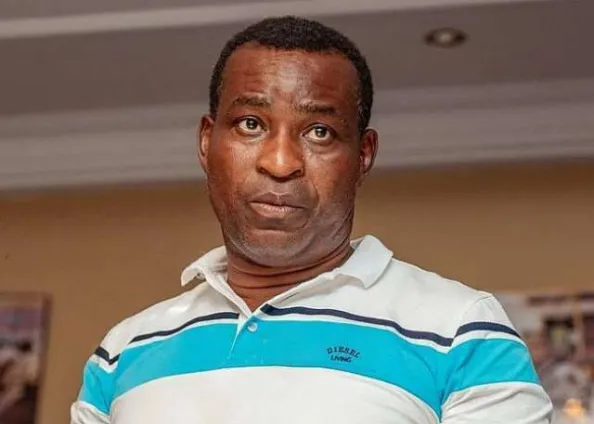
The 20-year prison sentence handed to Bernard Antwi-Boasiako, Ashanti Regional Chairman of Ghana’s opposition New Patriotic Party (NPP), for illegal mining has ignited a profound constitutional debate. While the Accra High Court’s Monday ruling marks a significant milestone in the nation’s battle against 'galamsey'—illegal small-scale mining—the opposition has condemned the verdict as a calculated miscarriage of justice. As Antwi-Boasiako begins his term at Nsawam Medium Security Prison, the case has evolved into a high-stakes test of judicial independence and the impartial application of the law in Ghana.
Constitutional Challenges and Due Process
The Minority Caucus in Parliament has launched a formal challenge against the judgment, citing procedural irregularities. Lead defence counsel notably missed the verdict delivery due to pre-existing professional commitments abroad. The Minority argues this absence violated Article 19(2)(g) of the 1992 Constitution, which guarantees an accused person the right to counsel of their choice.
Drawing a parallel to the Tsatsu Tsikata case of 2008, the caucus maintains that judicial proceedings should have remained suspended while fundamental constitutional questions were pending. The Minority statement emphasised: "If the right to counsel of choice mattered in 2003, it matters in 2026, and it matters exactly as much when the accused sits on the other side of the political aisle." Additionally, the defence faulted Justice Audrey Kocuvie-Tay for declining to refer interpretative questions regarding Section 99(2)(b) of the Minerals and Mining Act to the Supreme Court under Article 130, a move critics claim improperly usurps the apex court’s authority.
Allegations of Selective Prosecution
Beyond the procedural debate, NPP leadership insists the prosecution is a manifestation of institutionalised bias. General Secretary Justin Frimpong Kodua characterised the conviction as a "political trophy," arguing the government weaponises the judiciary against opponents while shielding its own members. The party highlighted a lack of progress on a July 2025 investigation into NDC National Organiser Joseph Yamin and National Vice Chairman Yakubu Abanga.
"The fight against illegal mining cannot become credible only when it targets political opponents in respect of whom evidence of wrongdoing does not exist, while overlooking allegations involving others," Kodua stated. The opposition contends that by prioritising the conviction of a high-profile regional chairman over unresolved petitions before the Economic and Organised Crime Office (EOCO), the state risks delegitimising the entire national anti-galamsey campaign. The NPP further demanded that the Office of the Attorney-General publish its full enforcement record on illegal mining across the political spectrum to restore public confidence.
The Defence Strategy and Appellate Outlook
Justice Kocuvie-Tay found Antwi-Boasiako guilty on six counts, including assigning mineral rights without approval and facilitating unlicensed mining. The court, citing evidence of unauthorised activities on the Samreboi concession, imposed a 20-year sentence and a fine of 10,000 penalty units, or GH¢120,000, with a three-year default term. Notably, the court showed leniency toward Akonta Mining Limited, imposing only a financial penalty on the corporate entity.
Legal representatives maintain the prosecution failed to meet the standard of proof. Dr. Palgrave Boakye-Danquah, who confirmed the transfer to Nsawam, stated: "We did not expect this outcome because, based on the evidence we provided, it was clear that there was nothing presented in court that showed Chairman Wontumi was personally involved in illegal mining throughout the proceedings." The defense has commenced filing for certiorari and appellate review. The NPP has explicitly designated Antwi-Boasiako a "political prisoner," while the Ashanti Caucus of the NPP urged supporters to stay "strong" and "resolute," insisting the verdict is a "test of our collective commitment to justice, fairness, and democratic principles."
National Distraction or Judicial Milestone
For the governing administration, the verdict serves as evidence of a non-partisan crackdown on environmental degradation. However, the opposition argues the timing is opportunistic, designed to distract from pressing challenges like cocoa farm destruction, recent flooding, and regional terrorism. Kodua dismissed the conviction as a superficial effort to project success, asserting: "No Government should attempt to divert public attention from those pressing national concerns through selective prosecutions."
As the nation navigates this polarised environment, the judiciary now faces the delicate task of balancing rigorous environmental enforcement with the constitutional necessity of visible, impartial due process. The ultimate resolution of this case will likely serve as a definitive precedent for how political actors, regardless of party affiliation, are held accountable under Ghana’s mining statutes.
Latest Stories
-
WASSCE 2026: English Language performance falls to 62.4% – WAEC
3 minutes -
WASSCE 2026: Social Studies records sharp rebound as Maths, Science also improve
16 minutes -
2026 WASSCE entry rises by 11% as 512,862 candidates sit exams
23 minutes -
WASSCE 2026: English Language performance falls to 62.4% – WAEC
37 minutes -
WAEC cancels 2026 WASSCE results of 8,295 candidates over examination irregularities
58 minutes -
WAEC releases provisional 2026 WASSCE results for 512,862 candidates
1 hour -
CJ’s remarks on SOEs were made in good faith, not to undermine judicial independence – Judicial Service
4 hours -
Bright Future Alliance pays courtesy call on Akufo-Addo, invites him to African Leaders of Influence Lectureship Series
4 hours -
This is an attempt to break the Minority caucus – Patricia Appiagyei on alleged GH¢70k payment
5 hours -
‘OSP hasn’t contacted me’ – Patricia Appiagyei assures cooperation if invited
5 hours -
I find it strange that this memo was purportedly written by me – Patricia Appiagyei
5 hours -
Ayariga calls for stronger church partnership to tackle sanitation, environmental challenges
6 hours -
I don’t think we have an industry – Patchbay Band manager
6 hours -
Patchbay Band questions recognition of live bands in Ghana’s music industry
6 hours -
Newsfile to discuss SOEs’ GH¢19.8bn profit, dissolution of 9 boards, CJ’s visits to SOEs, GH¢70k gift rejection
6 hours