

Audio By Carbonatix
The United Nations Population Fund (UNFPA) says improved data systems and modern census methods will be critical in helping African governments identify underserved communities and address persistent inequalities in access to healthcare.
The Regional Director of UNFPA for West and Central Africa, Dr Sennen Hounton, said governments must accelerate efforts to collect and use detailed population data to ensure that development interventions reach people who are often left behind.
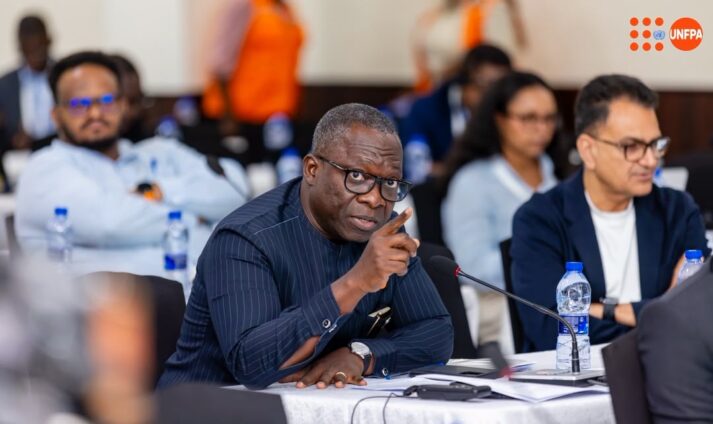
Speaking during a press conference in Accra on Wednesday, July 22, on the sidelines of the 2026 African Union Extraordinary Health Summit, Dr Hounton said achieving the targets of the 2030 Agenda for Sustainable Development would require two key actions: accelerating progress and addressing inequalities.
"The Agenda 2030, we need two things: acceleration and again addressing the inequalities," he said.
He explained that UNFPA has been supporting countries across the region to conduct modern, geo-referenced censuses that provide governments with more accurate information to guide decision-making.
"In this region, I'm proud to stand in front of you and say that I covered 23 countries. Twenty-two out of the 23 will have conducted a geo-referenced modern census by next year," Dr Hounton stated.
According to him, the availability of detailed population data will enable governments to identify communities that are not benefiting from national programmes and target interventions more effectively.
He said traditional national statistics often hide inequalities that exist between urban centres and rural communities, making it difficult for governments to identify areas requiring urgent attention.
"This is huge because it provides us unlimited data and because we have geo-coordinates, we can then do small area estimation and tell government, for example, your national health insurance is doing well, but in Tamale, only 30 per cent are covered," he explained.
Dr Hounton said such granular data would prevent governments from relying only on national averages, which may give an inaccurate picture of the actual situation in different communities.
"Otherwise government will be happy. We have 90 per cent enrolment, we are doing well, but okay, it's maybe 99 per cent here in Accra and maybe in Kumasi it's 50 per cent," he noted.
He added that geo-referenced information could help governments and development partners identify communities lagging behind and design targeted interventions to close existing gaps.
"This type of information, granular information, so that across the region and I'm hoping across the continent, we can then even zoom it and give them satellite imagery of those local government areas that are very lagging behind and they can then go and do intensified effort," he said.
The UNFPA Regional Director stressed that achieving health equity requires focusing not only on people living in major cities but also those in remote and underserved communities.
He linked the use of data to better planning for healthcare financing, maternal health services and social protection programmes, saying governments must know exactly who is being reached and who remains excluded.
Dr Hounton also highlighted the importance of accountability in tracking progress towards development goals, arguing that governments can only address challenges effectively when they have reliable information.
"We only make progress on what we measure," he said.
He said stronger data systems would enable governments to design evidence-based policies and ensure that resources are directed to communities with the greatest needs.
"Scale and addressing inequality will be very critical to achieving Agenda 2030," Dr Hounton added.
Latest Stories
-
Existing Cedi notes to remain legal tender alongside Heritage Series – BoG
4 minutes -
Consumer, business sentiments positive – BoG
13 minutes -
There’ll be no GHS500 Cedi note as part of Heritage Series issuance – BoG
31 minutes -
Heritage Series Cedi notes to modernise cedi while preserving national identity – BoG
45 minutes -
Ghana’s business environment at ‘Inflection Point’ as private Sector takes greater lead — Vish Ashiagbor
51 minutes -
At least 2 new airlines could join domestic aviation market by 2027 – GCAA Director General
1 hour -
What if Ghana’s next tourism boom begins with Ghanaians?
1 hour -
Energy Commission to monitor EV charging stations
1 hour -
Invest with confidence, Ghana’s golden era is beginning – Finance Minister
2 hours -
Do Ghana to launch The Great Ghana Day Out on World Tourism Day
2 hours -
Clean up our politics before politics cleans us up
2 hours -
2025 was a turning point, says Abradu-Otoo as NAFCO posts record GH¢91.7m profit
3 hours -
Today’s front pages: Friday, September 25, 2026
3 hours -
‘FA President has four clubs; what do you think he would do?’ – Nana Baffour Awuah fires back
3 hours -
Kurt Okraku doesn’t like criticism, but Ghana football is beyond him – Nana Baffour Awuah
3 hours