

Audio By Carbonatix
As Do Ghana and Joy FM invite Ghanaians to “Go Outside. Do Ghana. Find Your Centre”, a growing appetite for outdoor experiences is opening a bigger question about the future of domestic tourism, and why the country’s biggest tourism market may be the one already living here. Is doing Ghana the new weekend escape?
On World Tourism Day this Sunday, BENTSIFI, in collaboration with Joy FM and Joy Prime, takes another step in a journey that began long before domestic tourism became the fashionable phrase it is today. They have a simple invitation: GO OUTSIDE. DO GHANA. FIND YOUR CENTRE.
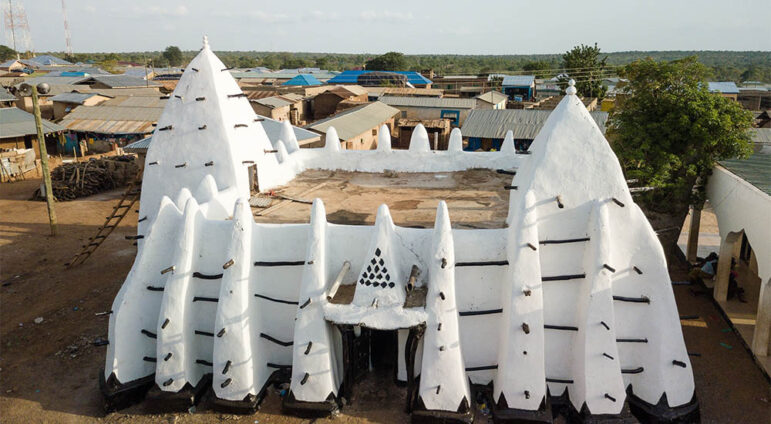
It is an invitation that may sound remarkably contemporary, even though the instinct behind it is anything but new. Ghanaians have always had a relationship with the outdoors. There was a time when weekends were naturally spent at the beach, the 1980s phenomenon of ‘Meet Me There’, by Lake Volta in the Akosombo area, at the botanical garden at Aburi, at a swimming pool, on a football field or simply somewhere outside the city. Families packed food for picnics, friends organised outings, schools took children on excursions, and public holidays offered an excuse to get into a car or onto a bus and see somewhere different. Nobody needed to call it an ‘outdoor experience’. It was simply how people spent their leisure.
Much of that culture has changed. The modern urban weekend has become increasingly indoor, commercial and digitally mediated, with shopping malls, restaurants, clubs and other forms of organised entertainment competing for people’s leisure time. International travel has also become more visible and aspirational, while social media has transformed the way destinations are discovered and presented. Yet, interestingly, outdoor recreation is finding a new audience.
Hiking, cycling, camping, farm visits, run clubs, wellness retreats and destination picnics are becoming increasingly popular, particularly among younger urban audiences. What looks like a new movement may therefore be less a new invention than a return to an old instinct, updated for a different generation.
It is against this changing leisure landscape that PaJohn Dadson poses a deceptively simple question: What would happen if we all did a little more Ghana?
For decades, much of Ghana’s tourism conversation has looked outward. The familiar ambition has been to attract more international visitors, increase arrivals, fill hotel rooms, market attractions overseas and persuade people in Europe, North America and elsewhere to spend their holiday money in Ghana. That remains important. International tourism generates foreign exchange, supports employment and connects Ghana to global travel markets.
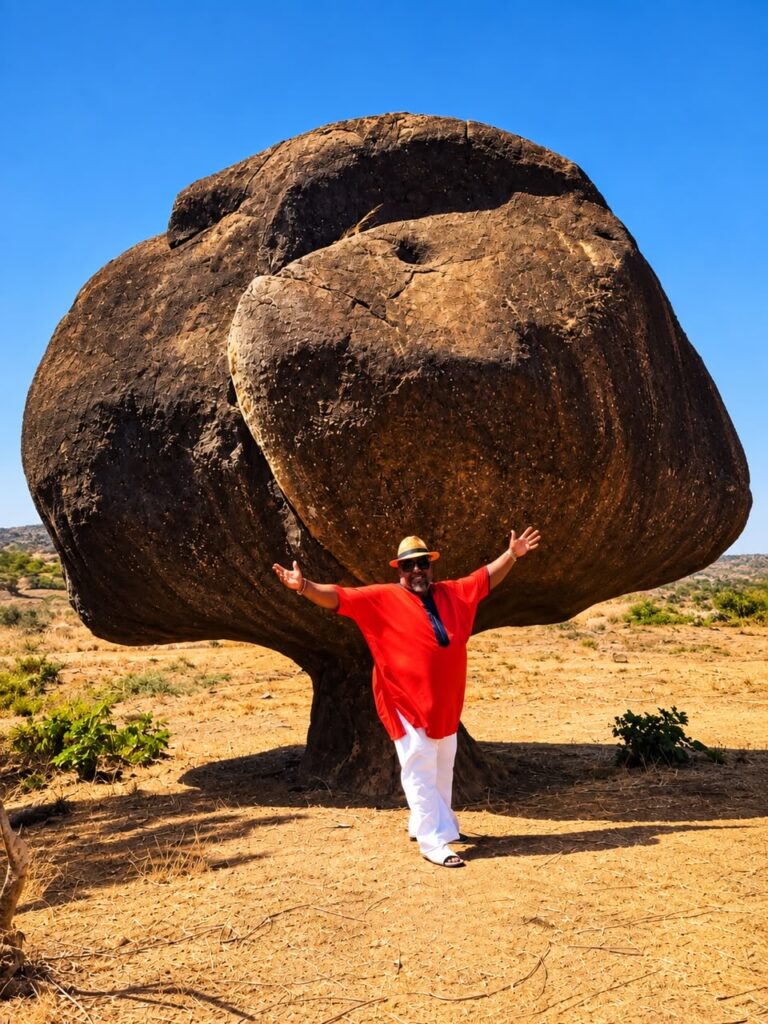
But another tourism market may be sitting in plain sight, requiring neither a visa nor an international marketing campaign nor a flight across the Atlantic: Ghanaians themselves.
Domestic tourism is sometimes treated as the smaller cousin of international tourism: something people do when they cannot afford to travel abroad, or a useful way of keeping hotels occupied during quieter periods.
That interpretation misses a considerable part of the opportunity. A population of more than 30 million represents not merely an audience for tourism promotion but a substantial potential market for travel, accommodation, transport, food, entertainment, culture and experiences.
More importantly, domestic travel can be repeated fairly often. A family may take a weekend trip to the Volta Region and return during the next school holiday. Friends may make a day trip, an office may organise a retreat, a couple may spend a night outside Accra or a group may travel to a festival in another region. Unlike the international visitor, whose trip is usually measured in days, the domestic traveller has the possibility of becoming a recurring customer.
That matters because tourism is fundamentally a circulation business. A family travelling from Accra to the Eastern Region does not spend only on accommodation. The journey can generate income for a fuel station, transport operator, roadside trader, restaurant, farmer, guide, attraction, craftsperson and guesthouse.
The restaurant buys from suppliers, suppliers buy from farmers and producers, businesses employ people who spend their income elsewhere, and the cycle continues. The value of a journey therefore extends beyond the visitor’s immediate expenditure.
There is another reason the domestic market matters. Ghanaians can become customers for places and experiences that international tourism may never reach. They can discover the farm before it becomes an agritourism attraction, eat the local dish before it appears on a hotel menu, meet the guide before a tour company lists the experience and visit a community before it becomes a recognised destination. In that sense, domestic travellers can help demonstrate that there is an economic market for what a place already possesses.
More than twenty years ago, before domestic tourism became a fad, BENTSIFI had already begun trying to get Ghanaians to think differently about travelling within their own country. What is now commonly described as domestic tourism was then a much simpler proposition: go and see Ghana.
Led by Head Honcho PaJohn Dadson, BENTSIFI began telling stories about places many Ghanaians had never considered visiting, places beyond Accra, beyond the familiar and, in some cases, well beyond the comfort of the city.
Through his weekly Bentsifi’s Diary column in the Weekend Chronicle in the 1990s, and later Bentsifi’s Tattle in the Mirror in the 2010s, PaJohn wrote about waterfalls, villages, mountains, forests, rivers, historic sites and curious corners of the country that had barely registered on the urban imagination.
The focus was deliberately domestic. The objective was not simply to tell international audiences that Ghana was beautiful, but to persuade Ghanaians to look at their own country with fresh eyes. For people accustomed to the conveniences of Accra and the established weekend circuit, many of the places he wrote about represented a different proposition altogether. Roads could be rough, amenities limited and accommodation basic. A few days away from the city could feel less like a conventional holiday than a small expedition.
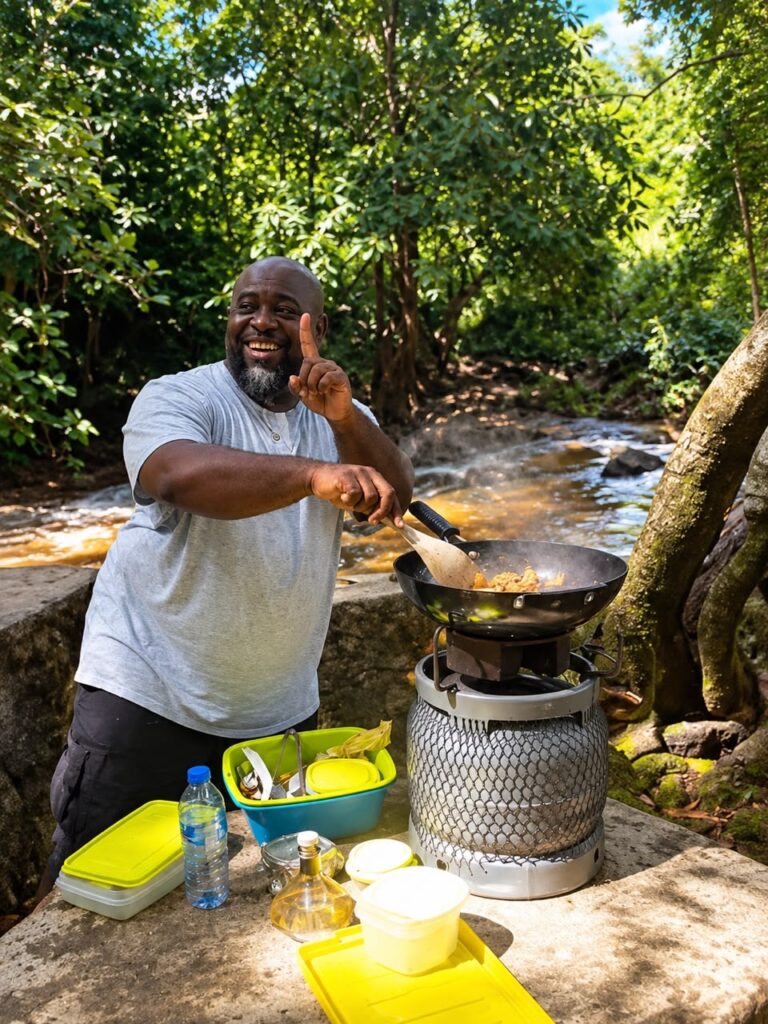
Bentsifi went anyway. He travelled the roads, followed the tracks, found the places, met the people and returned with stories. Then he wrote about them. Readers followed those journeys through the pages of the newspaper, discovering destinations they might otherwise never have considered visiting. In an era when domestic tourism was still largely discussed as an adjunct to the more glamorous business of attracting international visitors, the work was making a different case: Ghanaians themselves could be an important tourism market.
That advocacy received formal recognition circa 2015/16, when Bentsifi was named Travel Writer of the Year at the Ghana Tourism Authority National Awards. His work in domestic tourism advocacy also coincided with the creation of a ‘Tourism-Oriented Media: Radio’ category, with Joy FM receiving the honour. This was the result of Bentsifi’s work with Doreen Andoh on Cosmopolitan Mix, using the radio platform to encourage listeners to look beyond the familiar and consider destinations within Ghana.
The significance of that period is easier to appreciate in retrospect. This was before smartphones became essential travel companions, before Google Maps placed navigation in almost every pocket and before Instagram turned remote waterfalls and mountain viewpoints into instantly searchable destinations. Facebook was emerging, but the social-media travel ecosystem that exists today had not yet taken shape. There was no algorithm continuously suggesting where to go next.
There was a newspaper column, a radio programme and photographs. And there was curiosity. Photographers Yaw Pare and the late Emmanuel Bobbie were documenting Ghana’s landscapes with the same sense of discovery, producing images that gave visual substance to the places being described.
Their photographs circulated through emerging social-media platforms and became part of conversations around destinations featured in Bentsifi’s writing and radio discussions. The words created curiosity; the photographs helped people see what those words were describing.
Together, the different media were beginning to do something that tourism communication had not always done particularly well: they were making unfamiliar Ghana visible to Ghanaians.
The tools have changed considerably since then. Today, a destination can be discovered within seconds. A rural enterprise can market directly to an urban audience. A traveller can navigate an unfamiliar road from a phone, book accommodation online and document the entire journey almost as it happens.
But the underlying challenge has not changed. People still need a reason to go. And destinations still need people to come. That is where the domestic tourism argument becomes particularly important. International visitors remain an essential part of Ghana’s tourism economy, but they are not the only potential customers.
A Ghanaian family travelling from Accra to the Volta Region, the Central Region or the northern savannah creates a chain of spending that can extend from fuel and transport to accommodation, food, guiding, entrance fees, entertainment and local purchases. The individual amounts may be modest. The economic principle is not.
Tourism is a circulation business. Money spent by a visitor can move through a destination’s hotels, restaurants, transport operators, farmers, artisans, guides and other service providers. If domestic travel happens more frequently and across more parts of the country, more communities have an opportunity to participate in that circulation.
This is why the idea of doing a little more Ghana has significance beyond leisure. It is about creating demand. Demand can make a farm worth developing as a visitor experience. It can give a community an incentive to package a local festival. It can create a market for traditional food, crafts and guiding. It can make the knowledge of a local storyteller or farmer economically relevant. It can give a young person another reason to see value in the place where they live.
The attraction does not always have to be built from scratch. Sometimes the attraction is already there. What is required is for somebody to notice it, tell the story and persuade somebody else to make the journey.
That was the work Bentsifi began doing years before the current vocabulary of destination marketing, experience economy and domestic tourism became fashionable. His contribution was not simply in identifying places. It was in challenging the assumption that tourism was principally something Ghana should sell to outsiders.
There was another audience. It was sitting at home. And it was potentially much larger. The question, therefore, is no longer simply whether Ghana has enough places for people to visit. It is whether enough Ghanaians have enough reasons to leave their familiar routes and discover them.
That is the question that eventually leads back to ‘Do Ghana’, the WangoWango proposition that has been developing for years: that Ghana can be experienced more deeply when people move beyond the obvious destinations and encounter the landscapes, communities, food, history and stories that make the country distinctive.
The technology may be different now. The audience is more connected, with photographs travelling faster. Recommendations arrive instantly. But the fundamental invitation remains remarkably old-fashioned. Go somewhere you have never been. And perhaps, in doing so, discover a little more Ghana.
That distinction matters because Ghana does not necessarily need more people merely ticking destinations off a list. It needs more people participating in the life of places, staying longer, spending locally and returning.
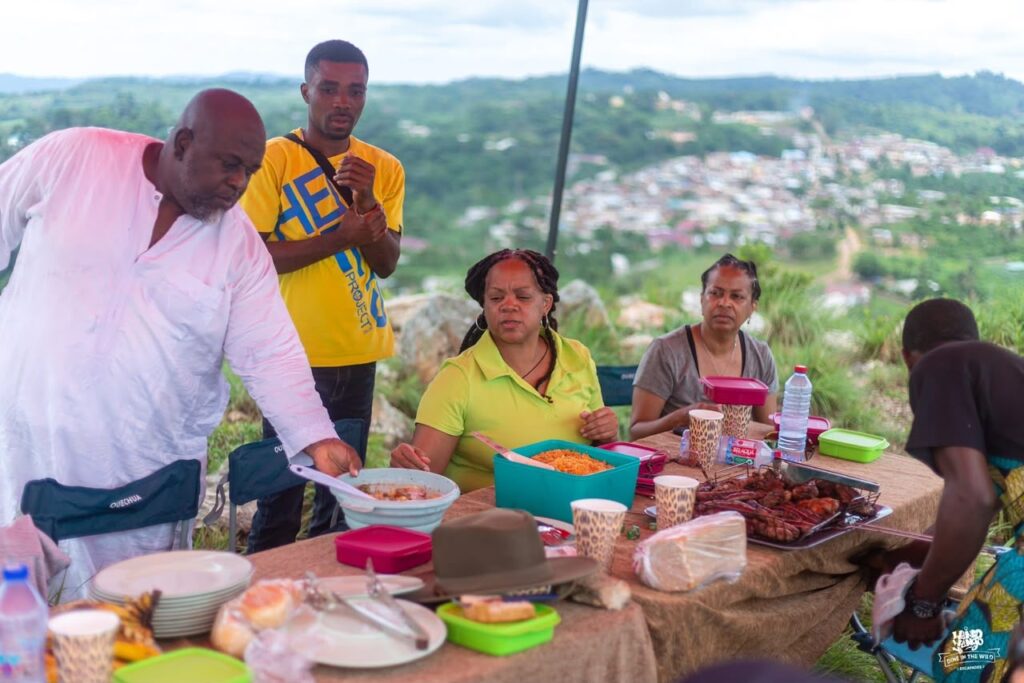
A visit to a farm can support agriculture and hospitality. A road trip can support roadside businesses and attractions. An outdoor meal can create demand for local produce. Festivals and funeral gatherings can generate business for accommodation, transport, food vendors and craftspeople. The connections between these activities are what make tourism an economic ecosystem rather than a collection of isolated attractions.
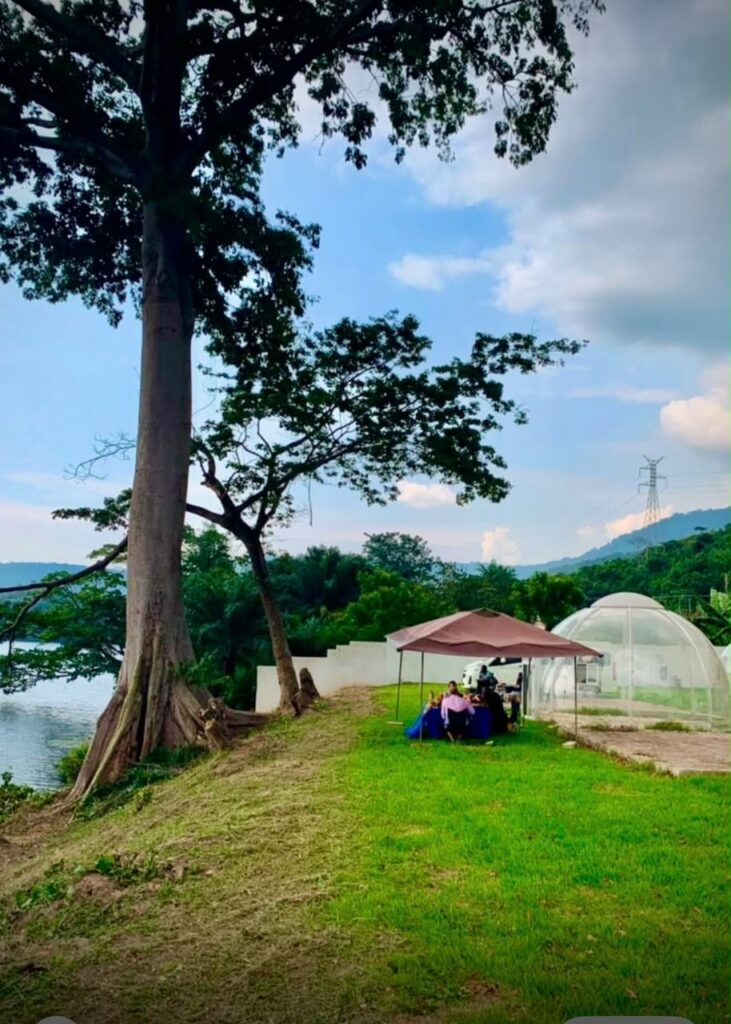
This is also why the renewed interest in outdoor recreation is significant. Hiking, cycling, camping, picnicking, swimming, nature walks, farm visits and outdoor dining are not simply leisure fashions. Properly developed, they create reasons for people to travel, often without requiring the infrastructure associated with conventional resort tourism. They can distribute spending beyond the major urban centres and create markets around landscapes and communities that might otherwise remain economically invisible.
The challenge is therefore not necessarily convincing Ghanaians that Ghana is beautiful. Most already know that. The challenge is making the discovery of Ghana sufficiently accessible, interesting and habitual that people choose to spend more of their leisure time experiencing it.
This is the thinking behind DO GHANA. It is not an argument against international travel, nor is domestic tourism a consolation prize for people who cannot afford to go abroad. Rather, it is an invitation to recognise that a country can become a stronger tourism destination partly by becoming a place its own people actively explore.
For decades, BENTSIFI has been asking Ghanaians to look again at the country around them, travelling into places that were largely absent from the urban tourism imagination and returning with stories intended to make people curious enough to follow.
Today, the invitation is broader and the tools are more powerful.
Together with Joy FM and Joy Prime, BENTSIFI is asking Ghanaians not simply to hear the stories but to become part of them.
Go outside. Do Ghana. Find your centre. Because Ghana has been here all along. The more interesting question now may be how much of it Ghanaians, residents and visitors alike, have yet to discover.
Latest Stories
-
We are not introducing higher denominations banknotes as part of “Heritage Series” issuance – BoG
2 minutes -
Heritage Series Cedi notes to modernise cedi while preserving national identity – BoG
15 minutes -
Ghana’s business environment at ‘Inflection Point’ as private Sector takes greater lead — Vish Ashiagbor
22 minutes -
At least 2 new airlines could join domestic aviation market by 2027 – GCAA Director General
31 minutes -
What if Ghana’s next tourism boom begins with Ghanaians?
52 minutes -
Energy Commission to monitor EV charging stations
56 minutes -
Invest with confidence, Ghana’s golden era is beginning – Finance Minister
1 hour -
Do Ghana to launch The Great Ghana Day Out on World Tourism Day
1 hour -
Clean up our politics before politics cleans us up
2 hours -
2025 was a turning point, says Abradu-Otoo as NAFCO posts record GH¢91.7m profit
2 hours -
Today’s front pages: Friday, September 25, 2026
2 hours -
‘FA President has four clubs; what do you think he would do?’ – Nana Baffour Awuah fires back
3 hours -
Kurt Okraku doesn’t like criticism, but Ghana football is beyond him – Nana Baffour Awuah
3 hours -
Ghana’s Liquidity Paradox: Why capital is not reaching productive businesses
3 hours -
Ghana football has collapsed under Kurt Okraku – Manhyia South MP
3 hours