

Audio By Carbonatix
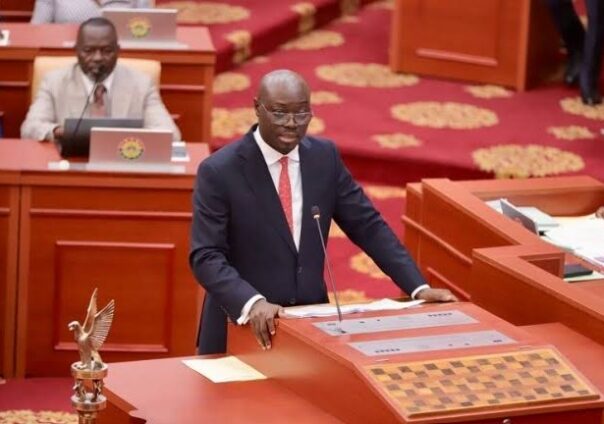
When Finance Minister Dr. Cassiel Ato Forson presented the 2026 Budget last November, Ghana's creative industry finally had reason to celebrate.
For years, practitioners had called for dedicated public financing to unlock the sector's enormous economic potential. Government responded by announcing two flagship interventions, a GH¢20 million Film Fund and a GH¢20 million Creative Arts Fund.
Together, they represented a GH¢40 million commitment to an industry that contributes to employment, tourism, exports and Ghana's cultural identity, yet has long struggled with limited access to financing.
Eight months later, the Mid-Year Fiscal Policy Review has arrived. Parliament has been updated on the implementation of numerous government programmes. Yet, conspicuously absent from the Finance Minister's statement is any mention of the two funds promised to the creative sector.
That silence should concern everyone who believes Ghana's creative economy deserves more than political recognition.
The Missing GH¢40 Million
The Mid-Year Review provides updates on funding and implementation for several flagship initiatives, including the Big Push Programme, the National Apprenticeship Programme, Youth Employment interventions, MahamaCares and even preparations for Ghana's participation in the FIFA World Cup.
But when it comes to the Film Fund and the Creative Arts Fund, there is nothing. There is no disclosure on whether any allocations have been released.
For an industry that has waited decades for structured public investment, that omission is significant.
Interestingly, just days after the Mid-Year Budget Review, President John Dramani Mahama, while receiving farewell calls from the outgoing Swiss Ambassador and Australian High Commissioner, disclosed that the GH¢20 million Film Fund had already been disbursed and that industry stakeholders were determining how the money should be invested.
He also reaffirmed that another GH¢20 million had been allocated to the Creative Arts Fund to support practitioners across the wider sector.
That announcement offers reassurance that the commitment has not been abandoned.
However, it also raises important questions.
If the funds have indeed been released, why were they omitted from the Mid-Year Fiscal Policy Review? Why has there been no formal public update on their implementation, governance arrangements or disbursement mechanisms?
For an industry that has consistently called for transparency and accountability, those questions deserve answers.
Beyond the promised funds, the Mid-Year Review offers little that directly advances Ghana's creative economy.
This is despite mounting evidence globally that the creative economy is not merely a cultural asset but an economic one.
Across Africa, countries are investing in film production, music exports, animation, gaming and digital storytelling as engines of growth. Ghana cannot afford to remain on the sidelines.
One of the few policies likely to affect the creative industry is government's intention to apply VAT to foreign digital platforms serving Ghanaian consumers. At first glance, this appears to be a tax administration measure. But its implications extend far beyond revenue collection.
If implemented, important questions arise. Will streaming platforms absorb the additional tax? Will subscription prices increase for Ghanaian consumers? Will higher costs reduce demand for digital entertainment? How might this affect Ghanaian creators who earn royalties and advertising income through these platforms?
These questions remain unanswered, but they are likely to shape the future economics of Ghana's digital creative ecosystem.
Not everything in the Mid-Year Review is disappointing for creatives.
Government's decision to extend the zero-rating of VAT on locally manufactured textiles until 2028 is welcome news for Ghana's fashion industry.
Textile producers, garment manufacturers and fashion designers stand to benefit from lower production costs and improved competitiveness.
Equally important is the increase in the VAT registration threshold.
Many smaller creative businesses including production houses, photographers, event organisers, designers, agencies and independent studios, may no longer be required to register for VAT.
Reducing compliance costs could allow many of these businesses to reinvest more resources into growth.
While these measures were not designed specifically for the creative economy, they nevertheless provide some indirect relief.
The broader issue is not simply whether the GH¢40 million exists. It is whether Ghana is prepared to treat the creative economy as a strategic pillar of national development rather than an occasional campaign promise. Successive governments have acknowledged the sector's enormous potential. Studies have shown that creative industries generate employment, stimulate tourism, preserve cultural heritage, drive innovation and contribute significantly to GDP in countries that invest in them.
Yet public policy often treats the sector as an afterthought. The Film Fund and Creative Arts Fund present an opportunity to change that narrative.
If managed transparently, they could help finance local film productions, strengthen music exports, support theatre and publishing, expand digital content creation and provide seed capital for creative entrepreneurs.
But transparency matters just as much as funding.
Industry stakeholders deserve to know how the funds will be governed, who qualifies for support, how applications will be assessed and what accountability mechanisms will ensure the resources reach practitioners rather than becoming another political initiative that fades with time.
The promise has been made. Now the industry deserves implementation, transparency and results.
The author, Kenneth Awotwe Darko is a multimedia journalist with interests in climate change, sustainability, arts and culture.
Latest Stories
-
Ghana to host high-level conference on scaling education initiatives in emergencies
4 minutes -
Democracy must not be for sale: Who pays for Ghana’s politics, and how do we confront money, influence and accountability?
20 minutes -
Aburi Amanfrom landowners appeal for government support for Atwapim development project
23 minutes -
Cargill Ghana and International Cocoa Initiative celebrate 111 young graduates building skills for the future
46 minutes -
Video: Madina MP Francis-Xavier Sosu collapses while addressing students at GIMPA
48 minutes -
Hunnyboy reveals how social media landed him Shatta Wale feature
53 minutes -
I am a perfectionist – Actor William Lamptey
57 minutes -
No room for another false start as Ghana begin AFCON qualifying campaign
1 hour -
“We are grateful for what you have achieved” – AGI President tells Finance Minister
1 hour -
“No Nation is Inferior”: Mahama champions human dignity and security council reform at the UN
2 hours -
Manhyia South residents, NPP executives fume over botched EOCO arrest of MP
2 hours -
Mahama unveils new deal with global philanthropy
2 hours -
Daily Insight for CEOs: Building customer-centric leadership
2 hours -
Democracy must deliver food, jobs and healthcare, not just elections – Mahama
2 hours -
Capacity constraints must never be a barrier to restitution – Mahama
2 hours