

Audio By Carbonatix
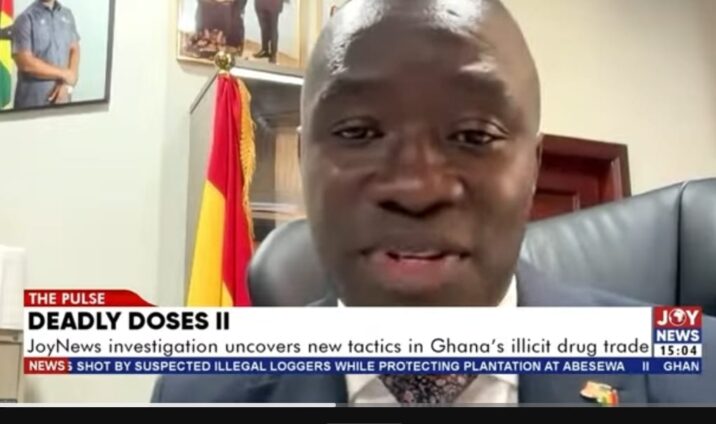
The Deputy Director General in charge of Enforcement, Control and Elimination at the Narcotics Control Commission (NACOC), Alexander Twum-Barimah, has expressed concern over the growing involvement of students in the sale and distribution of illicit drugs in Ghana.
Speaking on JoyNews' The Pulse on Monday, July 27, he said the development is one of the worrying trends emerging in the fight against substance abuse, as young people who should be protected from the dangers of narcotics are increasingly becoming part of the supply chain.
“It is sad that people are having this in the system. One sad part is even where now students are becoming a trade source, and they are the ones leading in selling these things. It’s sad.”
Mr. Twum-Barima said NACOC remains committed to reducing drug abuse in Ghana through enforcement, control, prevention and public education programmes.
His comments follow the airing of “Deadly Doses: Ghana’s Growing Drug Crisis,” a JoyNews investigative documentary series by Nana Boakye Yiadom, which exposes the changing dynamics of drug abuse in Ghana.
The latest edition of the documentary, which comes a year after the first investigation uncovered drug ghettos including Thinker Island and Columbia in the Ashanti Region, reveals a disturbing shift in the country’s drug crisis.
The investigation found that illicit substances are increasingly finding their way into schools, university campuses and everyday products consumed by young people.
According to the documentary, traffickers are moving beyond the open sale of narcotics in known drug hotspots and are now concealing substances such as marijuana and opioids in products including sobolo, brownies and gummies, making detection more difficult.
Mr. Twum-Barimah commended the Multimedia Group for highlighting the issue and supporting efforts to combat narcotics-related challenges.
Although he had not watched the entirety of the second part of the documentary, he said the follow-up investigation was important in showing how far Ghana has come in the fight against drug abuse while exposing emerging challenges.
He also urged other media organisations to emulate JoyNews’ efforts by using investigative journalism to bring attention to the realities of drug abuse, particularly in communities where the problem remains hidden.
“This fight that we are fighting here, we need everyone on board. The media has a critical role to play in helping us reach the various remote areas,” he added.
Latest Stories
-
T-bills auction: Government exceeds target marginally; yield on 91-day bill remains unchanged
43 minutes -
GPL 2026/27: 10-man Aduana hand Kotoko defeat in Kumasi
54 minutes -
GPL 2026/27: Medeama ease past Basake Holy Stars
1 hour -
Appiah Adomako writes: Why DVLA must stop treating every expired licence holder as delinquent
2 hours -
Localization must transfer decision-making power, not just project responsibilities
2 hours -
Modernising Ghana’s traditional markets through the 24-Hour Economy markets initiative
2 hours -
New economy will boost local production and create jobs – Finance Minister
2 hours -
Real-Time VAT on cross-border digital services – not a new tax and does not violate double taxation principle
3 hours -
Digitalisation, AI key to Ghana’s tourism transformation – GHATOF
3 hours -
Stronger GTA-private sector partnership needed to grow tourism – GHATOF
3 hours -
Amazon eyes Ghana for broadband expansion after talks with Mahama
4 hours -
National Investment Quiz 2026: Six schools qualify for quarter-finals
4 hours -
‘Do not let Russia pay for its madness with lives of your people’ – Zelensky to Ghana, 46 other countries
4 hours -
6,079 promotion cases fully processed and paid – CAGD says amid nationwide teachers’ strike
5 hours -
Teacher unions to meet government Monday over nationwide strike
5 hours