

Audio By Carbonatix
The Institute of Statistical, Social and Economic Research (ISSER) is urging the government to place greater emphasis on the efficient use of public resources, arguing that fiscal consolidation should be measured not only by expenditure reductions but also by how effectively public funds are utilised.
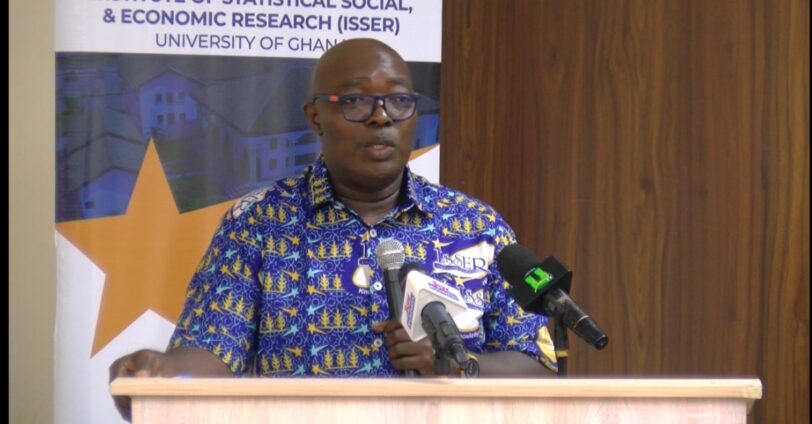
Speaking at ISSER's Post-Mid-Year Budget Review Forum, the Director of the Institute, Professor Robert Darko Osei, said Ghana's constrained fiscal space makes it imperative for the government to improve the quality and impact of its spending while maintaining its fiscal adjustment programme.
According to him, achieving sustainable fiscal consolidation requires careful prioritisation of projects and better value for money in public expenditure.
"Fiscal consolidation, in the face of tight fiscal space, is not only about reducing expenditure. It is also about the efficiency of spending," Professor Osei stated.
He explained that the government should ensure existing projects are completed and fully operational before committing scarce resources to new ones, noting that such an approach would maximise the benefits of public investment.
Using road infrastructure to illustrate his point, Professor Osei said the sequencing of projects is critical to achieving value for money.
"The prioritisation or sequencing of the new expressway relative to getting the one that is existing operational brings home the point about the need for efficiency of spending," he said.
The ISSER Director noted that while the government's commitment to fiscal consolidation remains important for preserving macroeconomic stability, improving expenditure efficiency will be equally critical in creating fiscal space for growth-enhancing investments without placing additional pressure on the public purse.
His comments come as economists continue to assess the implications of the 2026 Mid-Year Budget Review, with attention focused on the government's ability to sustain recent gains in inflation, exchange rate stability and fiscal performance while addressing infrastructure and social spending needs.
The Post-Mid-Year Budget Review Forum brought together policymakers, economists, development partners and private sector representatives to evaluate the government's mid-year fiscal policy measures and discuss the outlook for the Ghanaian economy.
Latest Stories
-
Kodua dismisses rift fears, says he and John Boadu are focused on NPP victory
48 minutes -
‘There is no competition’ – Justin Kodua confident of NPP General Secretary re-election
2 hours -
J100 Accra Doubles Champions : Kolesolva/ Ndukwa, Agarwal/Patel seal title victories
2 hours -
Sydney Wright crowned J100 Accra Champion
2 hours -
J100 Accra Boys’ Singles: Verma denies Beckles back-to-back titles to claim crown
2 hours -
Two friends fined GH¢12,000 for stealing
2 hours -
Son jailed for threatening to stab mother
3 hours -
Drive constitutional reform – GJA urges journalists
3 hours -
NPP Delagates Congress: Confusion delays voting at Ashanti Region TESCON centre
4 hours -
Fire ravages shops, houses near Koforidua Central Police Station
4 hours -
NPP Delegates conference: The wisdom of the masses will prevail – Napo
5 hours -
Flydubai co-pilot attacked captain with axe, UAE official says
5 hours -
NPP Bosome Freho Constituency Chairman reportedly arrested over ballot paper incident
5 hours -
Medical plane with 6 on board missing off Massachusetts coast
5 hours -
Bolt driver jailed 25 years for robbing beautician
5 hours