

Audio By Carbonatix
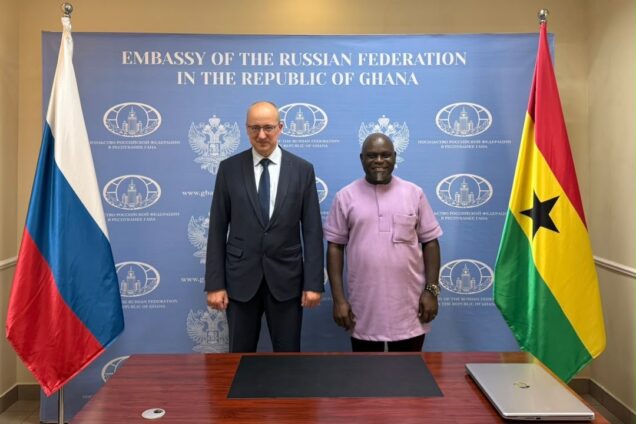
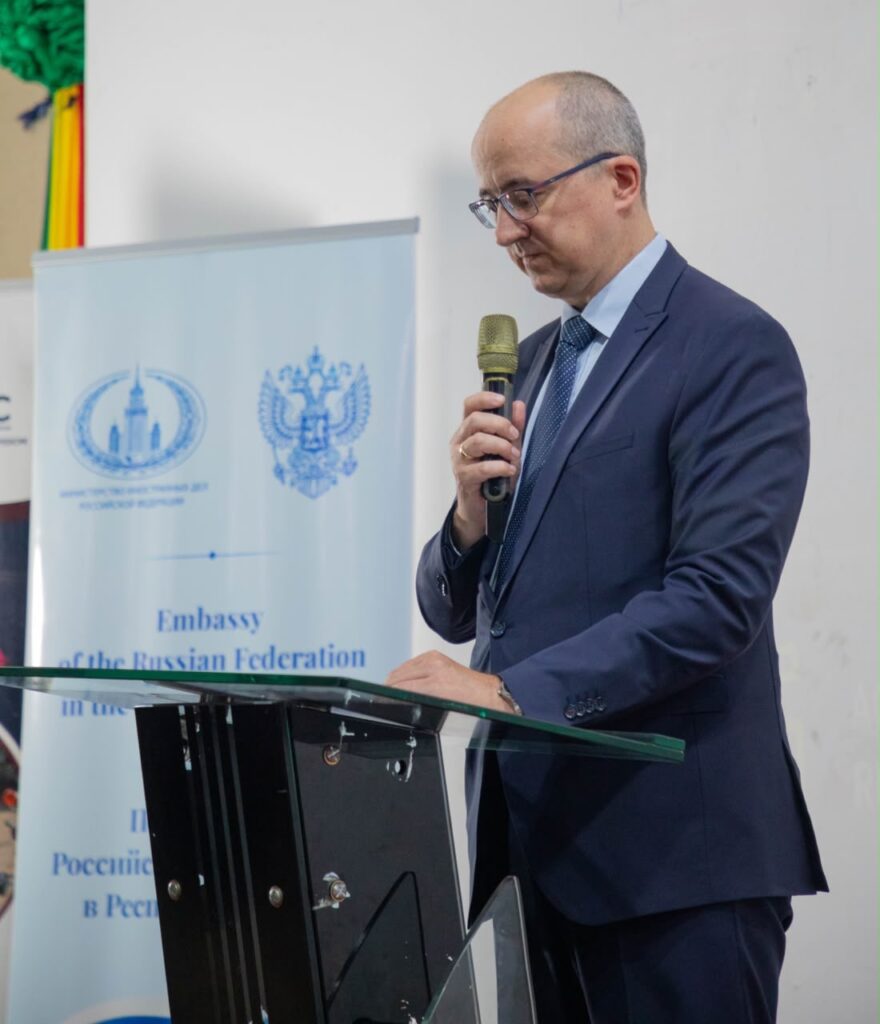
Russia’s Ambassador to Ghana, H.E. Mr Andrei Ordash, says culture, education and creative industries will play a central role in strengthening bilateral relations beyond diplomacy and trade.
For several years, relations between Ghana and Russia have largely been viewed through the traditional lens of diplomacy, education and political cooperation.
However, Moscow’s new approach to engagement with Accra appears to shift the conversation beyond government meetings and official statements, placing culture, cinema, education and young people at the centre of a broader partnership agenda.
Mr Ordash, believes the future of relations between the two countries will depend not only on trade agreements and political cooperation but also on the human connections built through culture and knowledge exchange.
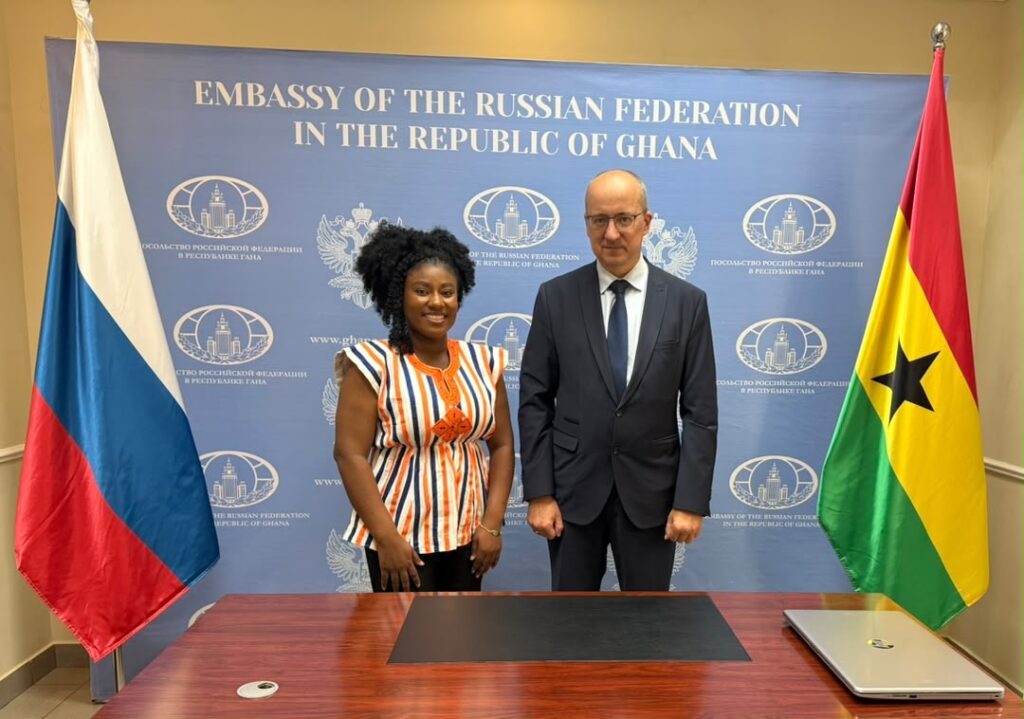
According to him, cultural cooperation is not an optional addition to bilateral relations but the foundation that gives the partnership its strength and endurance.
“Cultural cooperation is not merely a pleasant addition to politics and the economy. It is the very foundation and the ‘living soul’ of our relations, the very thing that makes them truly strong and enduring,” Ambassador Ordash said.
For Ghana, a country with a growing creative economy, a youthful population and an expanding interest in international collaboration, the Ambassador’s comments point to opportunities in areas such as filmmaking, media education, theatre, language studies and creative entrepreneurship.
Education remains one of the strongest historical links between Ghana and Russia. Thousands of Ghanaians studied in the former Soviet Union and Russia, returning home with expertise in fields ranging from science and engineering to medicine and the arts.
Ambassador Ordash described these alumni as a critical connection between the two nations.
“Thousands of Ghanaians who were educated in the Soviet Union and Russia form the very ‘living bridge’ that connects our peoples. Many of them now hold prominent positions in Ghana,” he said.
The Ambassador believes every student exchange, cultural programme and educational opportunity creates individuals who can strengthen the relationship between the two countries.
“We want every Ghanaian student who has visited Russia, or every participant in a cultural exchange, to become a good ambassador, strengthening the friendship between our peoples,” he added.
The renewed focus on cultural diplomacy comes at a time when Ghana’s creative sector is increasingly being recognised as a driver of jobs, investment and international influence.
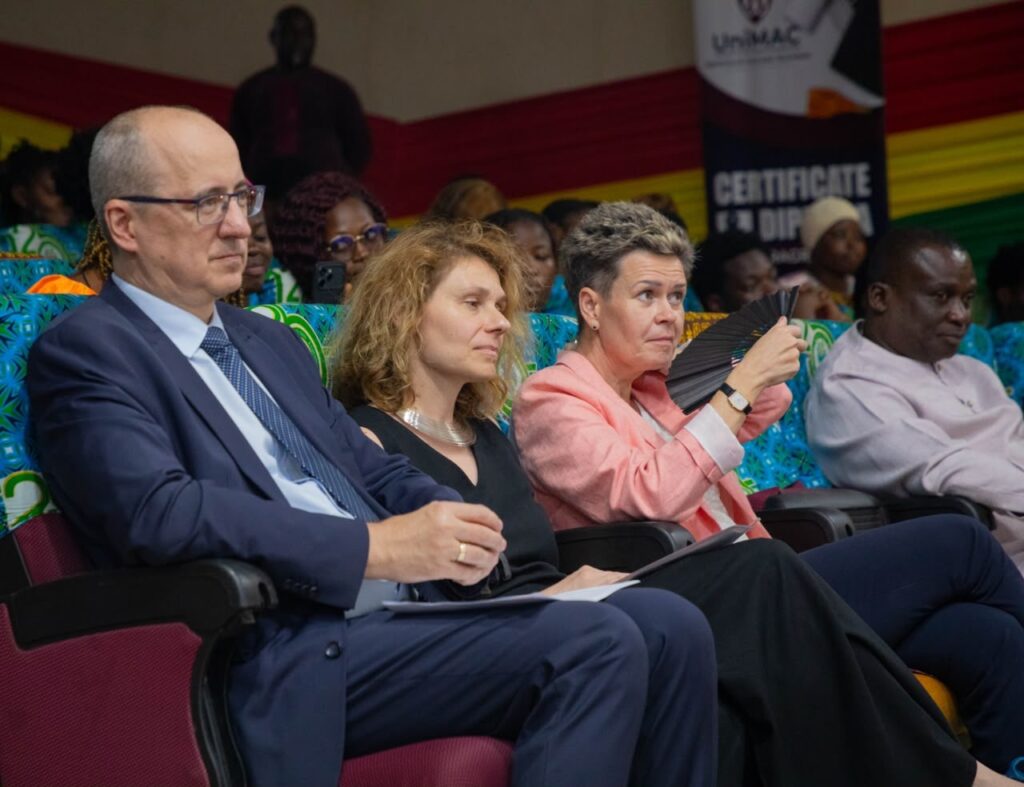
A major symbol of this emerging cooperation was the first Russian Film Festival held in Accra in June 2026 with the support of the University of Media, Arts and Communication (UniMAC).
The festival introduced Ghanaian audiences to Russian cinema, culture and storytelling, with screenings made accessible through English subtitles.
Ambassador Ordash described cinema as far more than entertainment, arguing that films can create understanding between societies that may be geographically distant but share common interests.
“I believe that cinema plays an exceptionally important and multifaceted role in bringing the peoples of Russia and Ghana closer together. It is not merely a form of entertainment, but a powerful tool of cultural diplomacy, capable of building strong bridges between people living on different continents,” he said.
He explained that the Russian Film Festival was organised in response to what he described as growing Ghanaian interest in the Russian language, culture and cinema.
“Films allow viewers to gain an insight into the soul of another nation and to learn more about its history, culture and traditions. They foster friendship and mutual understanding,” Ambassador Ordash said.
The success of the festival, he noted, has encouraged plans for another edition later in 2026, alongside discussions on film masterclasses and deeper collaboration between Russian and Ghanaian filmmakers.
For Ghana’s film industry, which continues to seek stronger international partnerships, such exchanges could provide opportunities for young creatives to acquire new skills, production techniques and global networks.
Ambassador Ordash said discussions were already underway on possible student and academic exchange programmes between UniMAC and Russian universities specialising in media and the creative industries.
“We are discussing opportunities for internships, masterclasses and direct links with leading Russian creative universities, such as the GITIS Theatre Institute. This will help to nurture new generations of Ghanaian filmmakers familiar with Russian traditions,” he said.
He believes exposing young creatives to different cultural environments will help them develop a broader understanding of storytelling and international collaboration.
“A young Russian filmmaker working in Ghana will see the country not through the lens of stereotypes, but through first-hand experience. Similarly, a Ghanaian student in Russia will be able to get to know our country and culture from the inside,” Ambassador Ordash explained.
Beyond culture, the Ambassador outlined a broader vision for Ghana-Russia relations that extends to practical economic cooperation.
He said Russia is interested in supporting long-term investment and joint ventures, including initiatives such as Ghana’s ‘24-hour economy’ programme.
“In the future, we would like to move beyond traditional trade, focusing on long-term investment and joint ventures. In this regard, we are ready to support such ambitious initiatives by the Ghanaian leadership as the ‘24-hour economy’ programme,” he said.
The Ambassador also pointed to the third Russia-Africa Summit, scheduled to take place in Moscow on Tuesday, 28 October and Wednesday, 29 October 2026, as an important platform for strengthening cooperation between Russia and African countries.
“This event will serve as a platform for signing new contracts and defining a strategy for the years ahead,” he said.
Ambassador Ordash said his vision is for a relationship built on practical cooperation, mutual respect and opportunities that benefit ordinary citizens.
“My vision is for relations based on mutual respect, sovereign equality and practical cooperation. We can build a partnership that will bring tangible benefits to ordinary people and open up new horizons for young people,” he said.
As Ghana positions itself as a hub for creativity, innovation and international business in Africa, the evolving relationship with Russia presents opportunities that extend beyond diplomacy into education, filmmaking, entrepreneurship and cultural exchange.
Latest Stories
-
Mahama urges African governments to treat healthcare as an investment, not budget cost
23 minutes -
Bawumia congratulates John Boadu and new NPP executives, pledges support ahead of 2028
24 minutes -
‘No talent should be left out’ – Bawumia pledges inclusive NPP campaign for 2028
30 minutes -
Prof. Mike Oquaye recounts how he blocked Special Prosecutor’s attempt to arrest Bawku Central MP
46 minutes -
Make health sovereignty a priority for Africa – Mahama
57 minutes -
Dorimon Naa, Wa West DCE lead massive clean-up exercise; threaten sanctions against recalcitrant residents
1 hour -
Photos From Adom FM Y2K Jam
1 hour -
Praye Tiatia steals the show at Adom FM Y2K Jam [Watch]
1 hour -
Boakye Agyarko congratulates John Boadu, pledges support for NPP leadership
2 hours -
Antwi HiMight thrills fans with Antwi ne Antwi hits at Adom FM’s Y2K Jam [Video]
2 hours -
Amb. Edward Boateng congratulates Boadu, Kodua on election wins
2 hours -
John Boadu pledges to rebuild NPP from grassroots and restore ‘winning machinery’
2 hours -
Ashaiman Assembly deploys monitoring system to curb dumping in storm drain
3 hours -
John Boadu must rebuild, unite NPP for 2028 – Edward Boateng
3 hours -
Executive intimidation of opposition undermines separation of powers – Prof Oquaye
3 hours