

Audio By Carbonatix
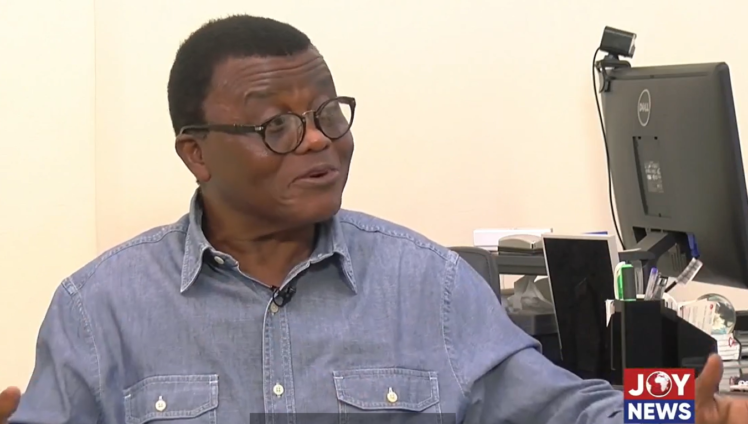
Former United Nations Senior Governance Adviser Prof. Baffour Agyemang-Duah has cautioned that the government's proposed model for selecting Metropolitan, Municipal and District Chief Executives (MMDCEs) could entrench one-party dominance at the local level instead of advancing genuine decentralisation.
Speaking on Joy FM's Middaynews on Tuesday, August , Prof. Agyemang-Duah criticised the proposal, arguing that it gives the central government excessive control over the selection process and undermines the principle of allowing citizens to freely choose their local leaders.
According to him, the proposal departs from the long-standing call for the direct election of MMDCEs and instead introduces a process that is susceptible to partisan influence.
"In the present case, we are told that instead of direct elections where people can stand on their own or as independents, the government rather wants to nominate five people, including two women, then interview them and get three people to contest. The Minister for Local Government will supervise this.
"This creates a one-party system because if the NDC is in power, it is not going to nominate NPP people. And vice versa, if the NPP is in power, it is not going to nominate NDC people," he argued.
"In the end, we are going to have the same issue of one party ruling across the country, and that will not be decentralisation."
He maintained that the objective of decentralisation is to transfer decision-making power from the centre to local communities, enabling residents to determine who governs them without interference from the executive.
According to him, restricting the pool of candidates through a government-led nomination process defeats that objective and weakens local democracy.
Prof. Agyemang-Duah recalled that similar debates emerged during the constitutional review process under the late President John Evans Atta Mills, when proposals for the election of District Chief Executives were modified in the government's White Paper.
He said that instead of implementing the recommendation for direct elections, the government at the time proposed a nomination system that diluted the popular will expressed during public consultations.
Drawing parallels with the current proposals, he argued that Ghana risks repeating the same mistake by maintaining central control over local governance.
"If there is a popular will for direct decentralisation, we should allow people to choose those who lead their cities and districts rather than continue to control every process around the country through the central government," he said.
He stressed that true decentralisation should permit individuals to contest local elections independently or on the ticket of any political party without first being screened by the executive.
Prof. Agyemang-Duah added that while constitutional reforms are necessary, they must reflect the aspirations of citizens rather than reinforce the powers of the central government.
"I do agree with those who are expressing serious reservations about some of the amendments the government is making to the committee's recommendations," he said, urging policymakers to ensure that the final reforms strengthen democratic participation instead of limiting it.
Latest Stories
-
Mahama urges African governments to treat healthcare as an investment, not budget cost
14 minutes -
Bawumia congratulates John Boadu and new NPP executives, pledges support ahead of 2028
16 minutes -
‘No talent should be left out’ – Bawumia pledges inclusive NPP campaign for 2028
22 minutes -
Prof. Mike Oquaye recounts how he blocked Special Prosecutor’s attempt to arrest Bawku Central MP
37 minutes -
Make health sovereignty a priority for Africa – Mahama
49 minutes -
Dorimon Naa, Wa West DCE lead massive clean-up exercise; threaten sanctions against recalcitrant residents
1 hour -
Photos From Adom FM Y2K Jam
1 hour -
Praye Tiatia steals the show at Adom FM Y2K Jam [Watch]
1 hour -
Boakye Agyarko congratulates John Boadu, pledges support for NPP leadership
1 hour -
Antwi HiMight thrills fans with Antwi ne Antwi hits at Adom FM’s Y2K Jam [Video]
2 hours -
Amb. Edward Boateng congratulates Boadu, Kodua on election wins
2 hours -
John Boadu pledges to rebuild NPP from grassroots and restore ‘winning machinery’
2 hours -
Ashaiman Assembly deploys monitoring system to curb dumping in storm drain
2 hours -
John Boadu must rebuild, unite NPP for 2028 – Edward Boateng
2 hours -
Executive intimidation of opposition undermines separation of powers – Prof Oquaye
2 hours