

Audio By Carbonatix
Transparency International Ghana has urged targeted institutional reforms after a Ghana Statistical Service survey showed increased demands for bribes by public officials in 2025.
The organisation said the findings should strengthen preventive measures, sanctions, and integrity systems across public institutions rather than discourage anti-corruption efforts.
In an interview with the Ghana News Agency, Mary Addah, Executive Director of Transparency International Ghana, said the findings were consistent with the organisation’s long-standing concerns about bribery in the delivery of public services.
“The report is not surprising for us at all. It confirms that there are systemic factors that continue to facilitate bribery, and those are what we need to address,” she said.
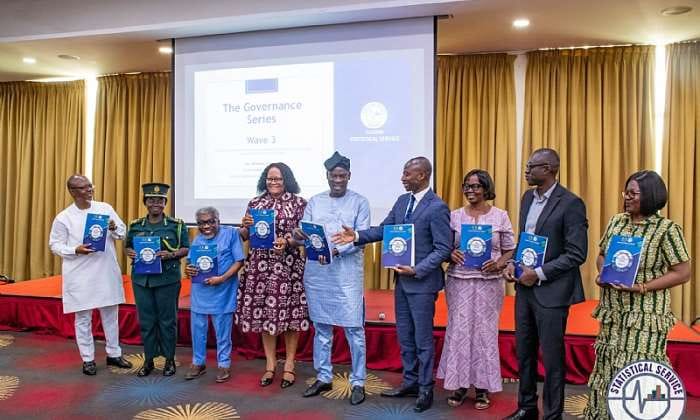
The comments followed the release of the Ghana Statistical Service’s latest Governance Series survey, which found that public officials demanded bribes more frequently in 2025 than in the previous survey period.
The report indicated that about seven in every 10 people who paid bribes said they were directly asked to do so by public officials.
It also showed that although more Ghanaians refused to pay bribes, demands for unofficial payments increased across public institutions.
Mrs Addah said the figures should not be interpreted as evidence that the fight against corruption had failed.
“The important issue is to identify the gaps that promote bribery and implement measures that reduce those risks rather than conclude that nothing is working,” she said.
Mrs Addah urged government institutions, particularly those frequently cited for bribery, to conduct corruption risk and vulnerability assessments and implement measures to address identified weaknesses.
She also called for accelerated digitalisation of public services to reduce direct contact between officials and citizens, saying fewer face-to-face interactions would minimise opportunities for bribery.
Mrs Addah advocated strict enforcement of institutional codes of conduct, stronger integrity and ethics education, and consistent sanctions against officials found engaging in corrupt practices.
The Governance Series survey forms part of Ghana’s monitoring of Sustainable Development Goal Indicator 16.5.1, which measures the proportion of people who had contact with public officials and paid or were asked to pay a bribe during the previous 12 months.
It is expected to be conducted every six months to track trends in bribery and support evidence-based anti-corruption policies.
Latest Stories
-
Education Ministry commends Ghanaian teachers on World Teachers’ Day 2026
3 minutes -
NPP can reconcile with aggrieved members who want to return – Nana Akomea
15 minutes -
Tamale Child Deaths: Vehicle owner arrested as IGP deploys homicide team
30 minutes -
From ShattaFest to MoMo Fest: Entertainment takes centre stage in youth engagement
37 minutes -
Nigerian military aircraft crashes, killing 32
42 minutes -
MTN encourages Ghanaians to use MoMo for saving, investing and financial planning
42 minutes -
Absa Bank Ghana names Stephen Ato Frimpong as Board Chair
50 minutes -
Pickford ‘almost caused crash’ with careless driving
52 minutes -
Author and former politician Jeffrey Archer dies aged 86
1 hour -
No education reform can succeed without teachers – Education Ministry
1 hour -
Gauff condemns racist abuse after China Open win
1 hour -
Medvedev disqualified for hitting spectator with ball
2 hours -
Oliseh scores twice in late comeback win for France
2 hours -
Pentagon stops using Anthropic AI tools after blacklisting company, BBC told
2 hours -
From despair to dance: Family of nurse Salomey Baffoe rejoices after GH¢100k bail granted
2 hours