

Audio By Carbonatix
When the skies open over Accra, fear often follows. It is not simply because of the rain. It is because Ghanaians know what comes next: flooded homes, stranded commuters, destroyed businesses, traffic paralysis, and, in the worst cases, lives lost.
The heartbreaking truth is that many of these tragedies are not natural disasters. They are the result of human choices.
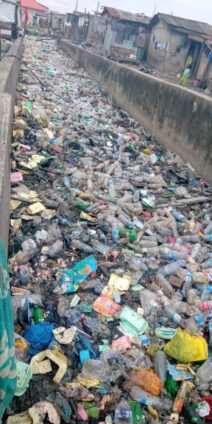
For years, poor sanitation has quietly become one of Ghana’s biggest national emergencies, yet it rarely receives the same sustained attention as elections, politics, or the economy. We speak passionately about development, but can a nation truly call itself developing when its drains have become rubbish bins, its beaches are littered with plastic, and its waterways are treated as dumping grounds?
The problem is no longer about untidy streets. It is about the value we place on human life.
Every plastic bottle thrown from a moving vehicle, every sachet water wrapper dropped on the roadside, and every heap of refuse dumped into a gutter contributes to a chain of events that can end in flooded communities, disease outbreaks, destroyed livelihoods, and preventable deaths. We often blame the rain, but rain only exposes what negligence has hidden.
Ironically, many of the same people who dump waste indiscriminately are the first to complain when floodwaters enter their homes. We condemn poor sanitation, yet some of us continue to contribute to it every day. This contradiction should trouble us all.
The cost of Ghana’s sanitation crisis extends far beyond dirty streets. Hospitals become overwhelmed with patients suffering from cholera, typhoid, diarrhoea, and malaria. Businesses lose customers because flooded roads become inaccessible. Schoolchildren miss classes. Families spend money treating illnesses that could have been prevented simply by living in cleaner environments. Government spends millions responding to disasters instead of investing those resources in education, healthcare, job creation, or innovation.
Perhaps the most dangerous consequence is that we have become comfortable with conditions that should outrage us.
We have normalised overflowing gutters.
We have normalised mountains of refuse.
We have normalised flooding every rainy season.
We have normalised avoidable deaths.
When society begins to accept abnormal conditions as normal, meaningful change becomes increasingly difficult.
Government certainly has a responsibility. Local authorities must improve waste collection, expand recycling programmes, enforce sanitation by-laws without fear or favour, and invest in modern waste management systems. Laws that exist only on paper cannot transform a nation.
But government cannot sweep every street, clean every gutter, or monitor every neighbourhood every hour of the day. Citizens must also accept responsibility. National development begins with personal discipline. Keeping our surroundings clean is not an act of charity; it is a civic obligation.
The private sector also cannot remain on the sidelines. Manufacturers should reduce unnecessary plastic packaging, invest in sustainable alternatives, and take greater responsibility for the waste generated by their products.
Environmental sustainability should become part of corporate responsibility rather than merely a public relations slogan.
The media must equally challenge itself. Instead of reporting sanitation disasters only after lives have been lost, news organisations should sustain investigations into waste management, expose institutional failures, track promises made by authorities, and highlight communities that are finding practical solutions. Journalism should not only inform, but it should also hold power accountable and inspire change.
The education system also has a role.
Environmental responsibility should not be taught only during occasional campaigns. It should become a lifelong value instilled from childhood. A generation that grows up respecting the environment is more likely to protect it.
Ultimately, Ghana’s sanitation crisis is not just an environmental issue. It is a governance issue, a public health issue, an economic issue, and above all, a moral issue. It forces us to ask difficult questions.
Why do we proudly clean our homes but neglect the streets outside our gates?
Why do we demand accountability from leaders while refusing to hold ourselves accountable for our own actions?
Why do we mourn lives lost to floods each year, only to repeat the same behaviours that contribute to the next tragedy?
The answers may be uncomfortable, but they are necessary.
A clean Ghana will not be built through slogans, annual clean-up exercises, or speeches delivered on World Environment Day. It will be built when every citizen understands that throwing a single piece of rubbish into a drain is not a small act , it is a contribution to a much bigger national problem.
History will not judge us by how many sanitation campaigns we launched. It will judge us by whether we dared to change our attitudes, enforce our laws, and protect the lives of future generations.
The next time the rains come, the question should not be, “Why is Accra flooded again?” The real question should be, “What did each of us do to prevent it?”
Because until we stop treating sanitation as someone else's responsibility, Ghana will continue to pay the price in money, in health, and tragically, in human lives.
Latest Stories
-
Lekzy DeComic to feature four generations of comedians on upcoming show
4 hours -
Nigeria wins arbitration as Sunrise’s $400 million hydropower claim dismissed
4 hours -
Xhaka under investigation over Covid-19 certificate
4 hours -
FAW chief questions Infantino’s Fifa reform claims
4 hours -
La Liga chief dismisses Real’s ref conspiracy claims
4 hours -
GMA rejects claims its vessel monitoring system is ineffective
4 hours -
I was close to joining Liverpool in 2016 – Mbappe
4 hours -
Ministry of Sports and Recreation holds national validation workshop on National Sports Policy Draft
5 hours -
‘Do you want me to be happy with this poor performance?’ – Bono East Minister fumes over Kintampo market project with less than 1% work done
5 hours -
London screening honours Nkrumah and 103 years of Ghana cinema
5 hours -
Founder’s Day: Is Nkrumah’s glory fading? – Nkrumah’s iconic fountain at Circle runs dry
5 hours -
GHS calls for stronger systems to ensure safe care for NCD patients
5 hours -
Kufuor calls for Africa’s resources and youthful population to be transformed into opportunities
5 hours -
Mahama administration not clamping down on free speech – Shamima Muslim
5 hours -
Ghana TVET Service, UNESCO, KPMG, Microsoft to train 100,000 facilitators in AI
5 hours