

Audio By Carbonatix
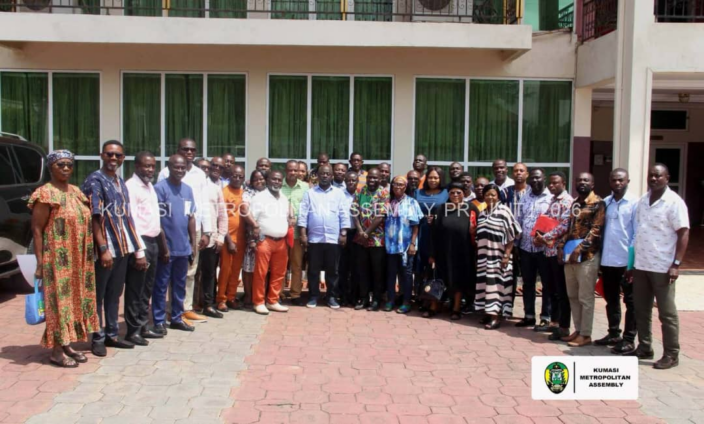
Members of the Kumasi Metropolitan Assembly (KMA) have undergone a two-day “Next Generation Leadership Training” aimed at strengthening accountable, responsive and effective local governance.
The programme brought together elected and appointed assembly members for training in legislation, oversight, financial management and community service delivery as Ghana deepens its decentralisation process.
It was organised by the Ministry of Local Government, Chieftaincy and Religious Affairs, the National Association of Local Authorities of Ghana (NALAG) and the Institute of Local Government Studies (ILGS).
Participants were taken through modules on the drafting and enforcement of by-laws, leadership and ethics, decentralisation laws, corporate governance, financial management and stakeholder engagement.
The training also covered the role of assembly members in monitoring government projects, improving revenue mobilisation and working effectively with traditional authorities and other local stakeholders.
Officials said the programme was designed to bridge knowledge gaps and align the work of assembly members with national policy objectives and local development priorities.
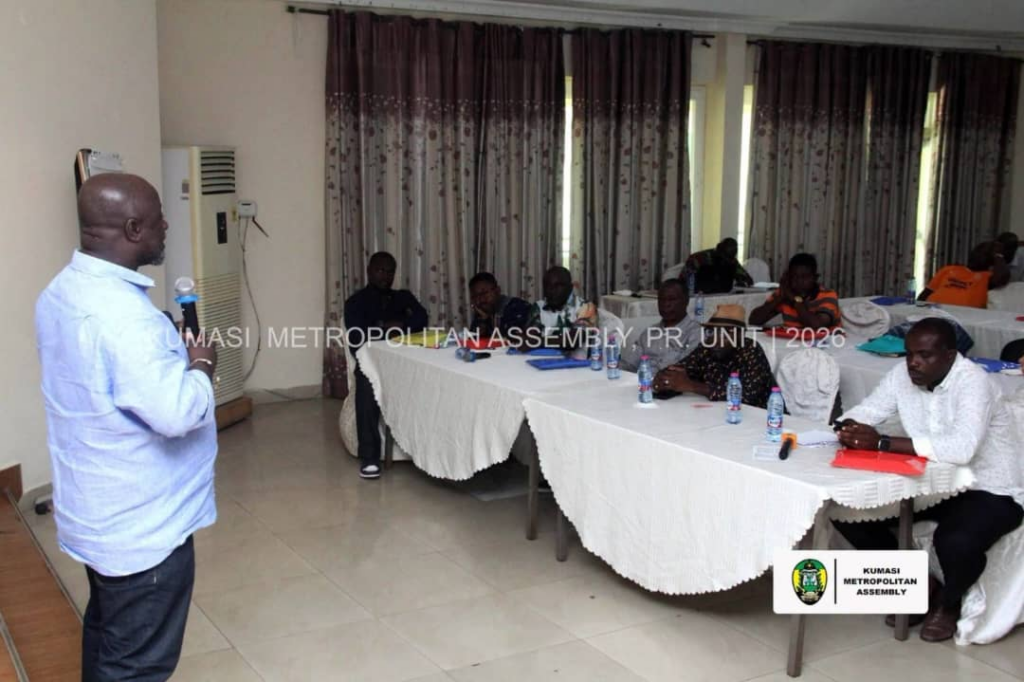
Speaking at the opening ceremony, NALAG President Alfred Asiedu Adjei urged participants to translate the knowledge acquired into practical improvements in their electoral areas.
“Leadership is about service. The people who voted for you expect to see results in sanitation, roads, health, and education. This training is to sharpen you so you can deliver,” he said.
Mr Adjei also encouraged assembly members to uphold integrity, engage their constituents regularly and rely on data in making decisions.
He further urged them to closely monitor public funds allocated to Metropolitan, Municipal and District Assemblies (MMDAs) to ensure the resources result in tangible development.
“Funds must follow functions, and that must go hand in hand with accountability. Where funds go, accountability must follow,” he said.
According to him, assembly members must understand their assemblies’ budgets, annual action plans, allocations, releases and projects, and monitor implementation to ensure value for money.
“Have the eagle eye,” Mr Adjei told participants, urging them to scrutinise financial documents, understand project allocations and demand explanations where spending or projects appear not to be delivering the intended results.
He cited figures presented at the workshop indicating that direct allocations to MMDAs in 2026 stood at approximately GH¢7.934 billion, representing about 90.47% of the total fund.
Mr Adjei said the key issue was not only the size of allocations, but the impact of the resources on communities.
He reminded participants that public funds belonged to the people and were entrusted to public officials solely for service delivery and development.
He stressed that the resources did not belong to MMDCEs, assembly members, coordinating directors, finance officers or political parties, and that every cedi must be accounted for.
Mr Adjei also urged assembly members not to allow political affiliation, personal relationships or fear to prevent them from raising legitimate concerns affecting their constituents.
The Mayor of Kumasi, Richard Kwasi Ofori Boadi Agyemang, expressed appreciation to the Ministry, NALAG, ILGS and other partners for supporting the training.
He said the programme was timely as KMA rolls out key projects under the government’s 24-hour economy policy and other urban development initiatives.
“Our mandate is to make Kumasi clean, safe, and prosperous. You are the link between the Assembly and the people. Use this knowledge to legislate well, supervise projects, and mobilise your communities,” he said.
Presiding Member of KMA Patrick Kwame Frimpong also urged members to apply the lessons from the programme in their work.
He said the Assembly would monitor performance in areas including attendance at sub-committee meetings, participation in town hall engagements and follow-up on projects in communities.
“This is not training for certificates. It is training for results. Kumasi deserves assembly members who are informed, proactive, and accountable,” he said.
Officials from the Ministry and ILGS said the Kumasi programme forms part of a nationwide effort to retool local government actors ahead of further decentralisation reforms and district-level elections.
Similar sessions are expected to be rolled out in other metropolitan and municipal assemblies to promote consistency in local governance standards.
Participants welcomed the initiative and called for regular refresher training to keep them abreast of new laws and policies affecting local governance.
Latest Stories
-
The illusion of a good deal: Why some everyday money-saving habits may be costing you more
11 minutes -
Family seeks autopsy, police investigation into death of student 12 days after Abomosu SHS enrolment
19 minutes -
Trade Minister urges employers to leverage industrial opportunities to create jobs
26 minutes -
Asantehene plants trees to commence Jimi Watercourse Rehabilitation destroyed by galamsey
51 minutes -
15 arrested, 6 trucks impounded over sandwinning activities on Kumasi-Accra Expressway
51 minutes -
OFFICIAL: Vinicius will miss El Clásico, suspended four games
54 minutes -
Prayer vigil held after four arson attack murders
1 hour -
GRA fully recovers $154k legacy debt owed by foreign entities between 2022 and 2024
1 hour -
Kwesi Pratt Jr warns bus preachers are adding to passengers’ stress with accident prophecies
1 hour -
MTN Ghana to spend $1.1bn in 3 years, build 500 new sites as MoMo hits 44% Growth
1 hour -
I have no regrets joining Assemblies of God – Mahama
1 hour -
Starlink restrictions in Ukraine war linked to political situation, Zelensky aide says
1 hour -
Furniture boost for Techiman North schools as MP donates to 20 institutions
1 hour -
Assemblies of God to loan 10,000-seater dome for Ghana@70 celebrations
1 hour -
Government to audit 2,016 community network sites – Communications Minister
1 hour