

Audio By Carbonatix
The National Road Safety Authority (NRSA) is to deploy Traffictech, a technology-based system to monitor motorists and apprehend those who violate traffic regulations.
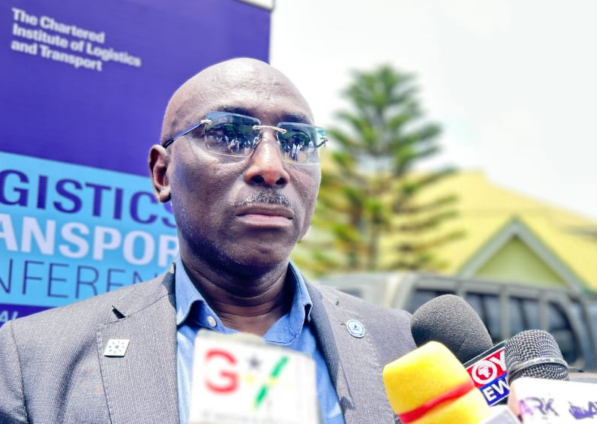
Mr Abraham Amaliba, Director-General of the NRSA, said the system would use cameras and other monitoring devices installed at strategic locations to identify traffic offenders.
He said unlike the traditional approach where police officers stood at vantage points to identify and arrest offenders manually, Traffictech would use technology to improve enforcement.
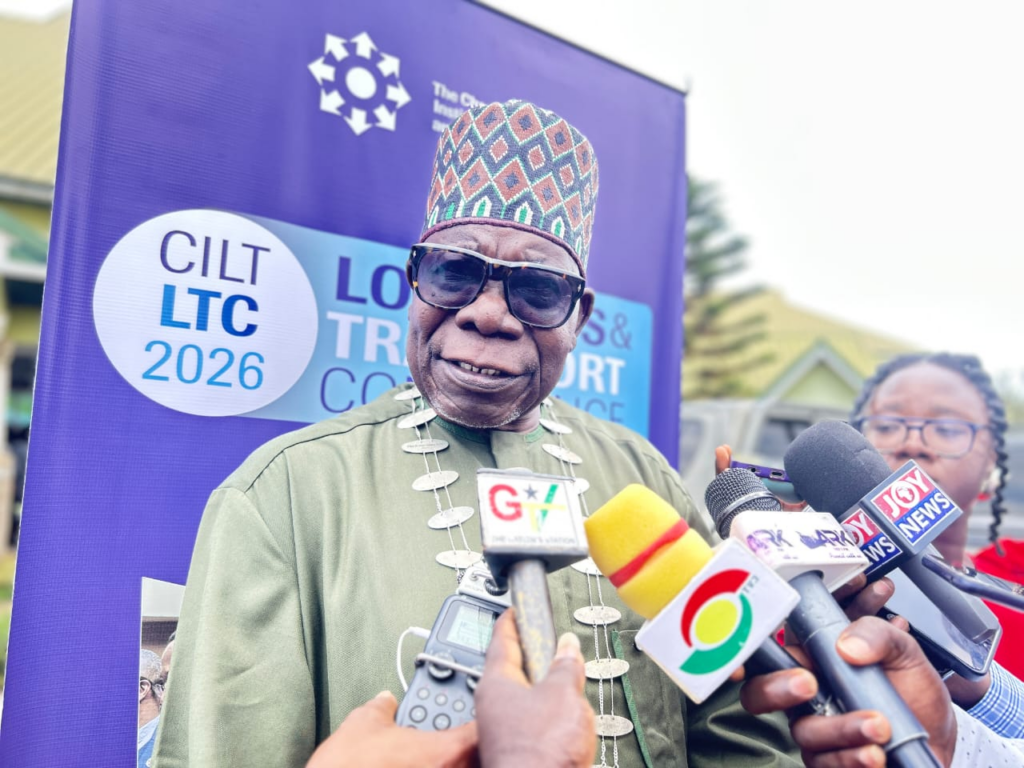
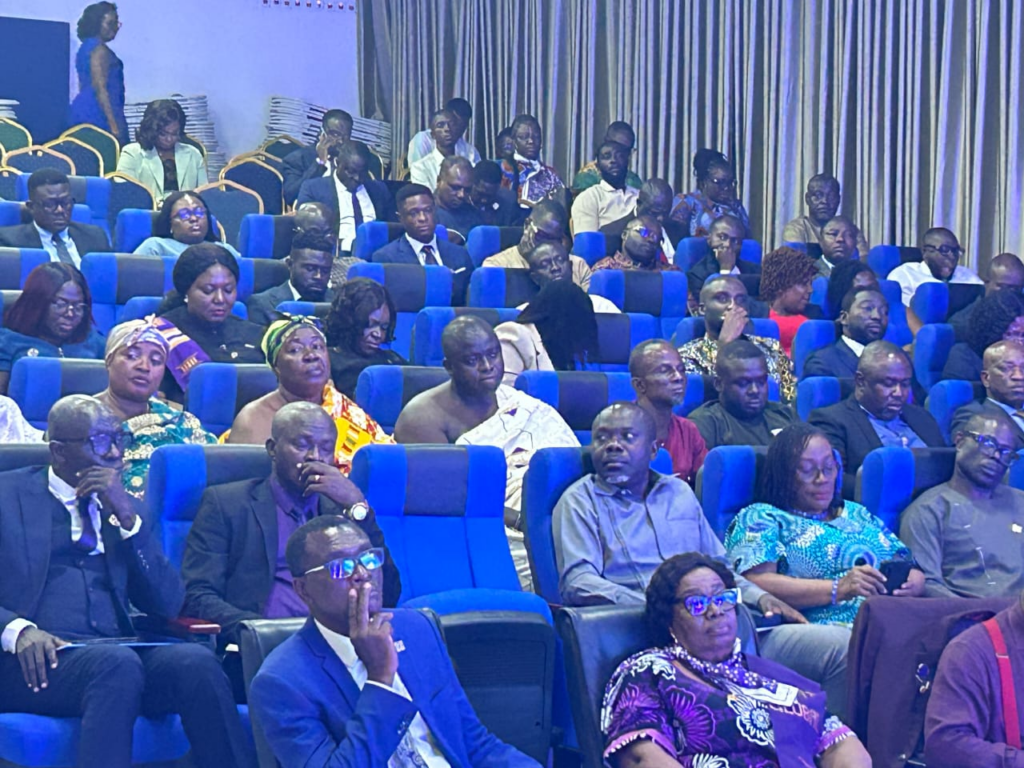
Mr Amaliba was speaking on behalf of Mr Joseph Bukari Nikpe, Minister of Transport, at the Ghana Logistics and Transport of the Chartered Institute of Logistics and Transport (CILT) Conference and Annual General Meeting in Fiapre, near Sunyani in the Bono Region.
He said cameras would be mounted on poles, while others would be placed on tripods and vehicles.
“Traffictech is about using technology to apprehend persons who don’t obey traffic rules,” he said.
He said about 16 traffic offences would be captured under the system.
Mandatory towing system
Mr Amaliba also announced plans to introduce a mandatory towing system to reduce crashes caused by broken-down vehicles.

He said the Ministry had identified broken-down vehicles as a leading cause of road crashes, particularly when they remained stationary on the road.
Under the new law, expected to be rolled out next year (2027), every vehicle owner would be required to register or subscribe to a towing company or an insurance company.
“When your car breaks down, all you need to do is call your subscriber, and they will come and remove it,” he said.
Mr Amaliba said a dedicated towing platform, similar to a ride-hailing platform, would connect motorists to the nearest registered towing company.
He said all towing companies would be required to register with the NRSA before they could operate under the new system.
He said the Authority would undertake a nationwide public education campaign to create awareness about the new law.
Call for inclusive transport
Alhaji Saaka Dumba, President of CILT Ghana, called for a transport system that took into account the needs of persons with disabilities and other vulnerable groups.
He said although Ghana had signed international treaties and enacted laws on the rights of persons with disabilities, implementation remained a challenge.
“Look at our vehicles, the trotros, and even supposed government vehicles. They are high-entrance buses. They don’t have low-floor buses where somebody can put a wheelchair and just go inside,” he said.
Alhaji Dumba said public transport operators should provide vehicles with ramps, low floors and other features that would allow persons with disabilities to board and travel with ease.
He called for deliberate planning to ensure that persons with disabilities were considered when vehicles were purchased, and transport infrastructure was developed.
“We think that transport should be integrated,” he said.
According to the 2024 Ghana Statistical Service report cited at the conference, public transport options such as shared minibuses lacked wheelchair ramps, designated seating and other facilities for persons with disabilities.
It also identified high-floor vehicles, poorly maintained sidewalks and the absence of traffic signals with audio prompts as challenges affecting the movement of persons with disabilities.
Gender inclusion
Mrs Doreen Owusu-Fianko, Global Chairperson of Women in Logistics and Transport (WiLAT), commended institutions working to promote gender inclusion in the logistics and transport sector.
She urged other institutions to adopt measures that would give women greater opportunities to participate and advance in the industry.
The three-day CILT Ghana Logistics and Transport Conference and Annual General Meeting was held from August 25 to 27, 2026, under the theme: “Transforming Ghana’s Transport Infrastructure for Inclusive and Sustainable Growth.”
The conference is discussing urban transportation and traffic congestion management, public-private partnerships in road transport development, and inclusive transport systems for persons with disabilities and vulnerable groups.
CILT Ghana was established and registered in 1965 as a professional body with branches in Accra, Tema, Kumasi, Takoradi and Sunyani.
Latest Stories
-
Ghana to build its biggest power plant since independence – Ato Forson
7 minutes -
APL demands forensic probe into GoldBod following $1.7billion gold-trading losses
18 minutes -
Government workers without valid NIA details risk salary suspension from September 15
24 minutes -
OSP must investigate everyone in AKSA deal’s value chain – Mary Addah
30 minutes -
Tribute to the late Kwabena Kesse (Stephen Boateng) from the May 9 Foundation and its president, Mr. Herbert Mensah
34 minutes -
Naming persons of interest in AKSA case is a step towards accountability – Mary Addah
43 minutes -
Recycle Up! Ghana calls for more government support to expand green entrepreneurship
49 minutes -
Police arrest two suspects over alleged lynching at Daboya
57 minutes -
Mustapha Abdul-Hamid promises ideological revival as he files for NPP Vice Chairmanship
1 hour -
Rosemary Selasi Dogbe-Asante
1 hour -
Contractor working on Adenta-Dodowa road incorporates pavement blocks at 17 major intersections
1 hour -
Ghana sees MTN’s GH¢20m donation as South Africa’s ‘back-channel diplomacy’ – International relations expert
1 hour -
Future of Energy Conference: Africa must power production, not just consumption – Policy leaders
1 hour -
Tarkwa residents petition government to renew Gold Fields mining leases
1 hour -
Bagre Dam spillage likely to begin Friday, August 28
1 hour