

Audio By Carbonatix
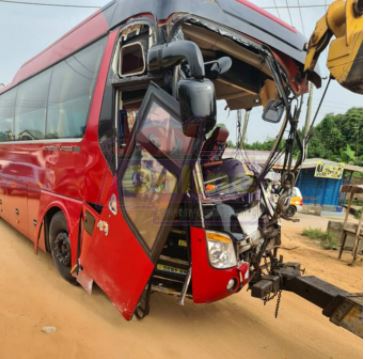
A member of the Public Accountability Committee of the Ghana Institute of Engineers (GhIE), Ing. Dr Charles Kwarteng Asafo-Adjei, has disclosed that road crashes claim an average of eight lives in Ghana every day.
He said the figure had increased from an estimated daily average of six deaths recorded between 2001 and 2003, indicating a worsening road safety crisis.
Speaking on Joy FM’s Super Morning Show on Thursday, August 27, Dr Asafo-Adjei warned that the growing demand for road transport, deteriorating infrastructure and inadequate maintenance were contributing to the rising number of fatalities.
He was speaking on Ghana's Roads and Public Safety, following the GhIE's latest infrastructure scorecard, which rated Ghana's road safety E2, placing the country close to the lowest performance category.
“In the past, between 2001 and 2003, an average of about six people died each day. Currently, I think it is around eight, and with the high demand for transport, it is getting worse,” he said.
He noted that eight deaths per day translated into between 2,000 and 3,000 lives lost annually, excluding people who sustained injuries or permanent disabilities in road crashes.
“Every day, about eight people are dying. If you multiply that by the number of days in a year, we are already talking about 2,000 to 3,000 people dying annually,” he stated.
Dr Asafo-Adjei said the consequences extended beyond the fatalities, as hospitals were increasingly burdened by the number of road crash victims requiring emergency treatment and long-term care.
“The hospitals are under pressure. If you go to any of the wards and really want to understand, the evidence is in the hospitals,” he said.
He added that hospital data could help the authorities determine where crashes frequently occurred, identify dangerous sections of roads and develop targeted measures to address them.
Dr Asafo-Adjei called for improved road maintenance, stronger enforcement of traffic regulations and sustained public education to curb the loss of lives.
He also urged the authorities to regulate the movement of motorcycles and vehicles within high-risk corridors, stressing that Ghana’s road safety crisis required urgent and coordinated intervention.
Latest Stories
-
Ghana must move beyond spectator role in climate initiatives – Zanetor
4 minutes -
Adamu, Kipruto unopposed for top PANASA positions
11 minutes -
OSP secures approval to serve Ofori-Atta, Akore with SML case summons in US
14 minutes -
Ghana must leverage AfCFTA to unlock climate finance, green technology – Zanetor
14 minutes -
Surprise at vetting as Mahama Ayariga reveals Sunyani West MP is his wife
20 minutes -
Ministers have no business meddling in chieftaincy disputes – Ayariga
20 minutes -
Bawku peace talks showing encouraging signs – National Peace Council
29 minutes -
Anger in Cameroon over femicide after eight women killed in a week
29 minutes -
‘If you started running, they shot you’ – inside Nigeria’s growing kidnapping crisis
30 minutes -
Fire destroys about 300 wooden structures at Asawase
30 minutes -
NRSA calls for urgent action on road infrastructure deficiencies
44 minutes -
Accra International Airport project funded without direct government financing – Mahama
45 minutes -
NDC promised 24-hour economy but cannot deliver 1-hour economy — John Boadu
56 minutes -
‘I can’t take any game for granted’ – Gideon Mensah says ahead of Bundesliga debut
57 minutes -
A look at the ‘Okada’ architecture under the new road traffic regulations, 2026 (L.I. 2519)
1 hour