

Audio By Carbonatix
The Country Representative and Safeguarding Lead at Chance for Childhood, Richard Opoku, has called on the government to increase funding for the implementation of Ghana’s Inclusive Education Policy to ensure that children with disabilities and special educational needs can fully participate in mainstream education.
According to him, inadequate funding remains one of the major obstacles to the effective implementation of the policy, despite its introduction by the government in 2015 as a framework for promoting inclusive education in the country.
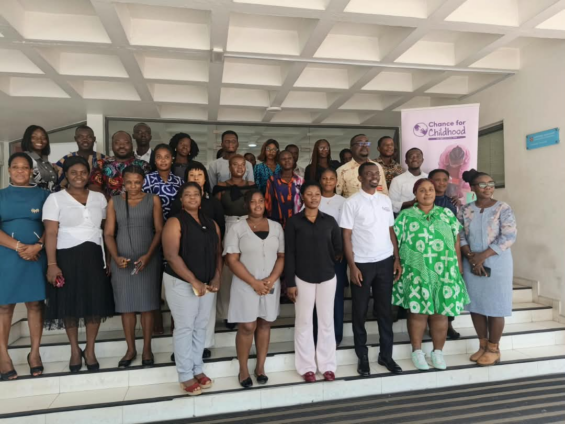
Mr Opoku made the call when he spoke to journalists on the sidelines of a Media Workshop on Disability and Inclusive Education held at the British Council on Tuesday, September 8.
He said Chance for Childhood, a disability inclusion organisation, was committed to ensuring that every child, regardless of their abilities or educational needs, had the opportunity to learn, participate and achieve.
“Chance for Childhood, as a disability inclusion organisation, recognises that every child is different and every child learns differently,” he said.
He explained that the organisation's work was centred on creating an educational environment in which children, particularly those with special educational needs and disabilities, could access learning opportunities and participate meaningfully in school and society.
Mr Opoku said although Ghana had taken an important step by introducing the Inclusive Education Policy in 2015 through the Ministry of Education and the Ghana Education Service (GES), the success of the policy depended largely on adequate resources for its implementation.
“The main challenge is with the implementation of the policy because of largely inadequate funding,” he said.
He therefore appealed to the government to review upwards the allocation for inclusive education in the national education budget.
According to him, the funding allocated to inclusive education has consistently remained below one per cent of the overall education budget, a situation he believes limits the ability of relevant institutions to provide the necessary support for children with disabilities.
“We will want to make a special appeal to the government that it should consider the budget allocation for the implementation of inclusive education,” Mr Opoku said.
He proposed that the allocation should be increased to at least two per cent to support critical interventions, particularly teacher training and the provision of appropriate teaching and learning materials.
He said adequate investment would help create conditions in which children with different forms of disabilities and special educational needs could learn alongside their peers in mainstream schools.
“This will ensure that all children, regardless of their disabilities and special educational needs, are able to participate and learn in the mainstream schools,” he added.
Mr Opoku also stressed the need for greater support for teachers who work with children with disabilities and other learners requiring special educational assistance.
He said continuous capacity building was essential because teachers needed to regularly update their knowledge and skills to respond effectively to the diverse needs of learners.
“For teachers who are teaching children with disabilities and others who are making provision for those special educational needs, the main support that they will need is continuous capacity building so that they will be equipped all the time to provide the needed support,” he said.
Beyond professional training, he said teachers also needed to be adequately motivated and recognised for the work they were doing.
He noted that motivation should not necessarily be limited to financial incentives, although additional funding and financial support would be welcome.
According to him, institutions and organisations could explore other ways of recognising and encouraging teachers who had dedicated their careers to supporting children with disabilities.
“But again, they also require motivation,” he said.
“When you talk about motivation, not necessarily in terms of funding — although funding would be great — there are other ways that we can motivate teachers who have devoted their time to teaching children who have disabilities.”
A major focus of the media workshop was the role of journalists and media organisations in shaping public understanding of disability and inclusive education.
Mr Opoku said the media had significant influence over how persons with disabilities were perceived, adding that the manner in which disability-related issues were reported could either reinforce negative stereotypes or contribute to a more inclusive society.
He said the images used in news reports, the language employed by journalists and the voices given prominence in stories could have lasting effects on public attitudes towards disability.
“We know that the media tell stories about disabilities and inclusive education. The images that they share on disabilities and the voices that they choose to amplify can either strengthen the stigma and discrimination against disabilities, or they can help to build an inclusive society that respects the rights, dignity and potential of children and persons with disabilities,” he said.
He urged journalists to approach disability-related reporting with greater sensitivity and a stronger understanding of the issues affecting persons with disabilities.
According to him, responsible reporting could help challenge misconceptions, reduce stigma and ensure that the concerns and experiences of persons with disabilities received appropriate attention in national discourse.
Mr Opoku further emphasised that achieving inclusive education could not be left to schools or government institutions alone.
He said government, schools, civil society organisations, non-governmental organisations, corporate institutions, the media and the wider public all had important roles to play.
“When you talk about inclusive education, we also acknowledge that it is the responsibility of everyone, including schools, government and the media,” he said.
He explained that the media engagement was organised specifically to strengthen journalists' understanding of disability and inclusive education and equip them to use their respective platforms to promote inclusion.
“The main reason why we organised this event is to ensure that, collectively, we strengthen our understanding about disability and inclusive education, so that we can use our various media platforms to ensure that we build a more inclusive Ghana,” he said.
He also called for broader recognition and support for teachers who were making deliberate efforts to ensure that children with disabilities were not excluded from the education system.
“All of us — I mean the government, NGOs, civil society, corporate bodies, the media and everyone — have a role to play in making sure that teachers who are making efforts to promote the learning of children with disabilities are motivated to continue the work that they do,” he added.
Latest Stories
-
Mahama raises concern over refereeing as Medeama, Nations FC receive support
3 minutes -
TUC clarifies threat of ‘legal action’ over ECG privatisation
18 minutes -
IES urges transparency in proposed ECG private participation
25 minutes -
Five Association International School students commission borehole for Tamanja in Oti Region
25 minutes -
Mahama inaugurates Independent Fiscal Council
29 minutes -
We need more consultation before deciding on ECG private participation – Adomako-Mensah
46 minutes -
Tariff increments may not necessarily address operational efficiencies – Analyst
49 minutes -
GES establishes help desk to address salary arrears concerns of 2024-recruited teachers
51 minutes -
Chance for Childhood, GJA call for increased funding to strengthen inclusive education
1 hour -
TUC’s resistance to ECG privatisation reflects lessons from past – NPP MP
1 hour -
Dorothy’s Hope Foundation to host women’s health forum, gala in New York
1 hour -
Mahama appoints Dr Aziz-Bamba as Acting Director-General of Value for Money Office
1 hour -
State closes case against Kwabena Adu-Boahene and two others
2 hours -
Afrodancehall prodigy TMBwoy debuts new album “Chapter one”
2 hours -
Chance for Childhood calls for increased funding for inclusive education in Ghana
2 hours