

Audio By Carbonatix
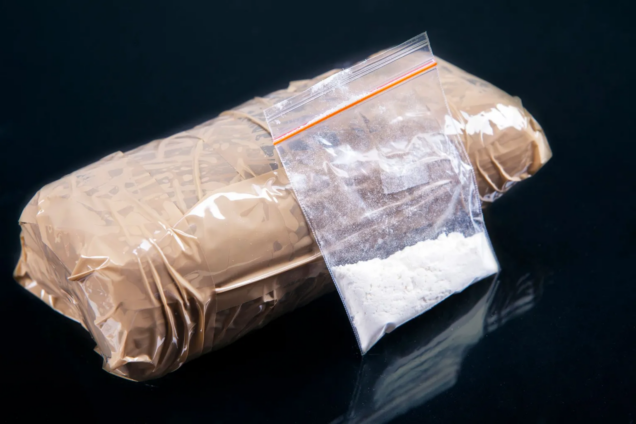
Narcotic drugs such as cocaine are dangerous for a developing country like Ghana to be grappling with. However, Ghana is facing a growing narcotics trafficking challenge that requires the attention of every citizen, our security institutions and, most importantly, the political leadership of the country.
Drug trafficking is not an ordinary criminal activity. It is often as we know, carried out through sophisticated networks involving individuals, businesses and, in some cases, people who may have access to influential positions or institutions. When such networks succeed, the consequences go far beyond the drugs themselves. They can affect national security, the economy, Ghana's international reputation and the future of our young people.
It is important to note that, over the past two years, Ghana has witnessed a number of significant narcotics seizures and trafficking-related incidents involving our roads, ports and international gateway.
One of the most significant cases occurred on 4 March 2025, when the National Intelligence Bureau intercepted a tipper truck at Pedu Junction in Cape Coast carrying approximately 3.3 tonnes of cocaine concealed beneath sand. The consignment, according to reports, was valued at more than US$350 million.
There have also been questions surrounding other incidents connected to Ghana's maritime and aviation environment. These matters have generated public debate and deserve proper investigation so that the facts can be established and the public properly informed.
In January 2026, the Tema Regional Police Command intercepted 1,613 parcels of substances suspected to be narcotic drugs along the Akosombo–Tema Road. Police said the consignment was being transported from the Volta Region towards Tema and arrested two suspects. The substances were subsequently investigated further.
Then, on 5 August 2026, the Tema Regional Police intercepted 866 parcels of a substance suspected to be cocaine, concealed in sacks of gari at a warehouse within the Tema Harbour area. Police estimated the street value at approximately US$6.928 million and arrested three suspects in connection with the operation.
As if, these were not enough. We have, however, witnessed the worst, most damning and mind-blowing trafficking very recently. Where the traffickers passed through our borders safely, only to be arrested by the French authorities on the 17th September, 2026.
These incidents raise very serious questions, especially when a suspected trafficker is deemed to be part of the president’s security, as the said individual is found in circulated pictures, standing very close to the president.
A situation like this, where a suspected trafficker is believed to be close to authority, may suggest official complicity. Perhaps, explains why easy passages for these narcotic drugs in Ghana nowadays.
The nagging issues are: how are such large consignments able to move through our territory without effective systems for detecting narcotics at our ports, airports and borders? And is it the case that there are weaknesses in our institutions that organised criminal networks are exploiting? And again,how much narcotics may have passed through Ghana without being detected?
In raising these pertinent issues for discussion and scrutiny, we should, however, be careful not to conclude that every undetected consignment constitutes corruption or official complicity. Such conclusions must be established through credible investigations and evidence. But we cannot also ignore the possibility that weaknesses within systems, poor coordination or individual misconduct may be exploited by trafficking networks.
Indeed, Ghana's own narcotics authorities have acknowledged operational challenges. In 2025, NACOC officials identified malfunctioning airport body scanners, overcrowded detention facilities and deteriorating vehicles among the challenges affecting the Commission's operations. In 2026, NACOC announced that new detection scanners were being deployed and that the replacement of body and baggage scanners at Kotoka International Airport was underway.
The situation therefore demands coordinated institutional strengthening, accountability and sustained national action.
Giving the fact that the situation was getting out of hand, President John Dramani Mahama had to chair a meeting with the country's security chiefs following investigations into recent drug-trafficking cases involving Ghana's port on 17 September 2026, where the Presidency said10 individuals, including four officers of the Customs Division of the Ghana Revenue Authority, were being held while investigations continued. The President subsequently directed the formation of an interagency task force to develop a roadmap to prevent narcotics trafficking across Ghana's borders.
This is an important step, but the Ghanaian people will ultimately judge the process by its results.
The investigations must be allowed to establish the facts without fear or favour. Anyone found to have participated in narcotics trafficking, facilitated it, abused public office, or compromised national security must face the appropriate consequences under the law.
At the same time, we must resist the temptation to turn every allegation into a political conclusion before the evidence is established. In fact, the issue before us is bigger than any one political party, government, or security institution.
If Ghana successfully becomes a preferred transit point for international narcotics networks, the consequences could be serious because a country increasingly associated with narcotics trafficking risks:
- Damage to its international reputation;
- Increased pressure on its economy and legitimate businesses;
- Greater threats to national and border security;
- Increased exposure of young people to drug abuse and organised crime; and
- The weakening of public confidence in state institutions.
In fact, what the President has started with the state security agencies must warrant a coordinated national response, for effective screening systems at our ports and airports with functioning detection equipment. Our land and maritime borders must also receive adequate surveillance with effective inter-agency information sharing.
The fight against narcotics trafficking cannot be left to NACOC or the Police Service alone. Customs, the Ghana Revenue Authority, the Ghana Navy, the Ghana Maritime Authority, the intelligence agencies, the Immigration Service, the judiciary and other relevant institutions must work together.
Civil society and the media also have a role to play by demanding transparency while ensuring that allegations are reported responsibly.
Fellow citizens, Ghana cannot afford to become a convenient operating environment for international drug-trafficking networks. We must confront this problem before it becomes even more deeply rooted.
The current investigations must therefore be transparent, professional and evidence-based. They must establish what happened, identify those responsible where wrongdoing is proven, expose the weaknesses in our systems and recommend concrete reforms to prevent a recurrence.
The objective should not simply be to make arrests after drugs have entered or passed through the system.
The objective must be to build a system that makes Ghana increasingly difficult for narcotics traffickers to exploit, since the narcotic trade has implications for our national security, economy, public health and social issues, and above all, it is an issue about the future of Ghana.
May God continue to bless Ghana and her people.
Thank you.
REV. DK ODEI-APPIAH
EXECUTIVE DIRECTOR
SMART GENERATION GOVERNANCE HUB (SMARTGENZ)
0277569955
Latest Stories
-
LA 2028: Black Queens to face Mauritius in Round Two of African qualifiers
8 minutes -
Three dead, including child, in Channel crossing attempt
12 minutes -
Woman charged with stealing from patients and staff at hospitals across Ontario
12 minutes -
Foreign tourists stay longer as domestic guests dominate Ghana’s accommodation market – GSS
13 minutes -
Ghana’s tourism accommodation market shows sharp regional disparities – GSS
18 minutes -
Ayalolo BRT to get contra-flow lanes on three major Accra corridors
22 minutes -
GH¢111bn DDEP maturity wall in 2027/2028 – Insights from Charles Adu Boahen
24 minutes -
Danlad Ibrahim on crutches after suffering injury against Aduana FC
25 minutes -
Aayalolo to operate contra-flow on three major Accra corridors
31 minutes -
Northern Region pupils left unsupervised as teacher unions begin strike
31 minutes -
Limited time forced me to contest 2024 election as independent candidate — Alan Kyerematen
33 minutes -
GES clarifies NCPTA, Prospectus Ghana Limited partnership
34 minutes -
Daily Insight for CEOs: The CEO’s role in strategic reflection
37 minutes -
John Jinapor reiterates government’s commitment to Salaga transmission project
38 minutes -
I’m not surprised Tinkler resigned because I predicted this – Kojo Addae Mensah
55 minutes