

Audio By Carbonatix
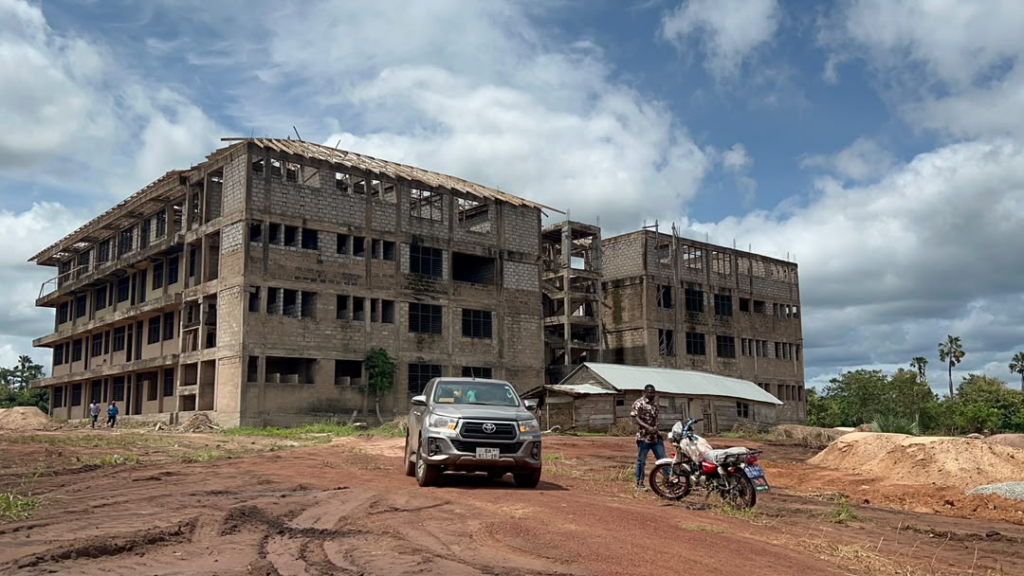
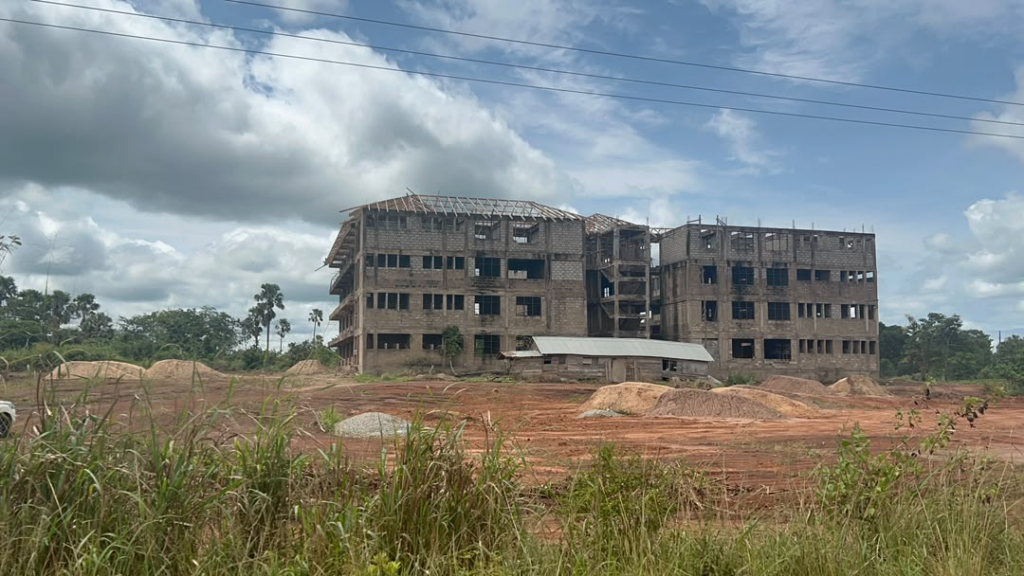
In the quiet farming community of Anyima, in the Kintampo South District of the Bono East Region, a grim monument to broken promises stands silently.
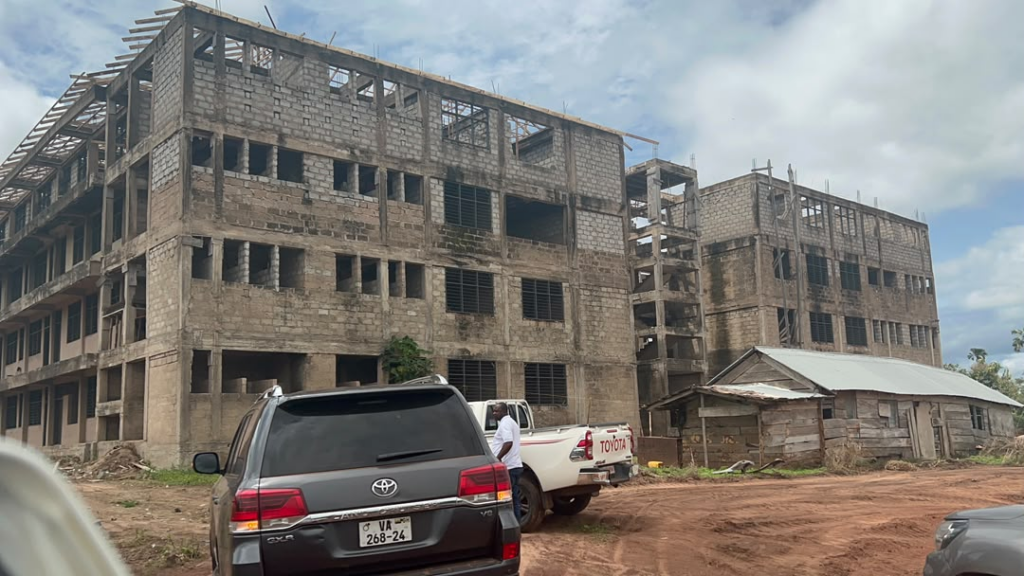
The Community Day Senior High School, initiated under the Mahama-led National Democratic Congress (NDC) government in 2016 as part of the ambitious E-Blocks project, remains unfinished ten years after construction began.
But what lies inside the crumbling structure tells an even more troubling story.
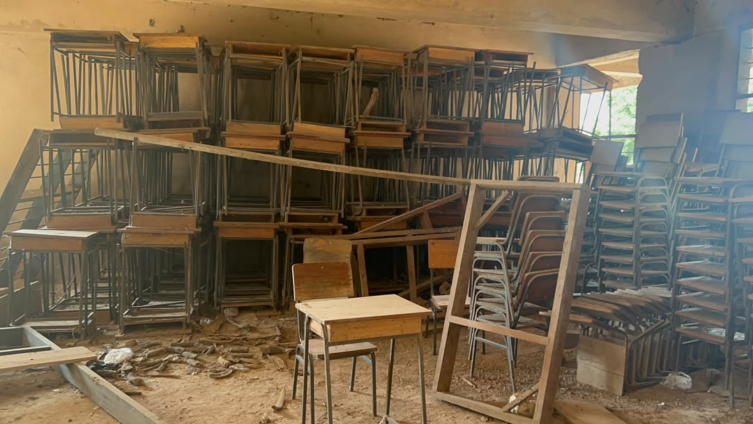
Stacked high within the unfinished classrooms are thousands of wooden desks, hauled to the site by the contractor during the initial construction phase. They were meant to furnish classrooms for hundreds of students who would soon walk through the doors. Those students never came.
Today, those desks purchased with taxpayer money are deteriorating. The wood is cracking. Dust and cobwebs have claimed them. Termites are slowly doing what time and neglect have already begun.
Meanwhile, just kilometres away, students in several schools across the region sit on bare floors or squeeze onto broken furniture, desperate for the very desks that are wasting away in Anyima.
A Decade of Abandonment
The story of the Anyima E-Block is a familiar one across Ghana.
In 2016, the NDC government rolled out the Community Day Senior High School programme popularly known as E-Blocks, promising to expand access to secondary education in underserved communities. Contractors were mobilised. Foundations were dug. Walls went up. Then came the December 2016 general elections.
The NDC lost power to the New Patriotic Party (NPP). The political will that had driven the project evaporated. Contractors abandoned sites. Funding dried up. And in Anyima, the project simply stopped.
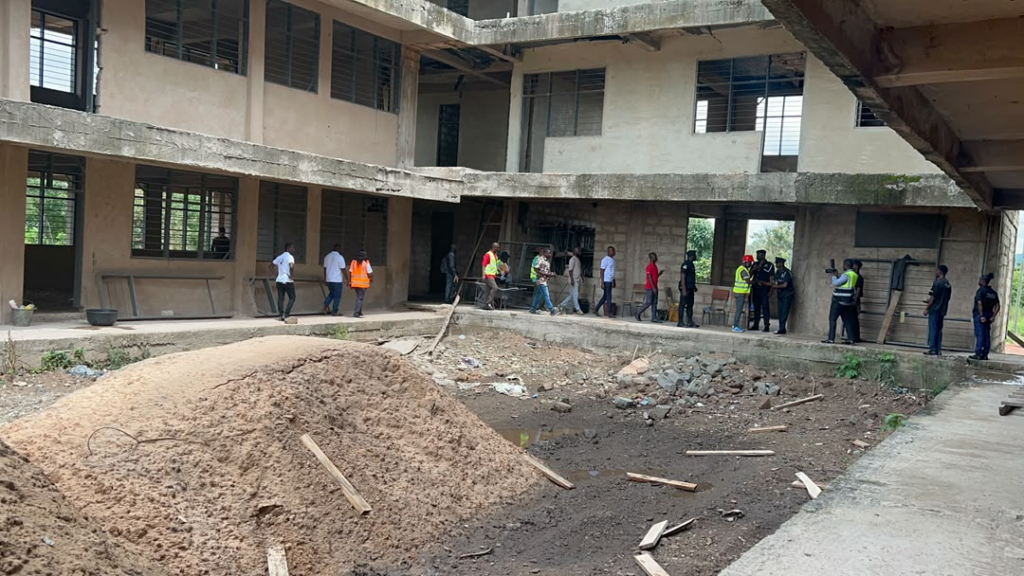
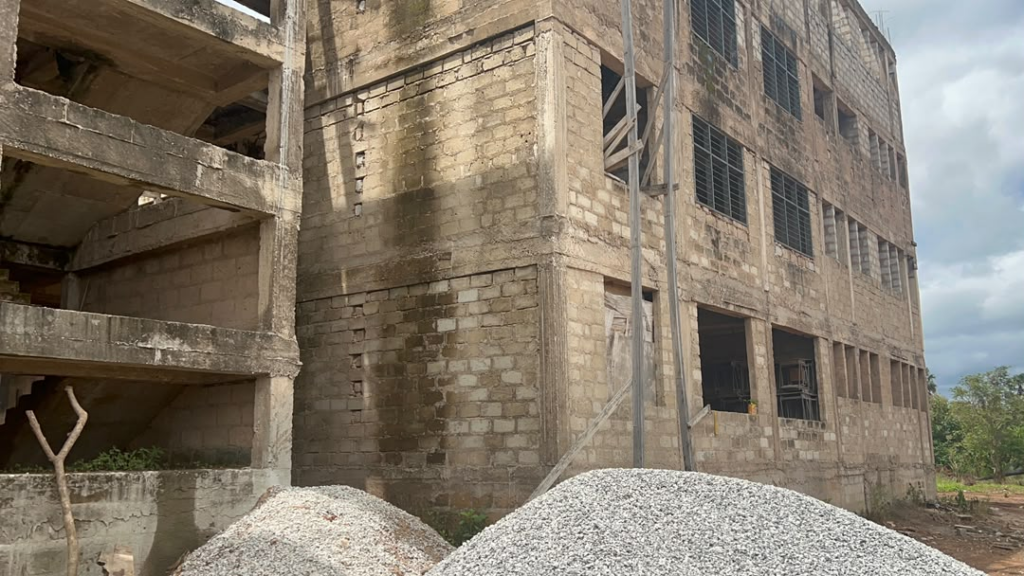
Ten years later, the building remains a shell, roofless in parts, walls stained by years of rain, and classrooms filled not with students, but with rotting furniture.
"A Pure Case of Financial Loss to the State"
For residents of Ampoma and surrounding communities, the situation is a bitter pill to swallow.
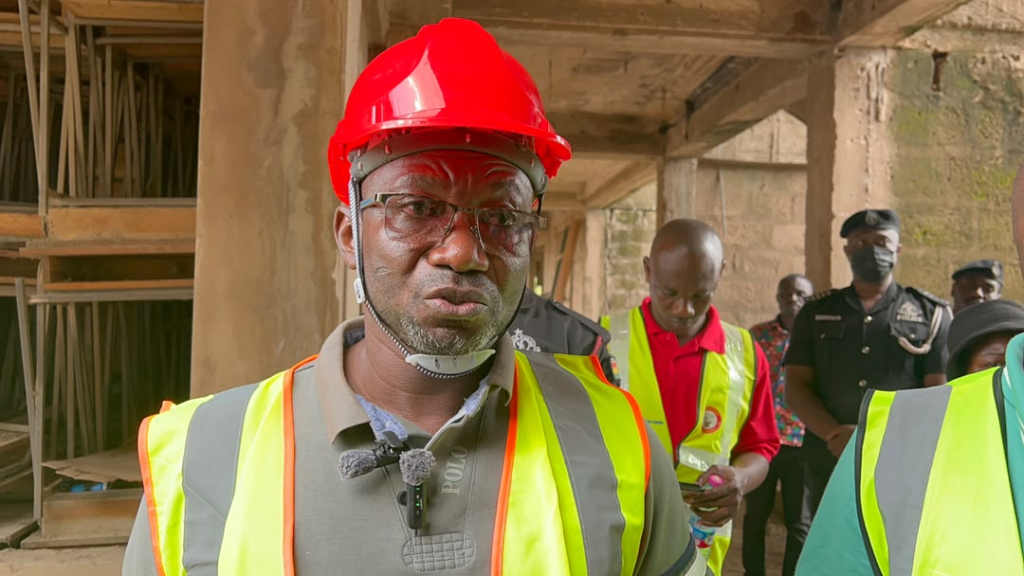
Speaking during a recent inspection tour of the project, the Bono East Regional Minister, Francis Owusu Antwi, could not hide his frustration.
"This is purely a case of causing financial loss to the state," he said, standing among the decaying desks. "These desks have been here since 2016. For ten years, they have been unused while schools in this same region are without desks. It is unacceptable."
The Minister noted that the desks could have bridged the infrastructure gap in the region's schools if they had been distributed when it became clear the project would not be completed on time.
"We have schools where children are sitting on the floor. We have schools where three or four students share a single desk. And yet, here we are, with thousands of desks wasting away. It makes no sense," he lamented.
Minister Moves to Salvage the Situation
Determined to prevent further waste, Mr Owusu Antwi announced that his office would formally write to the Ghana Education Trust Fund (GETFund) to seek approval to relocate the desks to schools where they are urgently needed.
"We will write to GETFund for their consent. Once we get the green light, we will move these desks to other areas where they are needed. We cannot continue to watch while state resources rot away," he stated.
The minister, however, struck an optimistic tone about the future of the project itself. He revealed that a contractor had returned to the site, raising hopes that the long-abandoned school may finally be completed.
"I am optimistic that with the contractor back on site, this project will see the light of day. The people of Ampoma deserve better, and we will ensure they get it," he assured.
A Community Waits
For the people of Ampoma, hope has been a fragile commodity.
They have watched for a decade as politicians came and went, each with promises of completion. They have seen their children walk long distances to attend secondary schools in other towns while a school sits unfinished in their own backyard.
"This school was supposed to change our lives," said Kwabena Adjei, a resident. "Our children would not have to travel far to go to school. But ten years later, we are still waiting. We are tired of promises."
The Bigger Picture
The Anyima E-Block is one of dozens of similar projects scattered across Ghana, abandoned or stalled due to political transitions, funding challenges, and contractual disputes.
Critics argue that the politicisation of educational infrastructure has robbed thousands of Ghanaian children of access to quality secondary education. They point to the lack of continuity in government projects and the failure to prioritise the needs of ordinary citizens over partisan interests.
For now, the desks of Anyima remain a haunting symbol of what could have been and a stark reminder of the cost of neglect.
As the contractor returns to the site and the minister pushes for the relocation of the rotting furniture, the people of Anyima can only hope that this time, the promises will be kept.
Latest Stories
-
GES to submit more data to CAGD to process outstanding teacher promotion arrears – Education ministry
5 minutes -
I wish to experience childbirth; I’m jealous of women – Okyeame Kwame
16 minutes -
Manhyia South constituents demand apology from EOCO over attempt to ‘unlawfully’ arrest MP
20 minutes -
Twelve women have been killed in one part of South Africa since July. Here’s what we know so far
23 minutes -
OMJ Foundation commits to supporting transport, safety and livelihoods of commercial riders in Akuapem South
25 minutes -
The Reciprocity crisis: Why Ghana welcomes British Professionals while the UK relegates ours
26 minutes -
GNAT rejects gov’t fresh assurances, demands implementation of August 31 agreement
36 minutes -
Gabriel Tanko Kwamigah-Atokple appointed Patron of NDC UK and Ireland Aldershot Branch
41 minutes -
Bawumia engages Ghana Medical Association on health workforce and licensing concerns
44 minutes -
SEC shuts down Nyak-City Hostels over unlicensed investment scheme
46 minutes -
The Ladder Project engages 60 UPSA student leaders on leadership and Ghana’s next chapter
48 minutes -
National Investment Quiz: St. Augustine’s, Prempeh College advance to semi-finals
52 minutes -
Leadership is about responsibility, not titles – Sammi Awuku tells UPSA students
54 minutes -
National Investment Quiz: Corpus Christi, Wesley Girls, advance to semi-finals
59 minutes -
Phone dealer murder: 3 suspects remanded as court adjourns Teshie case
1 hour