

Audio By Carbonatix
Portia (pseudonym) graduated from a university in Ashanti Region with a degree in Building Technology in 2017. By her third year, she had attracted the attention of one of her senior lecturers, Ronald (pseudonym), who was married.
Ronald sought her consent for a relationship. Though she declined, whispers within the department revealed that she was not the only student he had approached.
Angela, another student from the same department, confirmed she had a relationship with Ronald. She recounted how he provided her with gifts and meals, leading to an intimate relationship.
Angela expressed dissatisfaction with the relationship but admitted she didn’t report it.
“Why would I? I didn’t see the point. Reporting him would have made me a target, and nothing would change,” she said.
Portia and Angela’s experiences show a trend in Ghana’s universities. It is slowly becoming an environment where female students usually face sexual exploitation from those in authority, including lecturers and teaching assistants.
Many students feel powerless to report such incidents due to fear of victimization and lack of trust in the school system. Teaching assistants, also assigned academic responsibilities, are also implicated.
Reports indicate that some use their positions to exploit students, especially first and second-year female students. These TAs promise academic assistance or favourable grades in exchange for relationships.
Some students, desperate to improve their grades or gain favour, agree. Others, like Pearl, a third-year student in a different department, endured persistent sexual advances.
"He was always calling and texting me. I even blocked him"
Despite university policies addressing sexual harassment, implementation remains weak. Orientation sessions touch on the issue, but many students say they don’t feel informed about their rights or the reporting process.
According to Hannah, a business student, the lack of awareness about available support services worsens the situation. Hannah’s case also reveals economic vulnerability as a factor in exploitation.
Facing financial difficulties, she sought help from her lecturer. While he initially promised support, the relationship became conditional.
Feeling trapped, she later turned to a non-teaching staff member, who provided financial assistance in exchange for favours.
“I needed help to pay my fees and feed myself. It wasn’t right, but I had no choice.”
Students’ silence on these issues reveals a larger problem. Sexual exploitation thrives on secrecy, power imbalances, and fear.
Victims fear being labelled or disbelieved. They also worry about backlash, especially when the accused are influential staff members.
Psychological effects on victims cannot be ignored. While some students admit they benefited financially or academically from such relationships, others describe feelings of guilt, shame, and trauma. For those like Angela, the experience leaves a lasting emotional scar.
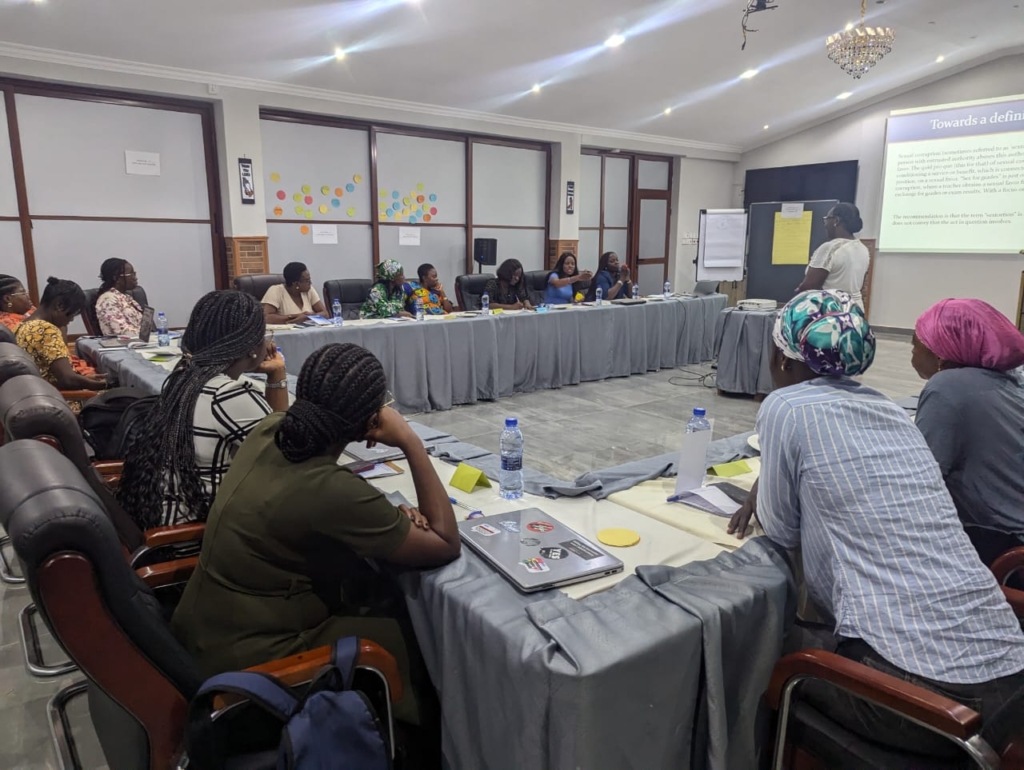
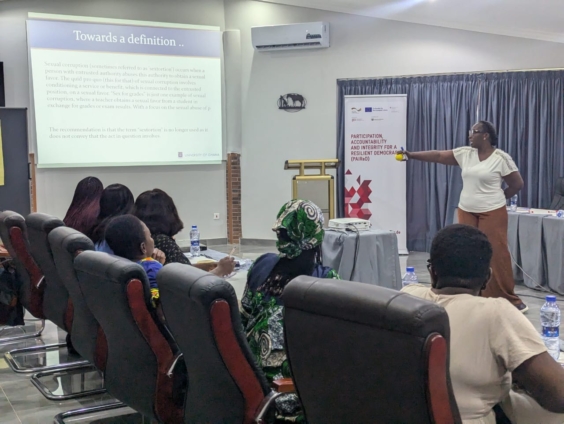
At a GIZ training for journalists on sexual corruption, According to Dr. Aurelia Ayisi from the Department of Communication, University of Ghana, universities need to take decisive action to address this issue.
“Sexual corruption thrives in environments where power imbalances remain unchallenged. Institutional accountability is key to dismantling these practices. Without it, perpetrators continue to exploit vulnerabilities.”
Establishing mandatory training on sexual harassment for staff and students, creating accessible and anonymous reporting systems, and strengthening counseling services are steps to take. Institutions must enforce strict penalties for perpetrators to deter such behaviour.
Rebecca Ekpe, Editor in Chief with the Ghana Broadcasting Corporation, stated, “Awareness campaigns and clear reporting mechanisms are important. Many victims suffer in silence because they fear backlash. Empowering students with knowledge and support systems is needed for change.”
Beyond individuals, student unions and organisations have been criticised for failing to champion awareness and advocacy. These bodies could play a role in educating students and holding institutions accountable.
However, their efforts are not seen or are limited.
Dr Ayisi said, “Addressing sexual exploitation is about creating an environment where exploitation cannot thrive, where policies are enforced, and students feel protected.”
Rebecca Ekpe added, “Media, universities, and civil society must collaborate to expose and eliminate sexual corruption. This is a fight for equity, trust, and the dignity of education in Ghana.”
Sexual exploitation in Ghana’s tertiary institutions is a systemic issue fueled by silence, power dynamics, and economic disparities. Addressing it requires a collective effort to create a culture of accountability, awareness, and support.
Latest Stories
-
SSNIT increases stake in Societe Generale Ghana to 24.36%
9 minutes -
Africa cannot rely on government budgets alone to finance climate ambitions – Deputy Finance Minister
30 minutes -
COMAC gives Finance Ministry 14 days to suspend implementation of Section 136 of Customs Act
30 minutes -
WhatsApp introduces optional parental controls for teenagers
32 minutes -
Afoko could help Bawumia pursue ‘clean break’ ahead of 2028 – Dr Amakye-Boateng
34 minutes -
Global Capacity Hub conference connects Ghanaian businesses to technology, investment opportunities in London
41 minutes -
Overcharge passengers and face sanctions, GPRTU warns drivers
44 minutes -
Government seeks $165m to complete operational phase of Boankra Integrated Logistics Terminal
54 minutes -
‘Show us the evidence’ – Upper West teachers demand proof of arrears payments
1 hour -
GH¢1 D-Levy suspension will offer relief to fuel consumers – COPEC
1 hour -
Youth Olympic Games in Africa: policy, regulation, and perspectives on shaping youth lives
1 hour -
Contractors move to site for construction of 120-bed trauma hospital in Bole – Kwakye Ofosu
1 hour -
Poor institutional leadership hindering Ghana’s creative industry – Oscar Provencal
1 hour -
CSA demands faster sharing of cyber threat intelligence among financial institutions
2 hours -
CSA warns Ghanaians to verify money requests as AI makes online fraud harder to detect
2 hours