

Audio By Carbonatix
World Malaria Day is celebrated every year on April 25. This year's theme is "Health equity, gender and human rights".
This day gives us the opportunity to analyze the successes and challenges of the fight against malaria, in particular, the need for increased domestic investment and a strong political commitment to the prevention and elimination of this scourge from our country.
Africa continues to pay the highest price for malaria
In the first 15 years of this century, great strides have been made in reducing the global burden of malaria, and we take this opportunity to pay tribute to all the institutions and leaders whose commitment, generosity and hard work have made these advancements possible.
However, there is a shadow hanging over these achievements, as since 2017 we have seen a slowdown in these gains.
The phase of stagnation currently observed is particularly evident in our countries, where conditions are highly conducive to malaria transmission and where the response to this pandemic is compromised not only by weak health systems but also by insufficient investment and infrastructure.
In publishing its annual report this year, the WHO warned that, despite the expansion of access to malaria prevention, too many people, mainly in Africa, are still deprived of the quality services and care they need to prevent, detect and treat the disease in time, or even effectively.
In 2022, the entire region recorded:
• 94% of all malaria cases (233 million) ;
• 95% of all malaria deaths (580,000 deaths);
Nearly 78% of all malaria deaths in the region are among children under the age of 5.
In Ghana, malaria continues to wreak havoc and take thousands of lives. With around [155] deaths reported in 2022, according to the National Malaria Elimination Program (NMEP). However, the estimated death is around11 557, taking into account those occurring outside health facilities. An unacceptable human toll for a preventable and curable disease.
Fortunately, it is important to note the remarkable progress made in recent years, thanks to the joint efforts of the players involved at the national and global levels, with the arrival of innovative tools such as the deployment of the very first antimalarial vaccine RTS,S/AS01, the WHO recommendation of a second safe and effective vaccine R21/Matrix-M, the availability of a new generation of dual-active mosquito nets, etc,
The urgent need to translate declarations into concrete action to increase domestic resources
According to WHO data, in 2022, a total of $4.1 billion has been mobilized to fight malaria worldwide, compared with an initial target of $7.8 billion. The funding gap between the amount invested and the resources required has widened in recent years, reaching $3.7 billion in 2022.
Insufficient resources remain a major obstacle at a time when external resources are becoming increasingly scarce and a greater contribution from national resources is now expected to reverse the trend and eradicate the pandemic.
It was against this backdrop that the Ministerial Conference on Malaria:
"Fighting malaria in the countries hardest hit by the disease" was held in Yaoundé, Cameroon, on March 6, 2024. It brought together Ministers of Health, global partners, funding agencies, scientists, civil society organizations and other key players in the fight against malaria.
At the end of the conference, the Ministers signed a declaration in which they pledged, among other things, to lead malaria control programs with greater determination and to devote more national funding to them, to invest more in the health sector in order to strengthen infrastructures and staffing levels, to improve governance and to reinforce intersectoral collaboration.
The parliamentarians are convinced that, by working in synergy with all the parties concerned, especially civil society organizations and communities, they will be able to follow up the Yaoundé Declaration.
They would encourage the government to explore all avenues to mobilise more resources that will help reduce inequalities in the fight against malaria, thus ensuring access to quality services for vulnerable and marginalized populations, particularly those living in hard-to-reach areas.
Increased investment will make it possible to:
- Strengthen and secure funding for universal health coverage (UHC);
- Accelerate the recognition of Community Health Workers by giving them state-recognized status and remuneration, as they are an essential link in the prevention, awareness-raising and simple management of confirmed cases of malaria;
- Ensure that the State respects its commitments and mobilizes counterpart funds on time for programs supported by external partners to implement high-impact malaria interventions.;
- Strengthening multisectoral action in the fight against malaria;
- Ensuring that gender, social rights and the needs of the most vulnerable populations are taken into account.
Population health is a profitable investment and a strategic development issue for any State aspiring to social and economic progress.
The time has come for our countries and all parliamentarians to make the fight against malaria a national priority.
This political will must be materialized on the one hand by increased and sustainable mobilization of national resources to increase funding, and on the other hand, by the implementation of a monitoring mechanism for good governance capable of guaranteeing transparent use of resources and equity, as well as the participation of all sectors and communities in the fight against malaria.
Let's mobilise to end malaria!
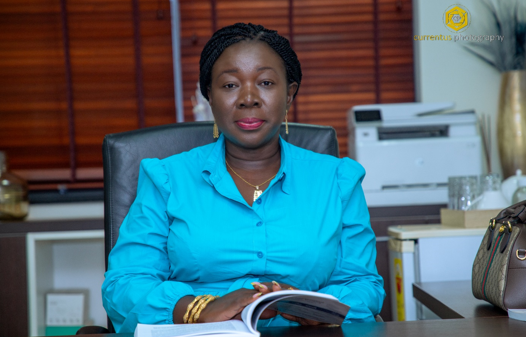
Author: Elizabeth Ofosu-Adjare (Mrs), MP- Techiman North Constituency
Latest Stories
-
Philanthropist Alhaji FuZak donates Da’wah bus to Ambariya Sunni community
4 minutes -
GUTA calls for suspension of Publican AI system over trade disruptions, demands temporary halt in import activities
6 minutes -
TTAG raises alarm over proposed recruitment of 7,000 teachers, demands national posting roadmap
40 minutes -
Civilians feared killed after reports of air strike on Nigerian market
49 minutes -
Bishop Simon Kofi Appiah installed as new Jasikan Diocese Bishop
50 minutes -
Trump’s Strait of Hormuz blockade threat raises risks and leaves predicaments unchanged
53 minutes -
US Court backs extradiction of former MASLOC CEO Sedina Tamakloe-Attionu’s to Ghana
1 hour -
Seven arrested as NAIMOS dismantles illegal mining camp, seizes firearms at Boin River
1 hour -
Fire erupts at Madina Ritz Junction, destroys multiple wooden structures and containers
1 hour -
Daniel-Kofi Kyereh returns from long-term injury, registers assist for Freiburg U23
2 hours -
Knifeman calling himself ‘Lucifer’ slashes three at NYC’s Grand Central
2 hours -
Brands are built from within to without
2 hours -
Matriculants urged to pursue excellence as gov’t reaffirms support for Maritime education
2 hours -
See the areas that will be affected by ECG’s planned maintenance on Monday, April 13, 2026
2 hours -
GPL 2025/26: Salim Adams double fires Medeama back to summit after Kotoko rout
2 hours