

Audio By Carbonatix
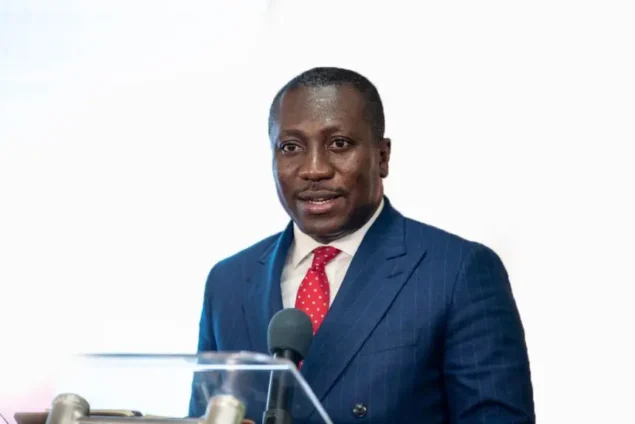
The Minority Leader in Parliament, Alexander Afenyo-Markin, has criticised government-linked contractors, accusing them of sabotaging Ghana’s agricultural backbone by importing rice in direct defiance of presidential orders.
Addressing the Kwahu Business Forum on Friday, 3rd April 2026, the Minority Leader described the sidelining of local farmers as a calculated subversion of national food security goals. He argued that while the state has publicly championed "Buying Ghana", the reality on the ground is a systemic preference for foreign grains that leaves local warehouses overflowing with unsold produce.
The controversy centres on the School Feeding Programme, a multi-million-cedi initiative intended to provide a guaranteed market for Ghanaian rice growers.
However, according to Mr. Afenyo-Markin, middlemen awarded these lucrative supply contracts are bypassing local silos in favour of cheaper, imported alternatives.
“Contractors engaged to supply the School Feeding Programme with locally produced rice instead of importing the grains [are] bypassing farmers who had prepared their produce following a direct presidential directive,” he stated.
The impact has been devastating for the rice value chain. Thousands of farmers, encouraged by government promises of market access, now face mounting debts and rotting harvests.
Mr Afenyo-Markin further condemned the lack of transparency at the National Food Buffer Stock Company (NAFCO).
He revealed that despite repeated petitions from agricultural unions, the identity of the contractors involved in this importation spree remains a closely guarded secret.
“The Peasant Farmers Association has repeatedly requested that NAFCO publish the names of those contractors. NAFCO has not responded,” the Minority Leader noted, adding: “What has been described is not a market failure. It is a procurement betrayal.”
The Minority Caucus has served notice that it will not let the matter rest. Mr Afenyo-Markin signalled a looming parliamentary inquiry intended to force the publication of all active supply contracts and the identification of every beneficiary involved in the procurement process.
He warned that such lapses do more than just hurt the economy but erode the fundamental trust between the state and the rural electorate.
Without immediate reforms to ensure that state-backed programmes genuinely support local producers, he argued, the nation's drive toward self-sufficiency will remain a mirage.
“Let us choose accountability over secrecy,” he concluded, urging the government to align its procurement actions with its political rhetoric to protect the livelihoods of Ghana's hard-working farmers.
Latest Stories
-
I assure Otumfuo, Mahama will join him to commission KNUST Teaching Hospital by end of this year – Haruna Iddrisu
2 minutes -
Gov’t to roll out free special education for persons with disabilities from July 1 – Education Minister
23 minutes -
“We used it to test our officiating officials’ readiness” – Bawah Fuseini after CAA Athletics event
50 minutes -
Volleyball emerges as Ghana’s fastest rising sport
57 minutes -
National Sports Fund needs strong leadership from the top – Administrator David Wuaku
1 hour -
JoySports Exclusive: Steve McLaren in talks with GFA after expressing interest in Black Stars job
1 hour -
Fire guts auto parts warehouse at Bubuashie, one fire officer injured
1 hour -
I owe my victory to coach Ofori Asare – Allotey after winning WBA Africa Gold Super Flyweight belt
2 hours -
Church of Pentecost supports over 2,000 BECE candidates in Obuasi with career guidance seminar
3 hours -
Brandon Asante and Coventry all but promoted to Premier League despite Sheffield Wednesday draw
3 hours -
GPL 2025/26: Late Kwartemaa strike downs Hearts in Tema
4 hours -
Ghana Faces Sierra Leone Moment as Prosecutorial Powers come under strain
4 hours -
Don’t consume fish or seafood from Tema Shipyard until further notice – FDA warns
4 hours -
Why volunteering might be Africa’s most underrated career accelerator
4 hours -
ActionAid Ghana raises concern over gender gaps in Feed Ghana Programme
4 hours