

Audio By Carbonatix
African health experts are calling for stronger investment in herbal and traditional medicine, warning that donor dependence and lack of coordinated research are slowing the continent’s ability to build resilient health systems.
Associate Professor of Ethnomedicine and Phytotherapy and Pro-Vice Chancellor of Pentecost University, Kofi Busia, described Africa’s donor dependency as a major obstacle.
“The health systems across Africa are largely donor-funded. In many countries, about 50% of the health budget comes from donors. But donors usually come with their own packages — they want to support maternal health care, HIV, or infant mortality. Big pharmaceutical companies produce drugs, and those drugs must be used somewhere,” Prof. Busia said.

He stressed that Africa must look inward if it wants to develop its traditional medicine sector.
“If we continue to depend on donors, our countries will never fully develop. The Chinese did not depend on donors to develop their traditional medicine. The Indians did not. We can collaborate with others, but when it comes to proper investment, research, training, and local manufacturing, national governments must take responsibility,” he explained.
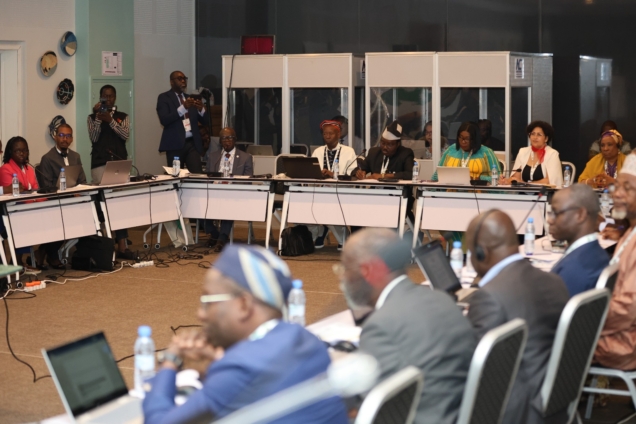
At the recently organized WAHO International Conference on Lassa Fever in Abidjan, where policymakers, researchers, scientists, and practitioners gathered to discuss sustainable health solutions for Africa, he said, Ghana has taken notable steps. These include the establishment of the Mampong Centre for Plant Medicine Research under the presidency of Kwame Nkrumah, the creation of the Traditional and Alternative Medicine Directorate, and the establishment of the Traditional Medicine Practice Council as a regulatory body. Degree programmes in herbal medicine are also running.
But funding gaps remain. “The political will is there, but the challenge is investment. Since many people already use traditional medicine on their own, it is sometimes treated like a private enterprise rather than a national priority,” Prof. Busia said.
Call for ECOWAS research agenda
Director for Traditional and Alternative Medicine at Ghana’s Ministry of Health, Dr. Anastasia Yirenkyi, argued that the way forward is for West Africa to build a joint research plan under ECOWAS.
“For us, ECOWAS should have a strategic plan. We should have a research agenda — and this agenda should focus on formulating herbal medicines for epidemics and pandemics,” she said.
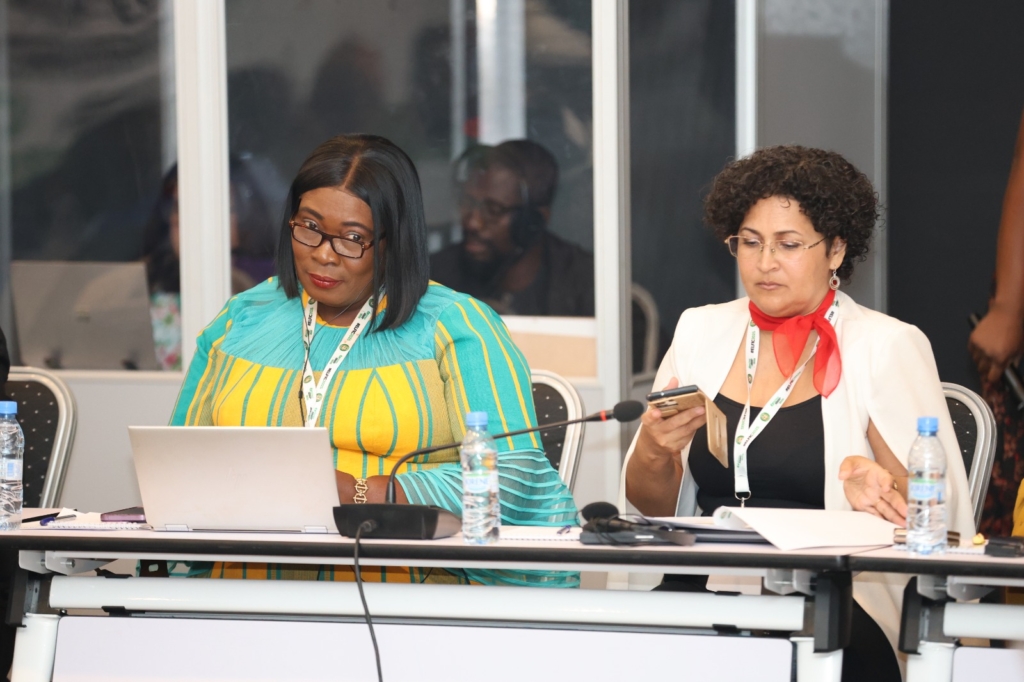
Dr. Yirenkyi warned that while herbs are potent, scientific backing is needed when they are formulated, combined, and tested for safety and effectiveness.
“We know the leaves, the roots, the fruits, the seeds — they all work. But when you combine more than three herbs, you need full-scale research. From plants to patients — from cultivating medicinal plants to finished products — there must be research, development, and post-market surveillance,” she emphasised.
She added that a coordinated regional approach will ensure ECOWAS is prepared before the next epidemic.
“We should not wait for the epidemic to hit before we run helter-skelter looking for medicines. If herbal products are well researched and developed, then in times of pandemics, the world will turn to ECOWAS. People will say, ‘Yes, let’s go to ECOWAS — they have these products ready for use,’” Dr. Yirenkyi said.
She also cited support from leaders, pointing out that former Nigerian President Olusegun Obasanjo recently urged African governments to channel resources into traditional medicine.
“Nigeria, too, is ready. About a month ago, at the African Health Summit, former President Obasanjo made a profound statement that we should channel our resources towards developing traditional medicine. He even emphasised that if 25% of our national budget were dedicated to herbs and herbal products, it would go a long way to support ECOWAS and the world at large.
The era has changed. There is a paradigm shift. We must all — researchers, institutions, governments, ministers, stakeholders, and policymakers — embrace this and support herbal medicine research and development.”
‘Nature is the first doctor’
Adding a philosophical perspective, Charles Ibnou Katy, a member of the WAHO Experts Committee on Traditional Medicine and a researcher in indigenous knowledge in Africa, described herbal medicine as humanity’s oldest and most reliable health system.
“Nature is the first medical doctor for human beings. Based on this idea, we can understand why herbal medicine remains one of the most genuine solutions to treat every kind of disease — both natural diseases and new ones such as Lassa fever and Ebola,” Katey said.

He noted that the relationship between humans and nature provides a foundation for health.
“Human beings ask questions, and nature provides the answers. Herbal medicine is one way to achieve harmony between people and nature. When this equilibrium exists, we enjoy good health,” he explained.
For Katey, herbal medicine is not only treatment but also a way of life.
“Nature helps us to find balance. That is why herbal medicine is one of the greatest solutions for humanity to live in harmony with the environment. Nature was, and still is, the first medical doctor for human beings,” he concluded.
Across the continent, experts agree that herbal medicine holds enormous potential, but progress depends on political commitment, funding, and scientific research.
With growing recognition from governments, regional bodies, and traditional medicine advocates, Africa faces a pivotal moment to reclaim and modernize its indigenous health heritage.
Latest Stories
-
Anti-LGBTQ Bill: Forget the rumour mongers, I’m a man of action, and will pass the bill – Speaker
25 minutes -
Women and children among those killed in Sudanese army shelling of wedding celebration
29 minutes -
President Mahama is not sincere with Ghanaians on LGBTQ bill matter – Hassan Tampuli
46 minutes -
Gov’t to establish Prison Industrial Hub to equip inmates with income-generating skills – Prison Service boss
1 hour -
Alhassan Tampuli donates cement, roofing sheets to support storm victims in Gushegu
1 hour -
Alhassan Tampuli appeals for urgent support for storm victims in Gushegu
1 hour -
The hypocrisy must stop; pass Anti-LGBTQ+ Bill now – Alhassan Tampuli to Mahama
1 hour -
Imprisonment should be rehabilitative, not punitive – Ghana Prisons boss at UNGA
2 hours -
Ga Adangbe traditional priests petition Mahama over McDan aviation licence revocation
2 hours -
Anti-LGBTQ Bill: NDC’s arrogance is worrying – Hassan Tampuli
2 hours -
Let’s give OSP time to mature, not to scrap it – Hassan Tampuli
2 hours -
Nigeria convicts 386 Islamist militants in mass trials
2 hours -
Djibouti president wins election with 97.8% of vote, state media says
2 hours -
We don’t have mandate to deduct tax from rent allowance of security services personnel – Interior Ministry clarifies
2 hours -
Ablakwa receives Presidential Special Envoy on Reparations to advance global agenda
3 hours