

Audio By Carbonatix
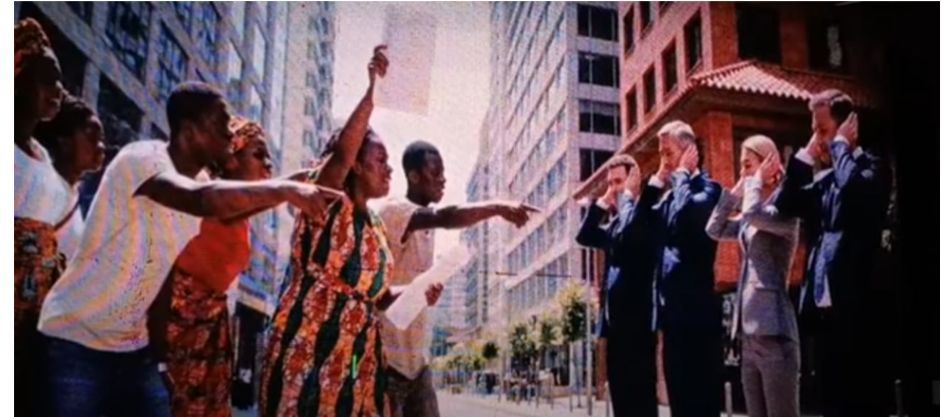
The city of Bamako hosted the premiere of ‘Reparations: The Colonial Debt’, a new documentary directed by Senegalese filmmaker Ibrahima Sow on Saturday, August 16, 2025.
The film, which explores Africa's historical experiences with slavery, colonization, and post-independence economic structures, has brought renewed attention to the ongoing global conversation around reparations.
From its opening scenes, the documentary presents a firm narrative: that Africa’s historical encounters with foreign domination have left lasting impacts that continue to shape its socio-economic realities today. The film suggests that these legacies warrant serious consideration in legal, political, and moral terms, especially regarding the question of reparations.
In recent years, Ghanaian President John Mahama has emerged as one of the most prominent international voices advocating for reparative justice. He has repeatedly argued that the legacy of transatlantic slavery and colonialism contributed to wealth accumulation in Europe, while Africa was left facing complex challenges such as poverty, underdevelopment, and fragmented state structures.
The film's premiere in Bamako builds on such arguments and reaffirms Ghana’s long-standing role in global discussions about historical justice.
The documentary covers a broad historical spectrum—from the transatlantic slave trade, during which millions of Africans were forcibly displaced, to the colonial era and contemporary economic frameworks.
Among those interviewed is Ivorian scholar Gnaka Lagoké, who points to the evolution of external influence over Africa: “Africa has experienced several systems of domination: slavery, colonisation, neocolonialism and neoliberalism. Reparations should address not just historical injustices but also ongoing systemic challenges.”
Ghana’s own engagement with this history is particularly visible. Sites like the Elmina and Cape Coast castles stand as powerful reminders of the transatlantic slave trade. In 2019, Ghana launched the Year of Return, an initiative that invited the African diaspora to reconnect with the continent and raised awareness about the enduring impact of the slave trade.
The Bamako screening also coincides with a broader continental push. In 2023, the African Union adopted a resolution calling for justice for victims of the transatlantic slave trade. For 2025, it selected the theme: “Justice for Africans and people of African descent through reparations,” reflecting a continent-wide commitment to advancing this agenda.
Ghana is expected to play a significant leadership role in developing practical approaches—legal, diplomatic, and educational—to move the conversation forward.
The film closes with a powerful reflection by Malian researcher Fodé Moussa Sidibé: “We have not only the right, but the duty to pursue reparative justice.”
This sentiment echoes Ghana’s own stance—that reparations should not be viewed solely as symbolic, but as part of a broader effort to achieve lasting justice and self-determination for Africa and its global diaspora.
Latest Stories
-
Police blur the line between invitations and arrests – Reindorf Twumasi Ankrah
10 minutes -
Turning invitations into arrests is making citizens reluctant to assist police – Twumasi Ankrah
44 minutes -
The Traffitech-GH SMS spot-fine system: The good, the sad, and the funny – Bright Simons writes
55 minutes -
Hawa Koomson pledges experienced and mature leadership of NPP women’s wing
2 hours -
Young woman found dead at Kasoa Peace Town
3 hours -
Playback: The Law examined lawful arrest in Ghana
3 hours -
Mahama urges African governments to treat healthcare as an investment, not budget cost
4 hours -
Bawumia congratulates John Boadu and new NPP executives, pledges support ahead of 2028
4 hours -
Aksa Energy delegation pays courtesy call on GRA Commissioner-General
4 hours -
‘No talent should be left out’ – Bawumia pledges inclusive NPP campaign for 2028
4 hours -
Prof. Mike Oquaye recounts how he blocked the Special Prosecutor’s attempt to arrest Bawku Central MP
4 hours -
Make health sovereignty a priority for Africa – Mahama
4 hours -
Dorimon Naa, Wa West DCE lead massive clean-up exercise; threaten sanctions against recalcitrant residents
4 hours -
Photos from Adom FM Y2K Jam
4 hours -
Praye Tiatia steals the show at Adom FM Y2K Jam [Watch]
5 hours