

Audio By Carbonatix
“Africa’s mineral wealth must no longer be a paradox of abundance without prosperity,” Director of the United Nations University Institute for Natural Resources in Africa (UNU-INRA), Prof. Fatima Denton, has said, following the release of a new report on critical minerals and development on the continent.
The report, titled “Africa Redefining Critical Minerals for a Shared Future: South-South Solidarity in Action,” was released on Thursday, February 12, 2025, and calls for stronger cooperation among countries in Africa, Latin America, and Asia to turn mineral resources into drivers of industrialisation, energy security, and technological advancement.
Speaking on the findings, Prof. Denton stressed that Africa’s minerals are not only vital for the global energy transition but also for the continent’s own development.
“Africa’s minerals are critical not only for the world’s decarbonisation agenda but for Africa’s own industrialisation, energy security, and technological advancement,” she said.
Turning resources into development
The report argues that Africa’s vast mineral wealth has not translated into broad-based economic growth because the continent remains largely at the periphery of global value chains.
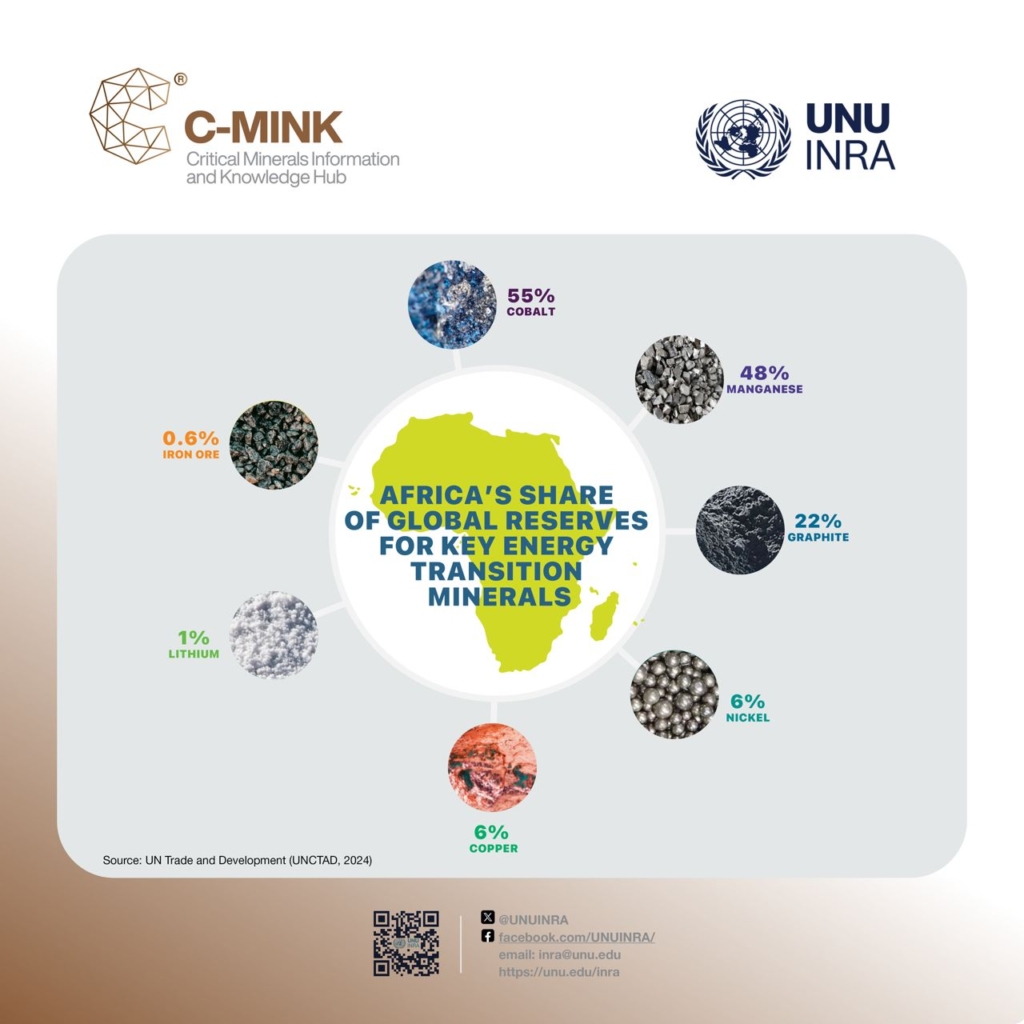
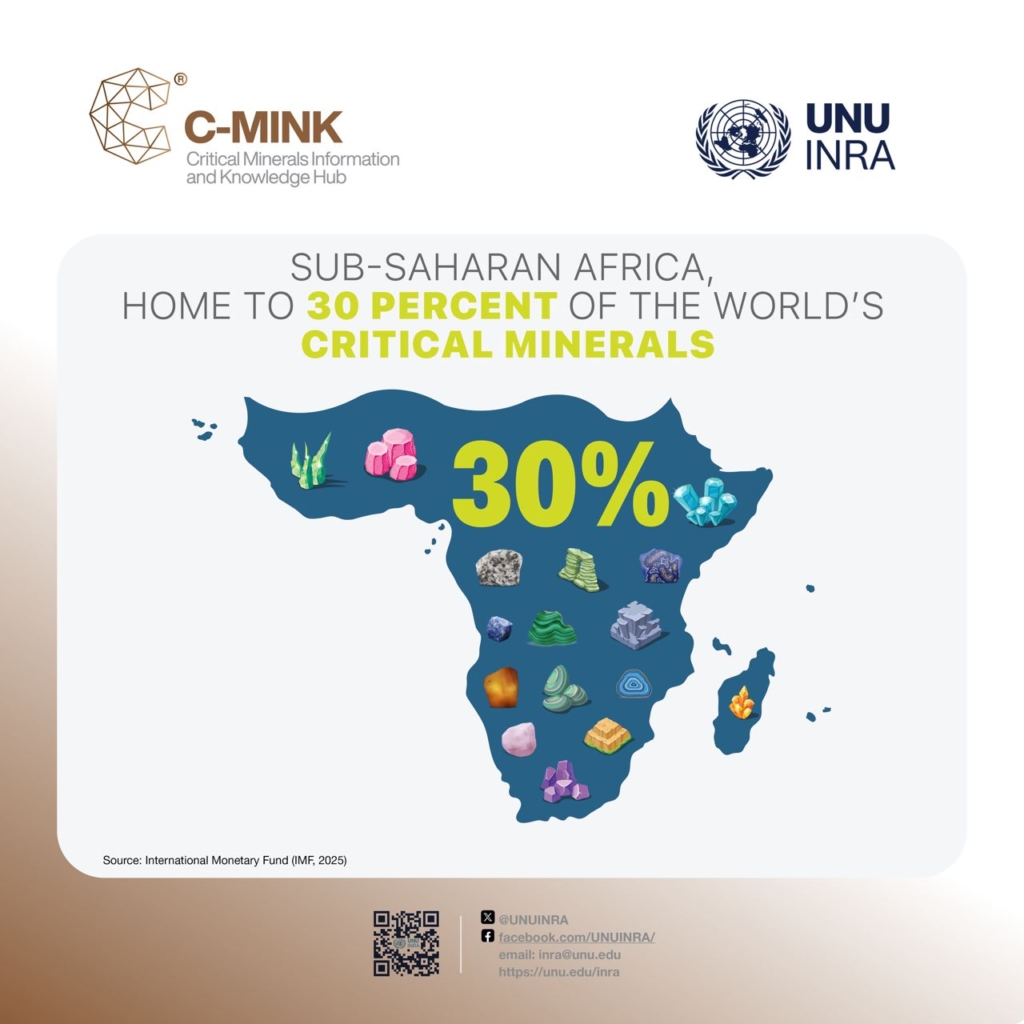
According to the study, Africa holds nearly one-third of the world’s critical mineral reserves, including cobalt, lithium, manganese, and copper — key resources for renewable energy, electric vehicles, and digital infrastructure.
However, most of these resources are exported in raw form, limiting job creation, technology transfer, and value addition.
To address this, the report urges African countries to embed minerals into domestic production systems and invest in local processing, manufacturing, and innovation.
It estimates that global revenues from copper, nickel, cobalt, and lithium could reach $16 trillion by 2050, with Sub-Saharan Africa capable of capturing more than 10 per cent of that value if the right policies are put in place.
Focus on South-South cooperation
A central theme of the report is the importance of South-South collaboration among countries in Africa, Latin America, and Asia.
It calls for shared knowledge, joint technological development, and collective investment to build what it describes as a new form of multilateralism rooted in cooperation among developing economies.
The report notes that by pooling experiences and expertise, countries in the Global South can co-design solutions that strengthen green value chains and reshape the decarbonisation agenda.
It also advocates for African expertise to be paired with partners in Asia and Latin America to promote shared prosperity in the critical minerals sector.
C-MINK and mineral governance
The report forms part of UNU-INRA’s Critical Minerals Information and Knowledge Hub (C-MINK) initiative, which aims to position Africa at the centre of global mineral governance.
C-MINK serves as a platform that brings together policymakers, researchers, and investors to translate research into practical strategies for sustainable mineral development.
According to UNU-INRA, the initiative seeks to ensure that mineral ownership translates into real control, effective governance, and value creation for African countries.
Relevance for Ghana and the region
For Ghana and other mineral-producing countries in the region, the report’s findings come at a time of growing interest in lithium, bauxite, and other strategic minerals.
Government efforts to expand local processing and attract investment into value addition have been ongoing, but challenges remain in infrastructure, financing, and regulation.
Latest Stories
-
I have supported highway authority financially to fix roads in my constituency – A Plus
31 minutes -
US, Iran fail to reach peace agreement after marathon talks in Pakistan
54 minutes -
ECG kicks off Phase Two of transformer upgrades at Lashibi; brief outages expected
1 hour -
Port crises loom as 11,000 drivers threaten four-day strike
2 hours -
A source of excellence across generations – Vice President Opoku-Agyemang lauds Mfantsipim
3 hours -
(Photos) Mfantsipim School launches historic 150th anniversary
4 hours -
Knights and Ladies of Marshall group backs Catholic Bishops’ stance on anti-LGBTQ+
4 hours -
Bright Simons writes: All the Filla in the Ibrahim Mahama/E&P – Gold Fields Saga
5 hours -
Monetise Idiocy In Ghana
5 hours -
The Ghanaian prophet and the mysterious death of his scottish wife Charmain Speirs
6 hours -
Nearly 400 sentenced in Nigeria for links to militant Islamists
6 hours -
Ghana’s recovery supported by gold strength despite global oil price pressures – Standard Bank Research
6 hours -
Methodist Church hails Mfantsipim@150; calls for “fresh consecration” to excellence
7 hours -
‘Excellence is our inheritance’ – Nana Sam Brew-Butler hails Mfantsipim’s 150-year reign in leadership
7 hours -
Kwaku Azar writes: A-G vs OSP
7 hours