

Audio By Carbonatix
As the cost of living in Ghana continues to rise, a professor of finance and economics is urging the government to focus on reviving agriculture as a key strategy to ease the burden on households.
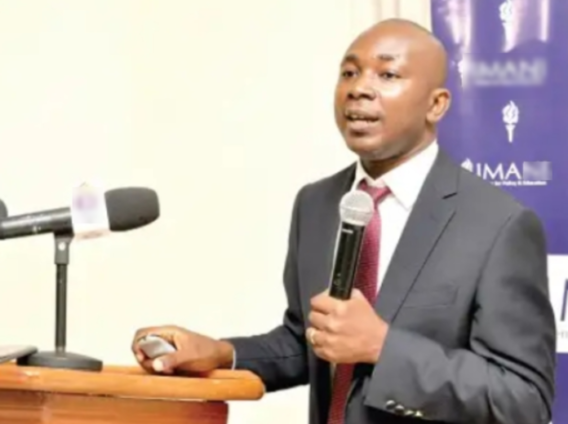
Speaking on Joy FM’s Super Morning Show on Wednesday, November 20, Prof Godfred Bokpin explained that addressing the country’s economic challenges will require strategic planning, particularly in the first three months of the incoming government, regardless of the election outcome.
According to Prof Bokpin, agribusiness should be prioritised to reduce food prices, create jobs, and stimulate the economy. With the average Ghanaian spending up to 44% of their disposable income on food, Prof Bokpin believes that tackling food price inflation could bring immediate relief to struggling families.
“If we can bring food prices down significantly, we would directly help Ghanaians by freeing up more of their income,” he said. “This could also create space for savings, which is essential for long-term economic stability.”
He further explained that the lack of savings at the household level is a major barrier to economic growth, as it limits capital accumulation. “Without sufficient savings, it’s difficult to take advantage of economic opportunities,” Professor Bokpin warned.
Beyond food security, Prof Bokpin stressed that agro-processing could create formal jobs and increase tax revenues. Despite agriculture contributing about 26% of Ghana’s GDP, it accounts for less than 1% of tax revenues due to the informal nature of the sector.
“Agriculture is job-rich,” he said. “By modernising and formalising this sector, we can create stable employment opportunities and generate much-needed tax income.”
Prof Bokpin also pointed to inefficiencies in public spending as another issue, noting that infrastructure projects like interchanges often come with inflated costs compared to international standards.
Ultimately, he believes that focusing on agriculture and its related sectors should be a top priority for any government aiming to tackle poverty, reduce inequality, and create sustainable economic growth in Ghana.
Agriculture is a vital sector for Ghana’s economy, contributing around 26% of the country’s Gross Domestic Product (GDP) and employing approximately 40% of the workforce. Historically, Ghana’s economy has been driven by agriculture, with crops like cocoa, maize, cassava, and plantain playing a central role in both domestic consumption and export. Cocoa, in particular, is a major foreign exchange earner, positioning Ghana as one of the world’s largest cocoa producers.
Despite its importance, the agriculture sector faces several challenges, including low productivity, climate change, ageing farmers, and limited access to modern farming technologies. The majority of farmers are smallholders who still rely on traditional farming methods, and post-harvest losses due to inadequate storage, and transportation facilities remain a significant issue.
In recent years, the government has implemented programmes like Planting for Food and Jobs (PFJ) to boost food production, create jobs, and reduce reliance on food imports.
Latest Stories
-
Asantehene plants trees to commence Jimi Watercourse Rehabilitation destroyed by galamsey
22 minutes -
15 arrested, 6 trucks impounded over sandwinning activities on Kumasi-Accra Expressway
22 minutes -
OFFICIAL: Vinicius will miss El Clásico, suspended four games
26 minutes -
Prayer vigil held after four arson attack murders
33 minutes -
GRA fully recovers $154k legacy debt owed by foreign entities between 2022 and 2024
34 minutes -
Kwesi Pratt Jr warns bus preachers are adding to passengers’ stress with accident prophecies
35 minutes -
MTN Ghana to spend $1.1bn in 3 years, build 500 new sites as MoMo hits 44% Growth
37 minutes -
I have no regrets joining Assemblies of God – Mahama
38 minutes -
Starlink restrictions in Ukraine war linked to political situation, Zelensky aide says
40 minutes -
Furniture boost for Techiman North schools as MP donates to 20 institutions
41 minutes -
Assemblies of God to loan 10,000-seater dome for Ghana@70 celebrations
41 minutes -
Government to audit 2,016 community network sites – Communications Minister
42 minutes -
Heritage Series notes: BoG promises more inclusive cedi with improved sizes, tactile features
59 minutes -
‘We want answers’ – Family seeks probe into 14-year-old’s death 12 days after starting SHS
1 hour -
No preacher has the right to impose beliefs on bus passengers – Kwesi Pratt Jr backs preaching ban
1 hour