

Audio By Carbonatix
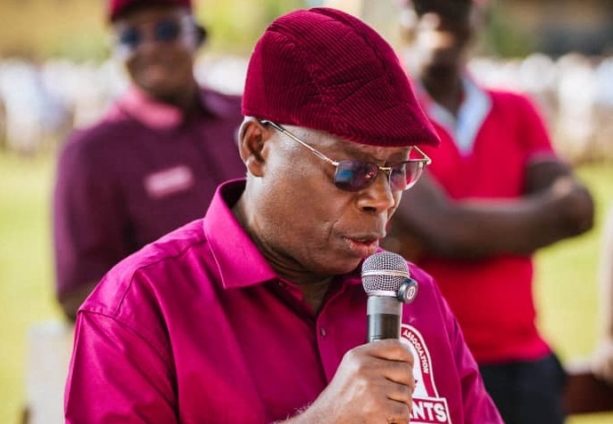
A former Chief Director of the Ministry of Education (MoE), Mr. Enoch Hemans Cobbinah, has called on alumni of second cycle institutions to actively partner with government in advancing Ghana’s educational development.
According to him, such collaboration has become imperative if Ghana is to keep pace with global transformations reshaping education and skills training.
Mr Cobbinah made these remarks while serving as Chairman and Grand Marshal at the 116th Anniversary and Homecoming celebration of the Ghana Secondary Technical School (GSTS) over the weekend. He emphasised that the government alone cannot shoulder the responsibility of educational development.
“The task ahead is enormous, but so must our collective commitment be to the continued progress of GSTS and Ghana. To our Alumni Association, the wider community, and potential partners, we cannot rely on government alone to make GSTS great. That is why we must continue to do more, through mentorship, financial support, and other meaningful contributions,” he stated.
An alumnus of the school himself, Mr Cobbinah described the ongoing alumni-led interventions as a renaissance capable of repositioning GSTS for the future.
"This renaissance requires a bold new vision to rekindle and deepen science and technical education. Through collaboration with key stakeholders and partners, we can nurture a pipeline of future-ready students equipped with the practical skills and competencies needed to thrive in Fourth Industrial Revolution technologies such as artificial intelligence, robotics, cloud computing, and related fields,” he added.
The event was held under the theme: “Advancing Educational Excellence: 116 Years of GSTS Impact and Growth in Ghana.”
Also addressing the gathering, the Headmaster of GSTS, Rev. Dr Kennedy Obeng, appealed for deliberate investment in modern educational facilities to enable students to contribute meaningfully to national and global development.
He further urged the government to intensify its support in line with modern global standards, particularly in Science, Technology, Engineering and Mathematics (STEM).
“We have heard the vision of government as it relates to national development aspirations. What is required is conscious investment in infrastructure and resources, modern classrooms, libraries, laboratories, and a conducive learning environment,” he said.



Latest Stories
-
Ghana explores centre of excellence for hearing, communication and cochlear implant care
1 hour -
Schizophrenia-related disorders lead mental health cases recorded in Ghana
2 hours -
Dutch authorities enlist Ghana in hunt for fugitive drug lord Bolle Jos
2 hours -
Ghana housing finance conference adopts communiqué to improve affordable housing access
6 hours -
Special Initiatives Minister urges Wa Technical Institute to enrol more girls as EU-backed solar training lab opens
7 hours -
In the matter of my first year at the Bar
7 hours -
ActionAid Ghana calls for an end to child marriage, greater investment in girls’ rights
7 hours -
Newsfile to tackle World Cup visa scandal, beach demolitions, education strikes, BRICS bid
8 hours -
UK-Ghana Trade & Investment Summit: Trade Resource Centre to help businesses maximise UK-Ghana trade opportunities
8 hours -
Embassy of Denmark celebrates World Maritime Day
8 hours -
Linking LEAP to productive inclusion could cut extreme poverty by 2030 – UNICEF
9 hours -
Trade Ministry backs use of creative arts to rehabilitate prison inmates
9 hours -
Negotiations with government to continue despite strike suspension – GNAT
9 hours -
‘Ghana cannot afford to waste public resources; every cedi has a job’ – Ato Forson
9 hours -
Ghana expects economic boost as World Assemblies of God Congress brings 10,000 delegates to Accra
9 hours