

Audio By Carbonatix
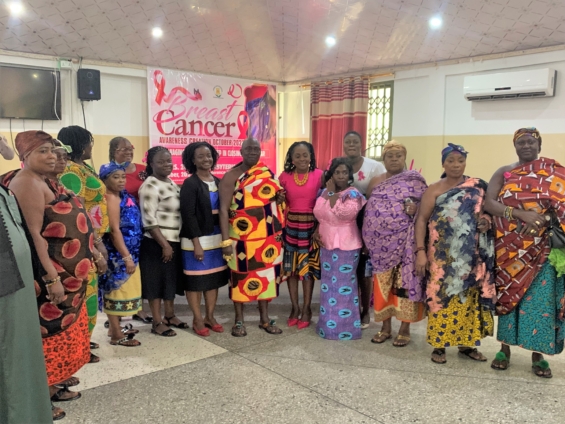
In a bid to promote breast cancer awareness and early detection, the Ashanti Regional Health Directorate has provided education and essential health screening to some women and students in the Ashanti Region.
The Deputy Director of Clinical Care of the Ghana Health Service, Dr. Mrs Rita Larsen-Reindorf emphasized the need for women to undergo breast cancer screening.
“It is the responsibility of us all, we should all get involve in creating breast cancer awareness. If we can close that gap and get involved in the awareness creation it will help in early detection and management because when breast cancer is detected early something can be done early about it. The outcomes can be better,” she said.
She also observed that people do not participate in these screenings because of the myths and stigmatizations that surround breast cancer.
“Stigma is also a problem and again because of the myths people tend to be afraid. We don’t know what causes it so people think that when you have it, it’s a curse.
“We tend to stigmatize it that is why we are creating the awareness. We have seen positive outcomes and I believe this will help people gain awareness about breast cancer,” she said.
The participants were educated on how to perform self-examinations.
Non-communicable disease coordinator of Ghana Health Service in the Ashanti Region, Lydia Owusu Ansah wants health practitioners to also focus on breast cancer in men.
“Usually because the percentage of men is low our focus is mostly on the women but about 2% of males also suffer from breast cancer
“So, we are opening our gates for each and everyone to partake in the screening,” she said.
She also debunked the notion that breast sizes can be determinants of breast cancer.
“Usually, we take into consideration your weight, because of the body make up. We have people that get breast cancer and their chests are even flat.
“There are other people who have large breasts but do not get breast cancer so we are saying this because some of them are hereditary and some of them is because of their lifestyle, some are also biological,” she said.
Participants also took part in eye screening and other general health screening.
Latest Stories
-
2026 Amputee World Cup: We want to make the continent proud – Black Challenge coach
2 minutes -
International Day of the Girl: Central Region Education Directorate calls for action to tackle child marriage, teenage pregnancy
8 minutes -
The Eyes of Ghana: iShowSpeed joins Obamas as producers of Chris Hesse documentary
19 minutes -
FirstBank Ghana pledges action on customer feedback at service week forum
50 minutes -
Sahara Group urges journalists to look beyond fuel prices in energy reporting
59 minutes -
Today’s front pages: Friday, October 16, 2026
1 hour -
Ashanti Region: ECG urges customer cooperation with franchise officers
1 hour -
Ghana’s research fund faces a test of turning funding promises into scientific breakthroughs
1 hour -
Dîner en Blanc Accra returns on December 28 for second edition
1 hour -
20% digital tax: Government hiding behind technicalities to cheat Ghanaians – Dr Boako
2 hours -
David Selassie Anthony declares bid for NDC Deputy National Organiser
3 hours -
Amin Adam proposes 13 measures to strengthen Ghana’s debt transparency and market confidence
3 hours -
Mahama announces $2bn annual investment to accelerate industrialisation
3 hours -
Amin Adam urges monthly disclosure of Sinking Fund as Ghana prepares for DDEP repayments
4 hours -
Stronger banks will fuel business growth and jobs – ADB MD
4 hours