

Audio By Carbonatix
The 2023 Upper West Regional best farmer, Mr Sumaila Doho, has urged the government to adopt policies that will improve Ghana’s maize production processes and make it more profitable and competitive.
He said Ghana had the potential to become a maize-surplus country but continued to spend millions of dollars importing the commodity that could be produced locally.
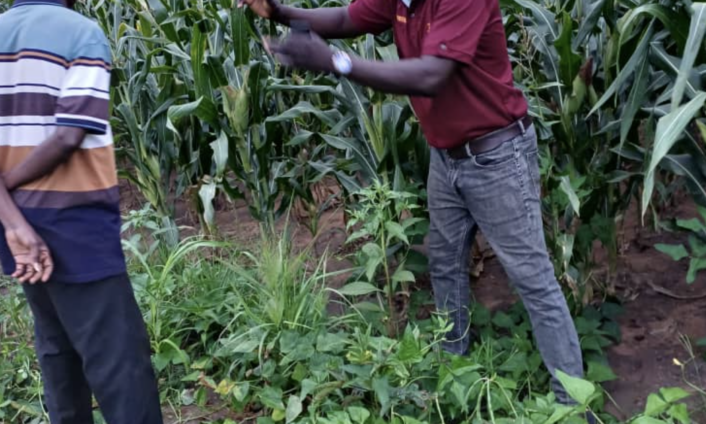
Mr Doho said this at Duwie, a community in the Sissala East Municipality during a visit to the Farmer Pride maize farms, as part of the third-trimester field practical programme for students of the University of Business and Integrated Development Studies.
In an interview with the Ghana News Agency (GNA), he said the continued dependence on imported maize was not only an economic concern but also posed a threat to Ghana’s food security and the livelihoods of local farmers.
He noted that maize remained one of Ghana’s most important food crops, serving as a major component of meals such as kenkey, banku, tuozaafi and koko, while also providing essential inputs for the poultry and animal-feed industries.
Mr Doho argued that importing maize from countries such as Argentina, South Africa and the United States meant that Ghana was effectively creating jobs and economic opportunities for foreign farmers, while local producers struggled to find markets for their produce.
“When Ghana imports maize, we are paying foreign farmers and supporting foreign agricultural value chains, while our own farmers are sometimes left with unsold produce,” he said.
He stressed that greater support for local maize production would keep more money within the Ghanaian economy and improve the livelihoods of farming families across the major maize-producing regions.
The 2023 Regional Best Farmer described local maize production as critical to Ghana’s long-term food security.
He said global events, including the COVID-19 pandemic and the Russia-Ukraine war, had demonstrated the vulnerability of international food supply chains, particularly when fertilizer and grain prices increased sharply.
Mr Doho added that fluctuations in the value of the Ghana cedi could also make imported food significantly expensive.
He observed that a country that could not feed itself could not claim to be truly independent and urged the government to invest heavily in domestic agricultural production.
The commercial farmer believed Ghana had the land, farmers, rainfall patterns and agricultural research capacity required to significantly increase maize production.
He cited improved maize seed varieties developed through agricultural research and maintained that what the sector needed most was deliberate and sustained government support.
Mr Doho proposed several measures that could help transform Ghana’s maize industry, including a guaranteed minimum price and market for maize.
Mr Doho also suggested that the National Food Buffer Stock Company (NAFCO) should announce a fair minimum price before the planting season and commit to purchasing maize from farmers.
He said such a policy would give farmers the confidence to invest in expanding production without fear of suffering heavy losses at harvest.
In addition, Mr Doho suggested an increased investment in storage and processing facilities, as post-harvest losses remained a major challenge because farmers lacked adequate drying, storage and processing facilities.
He advocated stronger links between maize production and industries involved in animal feed, flour, and starch production to create reliable markets for farmers.
Mr Doho also suggested farmers’ timely access to affordable agricultural inputs and investment in irrigation facilities, to help reduce the country’s dependence on rain-fed agriculture.
Latest Stories
-
Ghana’s BRICS move requires clear strategy to manage risks – Godfred Bokpin
5 minutes -
Pay teachers realistic income – Duncan Amoah to gov’t
22 minutes -
Bechem to become chicken capital of Ghana – Mahama projects
23 minutes -
Gov’t targets recruitment of 16,500 health professionals in 2026
44 minutes -
Two-week strike will not derail academic calendar – GNAT President
59 minutes -
Headmaster detained after BBC investigation into alleged sexual abuse of students
1 hour -
GNAT pushes for clear implementation procedures of teachers’ conditions of service
1 hour -
Recurrent strikes threaten quality of education and academic calendars – Prof Bokpin
2 hours -
‘Cockroach’ group leaders among hundreds detained in Delhi protest
2 hours -
Don’t let speed of information become your judgement – CJ tells new lawyers
2 hours -
World Cup visa scandal: People have leveraged public office to facilitate fraud – Senyo Hosi
2 hours -
Glut! Farmers count losses as prices crash, customers happy
3 hours -
GSA postpones auction of unserviceable vehicles
3 hours -
Man charged with attempted murder after stabbing
3 hours -
World Cup visa scandal: Senyo Hosi says issue goes beyond calls for Sports Minister’s resignation
3 hours