

Audio By Carbonatix
US President Joe Biden has announced an Israel-Hezbollah ceasefire to end fighting in Lebanon.
"Effective at 04:00 tomorrow local time (02:00 GMT on Wednesday), the fighting across the Lebanese-Israeli border will end," Biden said.
Israel's Prime Minister Benjamin Netanyahu said earlier that his government would "respond forcefully to any violation" of the deal.
There has been no response from Hezbollah - the Iran-backed armed group which had been trading fire with Israel since October 2023. The fighting escalated in late September when Israel dramatically intensified bombardments and launched a limited ground invasion.
The conflict has been Lebanon's deadliest in decades, killing more than 3,823 people say local officials.
On Tuesday, Netanyahu said how long the ceasefire lasted would depend on what happened in Lebanon.
"If Hezbollah violates the agreement and attempts to rearm, we will strike. If they try to renew terror activities near the border, we will strike," he said.
He also said ending the fighting against Hezbollah in Lebanon, Israel's northern neighbour, would allow the Israel Defense Forces (IDF) to increase pressure on Hamas in Gaza and focus on "the Iranian threat".
Iran-backed Hezbollah started firing rockets into Israel a day after its ally Hamas carried out a wide-ranging attack on southern Israel on 7 October 2023, which killed about 1,200 people.
"From day two of the war, Hamas was counting on Hezbollah to fight by its side. With Hezbollah out of the picture, Hamas is left on its own," Netanyahu said.
He also said ending fighting in Lebanon would give the IDF space to resupply weapons, munitions and troops.
The US, Israel's key backer, has led the charge in negotiating a ceasefire deal in Lebanon.
It is expected there will be an immediate 60-day ceasefire which will see both Israeli forces and Hezbollah's armed presence withdraw from Lebanon's south, the BBC's US partner CBS says.
Hezbollah fighters and weapons will be removed from the south of the Litani River, a boundary roughly 30km (19 miles) north of the border, that was established during the last Israel-Hezbollah war in 2006.
France, which administered Lebanon for more than 20 years in the last century, and is a long-term ally, is also expected to be involved throughthe monitoring of the truce.
Israel went on the offensive against Hezbollah - which is proscribed as a terrorist organisation by Israel and many Western countries - after almost a year of cross-border fighting sparked by the war in Gaza.
It says it wants to ensure the safe return of about 60,000 residents of northern Israeli areas displaced by rocket attacks, which Hezbollah launched in support of Palestinians the day after its ally Hamas’s deadly attack on Israel on 7 October 2023.
The war has been devastating for Lebanon, where, in addition to the 3,823 people killed and 15,859 injured, one million residents have been displaced in areas where Hezbollah holds sway.
On the Israeli side, the hostilities have killed at least 82 soldiers and 47 civilians, authorities say.
The World Bank estimates $8.5bn (£6.8bn) in economic losses and damage in Lebanon. Recovery will take time, and it is unknown how this will be funded.
Hezbollah, too, has been devastated. Many of its leaders have been killed, including long-time chief Hassan Nasrallah, in an IDF strike on Beirut on 27 September. A week later Israel also killed his presumed successor, Hashem Safieddine, in another strike.
With much of its infrastructure also damaged, how Hezbollah will look after the war remains unclear. The group has been severely weakened but it has not been destroyed.
In Lebanon, it is also more than a militia: it is a political party with representation in parliament, and a social organisation, with significant support among Shia Muslims.
Hezbollah’s opponents will probably see it as an opportunity to limit its influence - it was often described as “a state within a state” in Lebanon before the conflict - and many fear this could lead to internal violence.
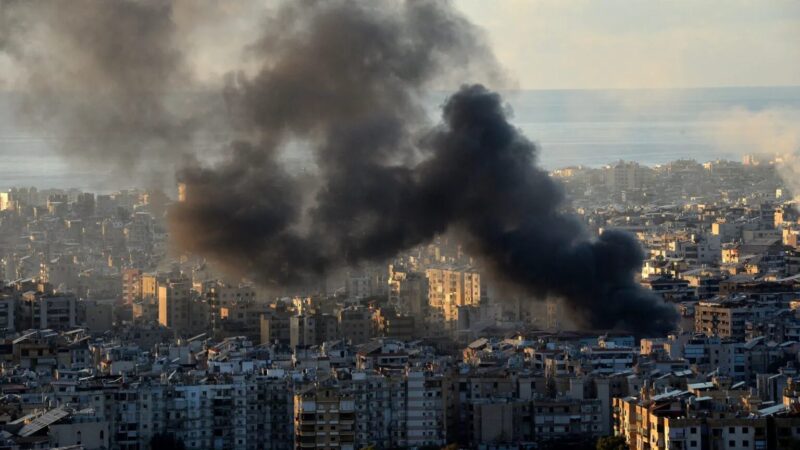
Since intensifying the fighting in September, Israel has carried out hundreds of daily strikes in Lebanon, targeting what it said were Hezbollah areas in the south, east and in the capital Beirut.
As reports emerged that Netanyahu was discussing a ceasefire deal with his cabinet on Tuesday, the IDF continued its strikes - targeting Beirut with strikes that killed at least seven people.
Latest Stories
-
Heritage Series Cedi notes to modernise cedi while preserving national identity – BoG
8 minutes -
Ghana’s business environment at ‘Inflection Point’ as private Sector takes greater lead — Vish Ashiagbor
14 minutes -
At least 2 new airlines could join domestic aviation market by 2027 – GCAA Director General
23 minutes -
What if Ghana’s next tourism boom begins with Ghanaians?
44 minutes -
Energy Commission to monitor EV charging stations
48 minutes -
Invest with confidence, Ghana’s golden era is beginning – Finance Minister
58 minutes -
Do Ghana to launch The Great Ghana Day Out on World Tourism Day
58 minutes -
Clean up our politics before politics cleans us up
2 hours -
2025 was a turning point, says Abradu-Otoo as NAFCO posts record GH¢91.7m profit
2 hours -
Today’s front pages: Friday, September 25, 2026
2 hours -
‘FA President has four clubs; what do you think he would do?’ – Nana Baffour Awuah fires back
2 hours -
Kurt Okraku doesn’t like criticism, but Ghana football is beyond him – Nana Baffour Awuah
3 hours -
Ghana’s Liquidity Paradox: Why capital is not reaching productive businesses
3 hours -
Ghana football has collapsed under Kurt Okraku – Manhyia South MP
3 hours -
Mr John Blankson Adu Otu
4 hours