

Audio By Carbonatix
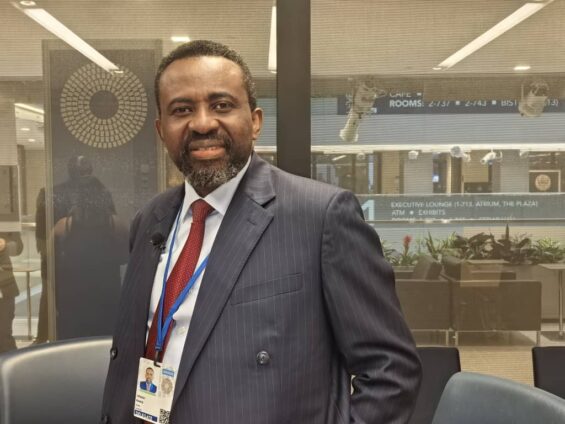
Governor of the Bank of Ghana, Dr Johnson Asiama, is calling for major reforms in how the International Monetary Fund (IMF) supports member countries, especially in Africa.
He argues that the Fund must introduce “step-changes” to make its interventions more effective amid mounting global and regional economic pressures.
The Bank of Ghana stressed that the review is critical at a time when African economies are facing an exceptionally challenging macroeconomic environment, driven by tight global financial conditions, rising debt vulnerabilities, and structural constraints that limit their ability to adjust.
Dr Asiama made the remarks while delivering a paper at the African Consultative Group Meeting with IMF Managing Director Kristalina Georgieva and members of the IMF Board.
He outlined two key policy proposals to improve the Fund’s response.
First, he called for urgent reforms to the sovereign debt resolution system. He said the IMF should use its convening power more decisively to ensure time-bound debt restructurings under the Common Framework, anchored on credible comparability of treatment and stronger participation by private creditors.
Dr Asiama also urged changes in programme design to ensure fairness in assessing country performance.
He noted that “Program design should better distinguish delays stemming from creditor coordination failures from those due to policy slippages, to ensure that strong adjustment efforts are not unduly penalised.”
He further stressed the need for reforms in debt sustainability frameworks and policy tools.
“In this context, we reiterate the need for a fit-for-purpose LIC DSF, the mainstreaming of the Integrated Policy Framework in program design, and a fast-tracked, more tailored implementation of the Three Pillar Approach to more effectively support members already in, or at high risk of, crisis.”
On strengthening the IMF’s role as a trusted advisor, Dr Asiama called for a more flexible and proactive approach. He said the Fund must expand its lending toolkit through bolder use of its balance sheet.
This, he explained, should include scaling up concessional financing, institutionalising Special Drawing Rights (SDR) rechanneling, and making the Resilience and Sustainability Trust faster and more responsive to liquidity and climate-related challenges.
The Governor warned that recent global shocks are intensifying vulnerabilities. “Recent shocks, including the Middle East conflict, underscore the need for well-resourced and readily accessible emergency financing to support members facing acute balance of payments pressures.”
He also highlighted the importance of sustained technical support to member countries.
“Finally, sustained and targeted Fund capacity development remains essential to strengthen revenues, debt and PFM, financial oversight, and crypto cyber resilience.”
According to him, the ongoing conflict in the Middle East has further worsened economic conditions, increasing inflationary pressures and weakening external balances across many economies.
Dr Asiama’s proposals add to growing calls for reforms at the IMF as developing countries seek more responsive and flexible support in navigating global economic shocks.
Latest Stories
-
‘Whatever the personal cost, I will not abandon my duty’ – Baffour Awuah assures Salomey Bafoh
2 minutes -
Government to increase funding for Houses of Chiefs to speed up dispute resolution
3 minutes -
Govt’ to introduce digital property rate system to boost MMDAs’ revenue – Mahama Ayariga
5 minutes -
Traditional Medicine Practice Council closes three unlicensed spa and massage centres in Ashanti Region
8 minutes -
Let’s accept the reality and move along – Mike Oquaye on NPP’s decision to make flagbearer party leader
10 minutes -
Early presidential primary helped cool tensions in NPP – Prof. Mike Oquaye
27 minutes -
NDC congratulates new NPP executives, urges national interest above party interests
30 minutes -
NPP implementing 2024 election review recommendations in stages – Prof Mike Oquaye
31 minutes -
Ghana Rugby Union announces managerial changes
32 minutes -
US removes all bombers from RAF Fairford base
33 minutes -
France closes up to 500 schools Monday over student protests
33 minutes -
Girl, 12, fatally shot in US during ‘dispute over parking space’
34 minutes -
NPP is a party for all classes – Prof. Mike Oquaye
34 minutes -
Chief Justice urges Judiciary to strengthen foundations of justice
34 minutes -
Rescuers suspend search for survivors after plane went missing off US coast
35 minutes