

Audio By Carbonatix
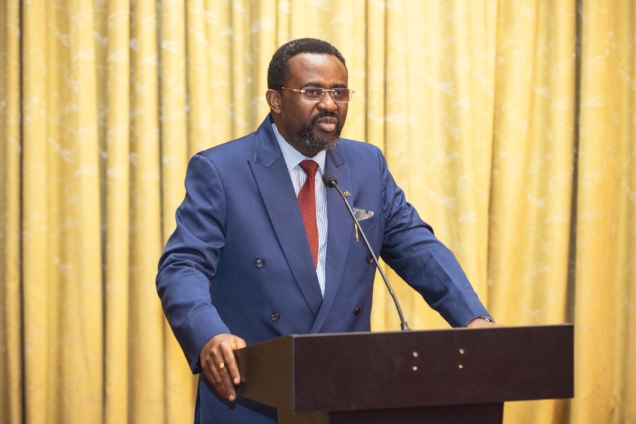
Bank of Ghana (BoG) Governor Dr. Johnson Asiama has dismissed speculation that the central bank is pumping large volumes of dollars into the market to prop up the cedi.
He said, “The stability that we are witnessing now has nothing to do with the fact that we are selling reserves.”
In an exclusive interview with JoyBusiness’ George Wiafe in Washington D.C., on the sidelines of the IMF/World Bank Spring Meetings, Dr. Asiama revealed that the Bank is not intervening directly in the market with its dollar reserves.
“All that we are doing now is strengthening the surge in inflows and implementing foreign exchange market reforms. It’s the combination of these factors that is enhancing the cedi’s recent stability,” he explained.
Indeed, Ghana’s cedi has experienced one of its most sustained periods of stability in recent years. Since December 2024, the currency has not only held its ground but has appreciated slightly against the US dollar on some trading days.
As of April 2025, Bank of Ghana data showed the cedi had appreciated by 2.76% against the dollar.
Bloomberg reported that commercial banks were selling the dollar at around GH¢15.58, with some even quoting GH¢14.38—figures that signal renewed confidence in the local currency.
No Return to a Fixed Regime
Dr. Asiama was quick to shut down any notions of exchange rate control.
“Whatever measures we are implementing will not lead to a fixed exchange rate for the Ghana cedi. We believe in allowing market forces to determine the rates, and that is what is going to happen,” he insisted.
What’s Really Behind the Cedi’s Comeback?
The Governor pointed to a blend of macroeconomic improvements and global trends as the foundation of the cedi’s rebound:
- Strong remittance inflows and improved export earnings from gold and cocoa are bolstering Ghana’s external position.
- Coordinated fiscal and monetary policies are shoring up confidence in the economy.
- A weaker US dollar globally has created favourable conditions for emerging market currencies like the cedi.
“The fiscal side has been supportive of monetary measures, helping to maintain the current development,” Dr. Asiama added, underscoring the delicate balance between policy coordination and market-led exchange rate determination.
As speculation mounts over the sustainability of the cedi’s strength, the Bank of Ghana appears determined to maintain confidence, not with reserves, but with reforms.
Latest Stories
-
Ghana’s BRICS move requires clear strategy to manage risks – Godfred Bokpin
8 minutes -
Pay teachers realistic income – Duncan Amoah to gov’t
24 minutes -
Bechem to become chicken capital of Ghana – Mahama projects
26 minutes -
Gov’t targets recruitment of 16,500 health professionals in 2026
47 minutes -
Two-week strike will not derail academic calendar – GNAT President
1 hour -
Headmaster detained after BBC investigation into alleged sexual abuse of students
1 hour -
GNAT pushes for clear implementation procedures of teachers’ conditions of service
2 hours -
Recurrent strikes threaten quality of education and academic calendars – Prof Bokpin
2 hours -
‘Cockroach’ group leaders among hundreds detained in Delhi protest
2 hours -
Don’t let speed of information become your judgement – CJ tells new lawyers
2 hours -
World Cup visa scandal: People have leveraged public office to facilitate fraud – Senyo Hosi
2 hours -
Glut! Farmers count losses as prices crash, customers happy
3 hours -
GSA postpones auction of unserviceable vehicles
3 hours -
Man charged with attempted murder after stabbing
3 hours -
World Cup visa scandal: Senyo Hosi says issue goes beyond calls for Sports Minister’s resignation
3 hours