

Audio By Carbonatix
The plan
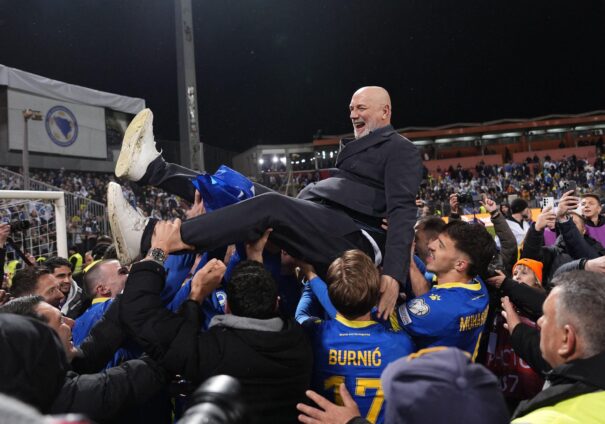
To say Bosnia and Herzegovina’s qualification for the World Cup comes as a surprise would be an understatement. A team that had managed only four wins in their previous 19 matches across two qualification cycles arrived at a crossroads when Sergej Barbarez took over in 2024. The campaign that followed was chaotic, emotional and occasionally irrational, which still feels like the most authentic description of Bosnian football itself. But Barbarez’s side somehow found a way through it all, eliminating both Wales and Italy in a dramatic playoff and reaching only the second World Cup in the country’s history.
The former captain had waited years for the job, so long that he had not coached anywhere in the meantime. He played professional poker and enjoyed retirement before the Bosnian FA finally got in touch. He gathered close friends and former teammates around him: Emir Spahic became sporting director, while Sasa Papac and Zlatan Bajramovic joined the coaching staff.
In Barbarez’s first year, 16 players made their debuts, most of them raised and developed abroad, from Sweden and Germany to Austria and the United States. That became the foundation of this new Bosnia side. Barbarez may have gone winless in his first eight matches and came under heavy criticism, but insisted that he first needed to rebuild the mentality of the squad.
Bosnia do not play especially beautiful football under the coach and systems change regularly – usually between 4-2-3-1 and 4-4-2 – but formations quickly become secondary once matches turn emotional, and with Bosnia they usually do.
The team’s identity is built around aggressive defending, direct football and quick transitions. Young players such as Kerim Alajbegovic, Esmir Bajraktarevic, Tarik Muharemovic and Amar Dedic have brought new energy to a squad still led by the veteran Edin Dzeko. Bosnia are unlikely to dominate many matches in Group B – against Canada, Switzerland and Qatar – but they have enough quality, emotional energy and unpredictability to become one of the tournament’s more uncomfortable teams.
The coach
Sergej Barbarez spent years criticising the way Bosnian football was run and had almost stopped expecting the call from Sarajevo altogether, having first expressed an interest in the role in 2009. Some 15 years later he took charge of the national team – with no previous coaching experience – for the first team against England at the age of 52.
A former captain and cult figure, Barbarez arrived promising honesty, emotional connection and a complete reset after years of dysfunction around the national team. He continued to repeat the same message about passion, pride and the responsibility of representing the country – and in the end this young squad absorbed it. After playoff victories over Wales and Italy, his status only grew further; the win against Italy transformed him from poker-playing outsider into one of Bosnia and Herzegovina’s most important sporting figures ever.
Star player
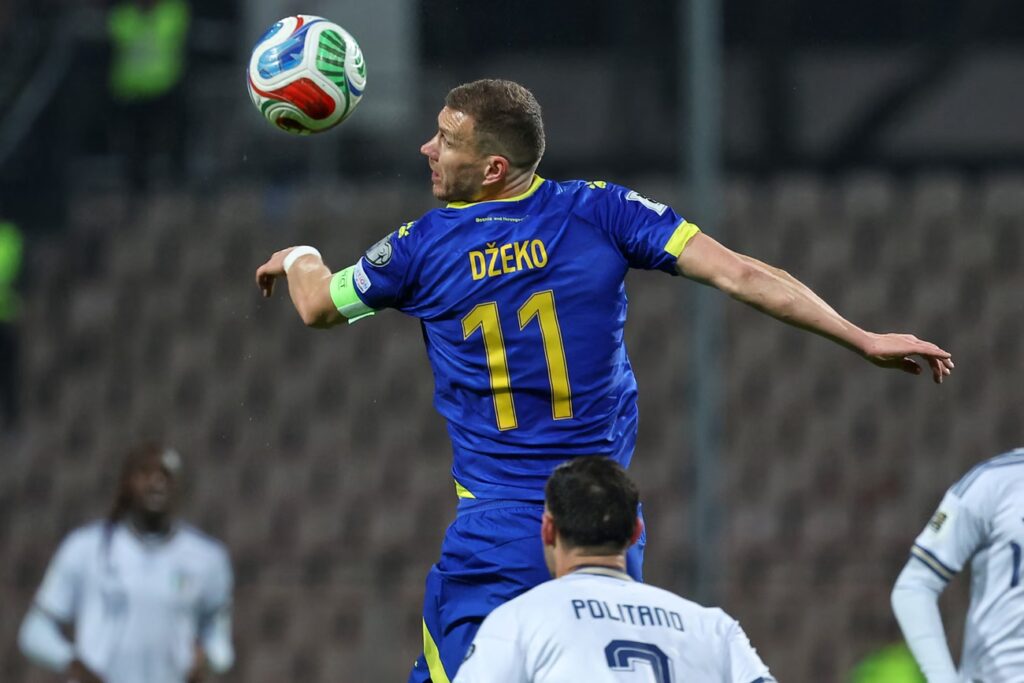
There are normal footballers and then there is Edin Dzeko. Even at 40, everything still somehow revolves around Edin. Bosnia and Herzegovina’s captain remains the country’s greatest footballer, its all-time leading goalscorer and the reference point of an entire generation. Younger players in the squad speak about him with a reverence bordering on disbelief.
Dzeko no longer dominates matches physically the way he once did at Wolfsburg or Manchester City, but his understanding of space, timing and pressure moments remains elite. During the playoffs he again delivered when Bosnia needed him most. “As long as I feel I can help, I’ll be here,” he said recently. Bosnia would not be at this World Cup without him.
One to watch
Kerim Alajbegovic, at 18, may already be the most naturally gifted attacking talent Bosnia and Herzegovina have produced since Miralem Pjanic. The midfielder, who spent a season with Red Bull Salzburg before Bayer Leverkusen triggered a buyout clause, is arriving at the tournament with that fearless attitude some players have at that age. It is not only his technique that stands out, but his personality too. Barbarez trusted the 18-year-old to take penalties in both playoff shootouts – and Alajbegovic responded with complete calmness. Elegant between the lines and fearless in possession, he feels like the face of Bosnia’s next generation.
Unsung hero
Bosnia and Herzegovina spent years producing centre-backs who defended first and worried about the football later. However, Tarik Muharemovic feels like the first one shaped by an entirely different mindset. Born in Slovenia and developed in Austria before moving through Italian football with Juventus and Sassuolo, the left-footed defender has quietly become one of the players Barbarez trusts most.
He is not especially loud, aggressive or dramatic, which, for a defender, normally makes people in Balkan football suspicious. Instead Muharemovic solves problems calmly, carries the ball forward and gives Bosnia something they lacked for years – composure.
Probable starting XI
Not in yet
What to expect from fans
Bosnia and Herzegovina’s support is emotional even by Balkan standards. Some fans will travel from Bosnia itself, others from huge diaspora communities across Germany, Austria, Sweden, Switzerland and the United States. Once together they usually become one loud, restless crowd once the matches begin. World Cups matter enormously because they happen so rarely; more than 100,000 people celebrated qualification on the streets of Sarajevo alone.
Part of the support is organised through the BHFanaticos ultra group, which follows the national team in different sports and drives the atmosphere throughout matches. Expect huge blue-and-yellow flags, fleur-de-lis symbols from medieval Bosnia, constant singing, drums, smoke and choreographies. And long nights around games too, because Bosnians tend to celebrate every small football moment as if it might never happen again.
This article is part of JoySports' collaboration with The Guardian. The cooperation enables readers to access team news, previews, and more from all 48 teams that qualified for the FIFA World Cup 2026.
Latest Stories
-
John Boadu is ‘an exceptionally gifted political figure’ – Prof Mike Oquaye
14 minutes -
NDC must study NPP congress closely for strategic lessons – Mustapha Gbande
20 minutes -
NDC has built strong structures to face any electoral challenge – Mustapha Gbande
30 minutes -
John Boadu can appeal across Ghana’s social groups – Prof Mike Oquaye
38 minutes -
‘Electing Kojo Bamba is backward politics’ – Mustapha Gbande
52 minutes -
Government must order payment of promoted teachers’ salaries – GNAT
1 hour -
Meet Sethina Edem Sunu, the healthcare professional eyeing the NDC UK & Ireland deputy organiser role
1 hour -
The myth of ‘sophisticated customer experience’ in the digital age
1 hour -
What happened to lands reserved for sanitary sites? -WasteCare CEO calls for audit
1 hour -
Manasseh Writes: The shift in the NPP
1 hour -
The price of a seat: Financial barriers and the structural quality of Ghana’s Parliament
2 hours -
Government targets October 16 for first tranche of teacher arrears – Haruna Iddrisu
2 hours -
Daily Insight for CEOs: The CEO’s role in driving innovation
2 hours -
Audit existing sanitary sites to address waste management land shortages – WasteCare CEO urges assemblies
2 hours -
Two-bin household waste system could support waste-to-energy in Ghana – Waste Care Associates CEO
2 hours