

Audio By Carbonatix
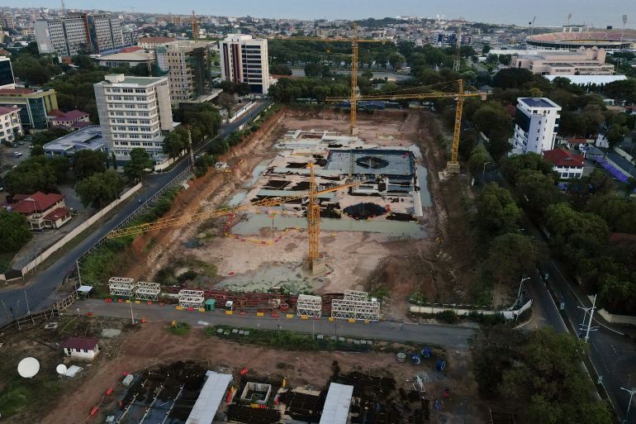
Ghana's National Cathedral was initially budgeted to cost $100 million. The revised figure used by its auditors is $350 million. However, with less than 10% completed (design + foundation), $100 million has already been spent. The total budget could top $1 billion. Some people argue that with nearly $100m spent already (on accrual basis), the country might just as well complete it.
This is the famous "sunk costs fallacy". I.e. "throwing good money after bad money." But what if the Cathedral could make enough revenue to pay for itself, as its trustees say? I have addressed that issue extensively in the recent past. The short answer is that it cannot pay for itself. You just have to look at cathedrals around the world and their financial issues to benchmark.
Cologne Cathedral, for instance, has an impressive religious pedigree. Its museum (treasury) not only houses holy relics of several important saints, such as Ursula, and fragments of the True Cross, it also hosts the Shrine of the Maggi, the proverbial "wise men" who "came from the East to worship the infant Christ." No matter how Ghana brands its Cathedral, it would simply not be able to compete with the 1000-year cathedrals dotted all over Christendom.
Cologne Cathedral receives 6 million visitors a year, more than 4x the annual number of visitors to Ghana. Many pay to enter the Museum. Yet, it is not financially self-sustaining. The Christian shrine most similar to what Ghana is attempting to build is the Basilica in Yamoussoukro in Côte d'Ivoire. It barely gets 30,000 visitors a year. It is entirely funded by donations from a Polish religious order. Obviously because it is a Catholic church. Ghana's Cathedral, on the other hand, is non-denominational, probably why so few donations have come in so far.
Cologne Cathedral, for its part, needs €4.5 million from the Catholic Church in subsidies. Its annual maintenance costs alone exceed €10 million. The Church has had to implement cost-saving measures in recent years to keep the doors open. In fact, without the dedicated worldwide voluntary association that donates regularly to fund Cologne Cathedral, maintenance would be tough. All the evidence suggests, therefore, that the National Cathedral, if completed, would become another loss-making entity requiring permanent government subsidies.
Of course, any other project proposed to replace it must be subjected to the same rigorous cost-benefit analysis and assessed for financial sustainability. There are, admittedly, certain projects that have such a high social value that permanent subsidies make sense. But the way to determine is to enhance the cost-benefit analysis to capture social, and not only financial, benefits and then compare with alternative projects that also have a high social value. The total budget of a project must also always be a factor in such analyses.
******
Bright Simons is the Honorary Vice President of IMANI Ghana
Latest Stories
-
Court hands Adjetey Sowah, two others lifetime bans after Amputee Football legal dispute
50 seconds -
NDC appoints Julius Kwame Anthony as a Deputy Communications Director
1 minute -
Ghana repatriates 120 Nigerians rescued from suspected cybercrime centres
6 minutes -
NPP rejects Emelia Agbenyo’s appointment as Deputy EC Chair, demands withdrawal
11 minutes -
EOCO grants Suame MP John Darko enquiry bail in GH¢27m SIC investigation
14 minutes -
NPP cannot question EC appointment after appointing own people to Commission – Kwakye Ofosu
19 minutes -
BoG deepens public trust with regional stakeholder forum in Techiman
29 minutes -
‘We have turned the tide’ – Ato Forson says Ghana is ready to take off
34 minutes -
Police arrest man captured in viral video assaulting wife in Agona Nkwanta
36 minutes -
KATH Mother and Baby Unit construction stalled for 14 months over unpaid contractor arrears
50 minutes -
Government wanted to ‘tilt the balance’ with new EC appointments – Kwakye Ofosu
56 minutes -
Angry Tema Community 25 residents threaten to sleep at GWL over water shortage
1 hour -
BoG takes financial literacy drive to Techiman, vows to protect depositors
1 hour -
‘Stop the distractions’ – Akosua Manu demands answers over GH¢49.7m South Africa evacuation cost
1 hour -
Formula 1 to return to Africa with Rwanda Grand Prix in early 2030s
1 hour