

Audio By Carbonatix
The newly appointed Managing Director of the Produce Buying Company Shea (PBC Shea) in Buipe, Savannah Region, Abubakari Abdul Mumin, has revealed that the shea butter processing factory is back in operation and is poised to play a key role in actualising the government's 24-hour economy policy. The factory is set to operate three separate working shifts and is projected to create approximately 30,000 direct and indirect jobs for the youth.
Mr Mumin stated that every department of the factory remains functional, and he brings with him a wealth of technical and practical knowledge of the industry to support government efforts in job and wealth creation.
Speaking in an interview with JoyNews in Buipe, Central Gonja District of the Savannah Region, Mr Mumin noted that former President John Dramani Mahama has tasked him with transforming the Buipe PBC Shea factory into a hub for youth employment and government revenue generation.
“What it means, seeing this huge investment sitting here in Buipe, is that President John Dramani Mahama’s 24-hour economy policy will be very much applicable in this factory. In fact, when I received my appointment letter from the President, he gave me two cardinal responsibilities: first, to create jobs, and second, to generate wealth for the central government,” he said.
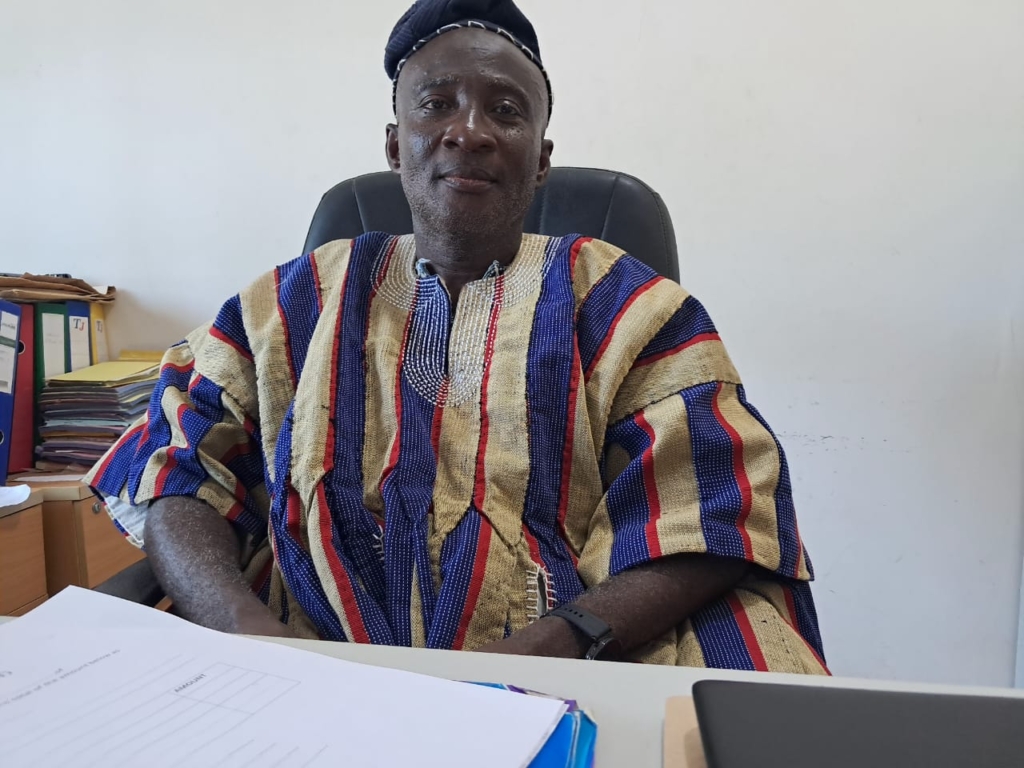
“My intention as Managing Director is to implement a three-shift working system – morning, afternoon, and night – so that we can effectively engage over 30,000 young people, including women, both directly and indirectly,” Mr Mumin assured.
His Excellency President John Dramani Mahama cut the sod for the construction of the multi-purpose factory in 2012 and commissioned it within the same year to begin processing raw shea into butter and soya beans into soya oil and cake.
However, following the 2012 general elections, the factory underwent managerial challenges, with four different directors, the most recent being Madam Gabiana Agbanwa, who recently handed over to Mr Abdul Mumin. These transitions occurred with little impact on the factory’s output.
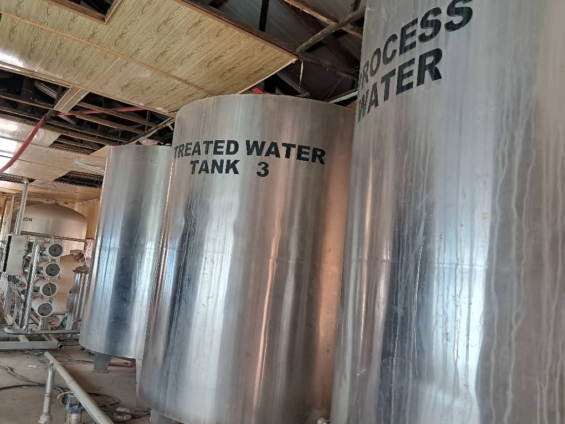
Despite its management setbacks, the factory still possesses functional infrastructure, including a water plant with a production capacity of 5,700 gallons per day and 2,562 litres per hour, according to factory records.
Other facilities include a solvent extraction plant (ACP), oil mill, boiler, laboratory, and a DOC (De-oiled Cake) room.
In addition to its underground fuel reserve, the factory has, over the years, been able to use DOC to generate energy internally, enabling it to power the entire plant efficiently.
Latest Stories
-
Photos: Housing solutions take centre stage at Day 2 of the 3rd Republic Bank-JoyNews Habitat Fair
7 minutes -
Video: Immunity should be exercised without creating classism – Inusah Fuseini on cocaine bust
40 minutes -
Ghana Air Force passes out 293 recruits after six months of intensive training
48 minutes -
EOCO vrs Baffour Awuah: EOCO should have secured warrant before arrest attempt at court – Inusah Fuseini
52 minutes -
Triple fibre cuts disrupt telecom services across Northern, Oti regions – Sam George
55 minutes -
Politicisation could undermine parliamentary probe into cocaine seizures – Dr Osae-Kwapong
1 hour -
EOCO chases MP: Can Section 41 cure lacuna in EOCO Act? – Inusah Fuseini asks
1 hour -
GNFS, GWL inspect fire hydrants in Ministries enclave; 23 found faulty
1 hour -
Gov’t directs release of 50,000 bags of grain to ECOWAS
1 hour -
Ghana, Germany deepen cooperation on railways, labour mobility
1 hour -
Huge crowds greet Pope in Paris for open-air Mass
1 hour -
‘I never said I’ll declare a state of emergency’ – President Mahama on galamsey
2 hours -
Bobby Banson condemns EOCO’s attempted arrest of Nana Agyei Baffour Awuah
3 hours -
When Kumasi begins to look like somebody is in charge
3 hours -
Parliamentary probe into cocaine seizure would be a waste of time – Inusah Fuseini
3 hours