

Audio By Carbonatix
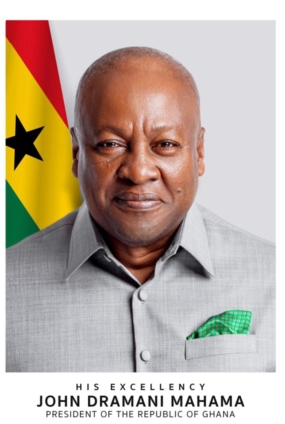
Private sector leaders have commended President John Dramani Mahama for restoring macroeconomic stability, citing the strengthening of the Ghana cedi, which has appreciated by 40.7% against the US dollar in 2025 and is currently trading at GH¢10.9756 per dollar, and the decline in interest rates as critical signals of renewed confidence in the economy.
The commendation was made at an Evening Direct Government–Private Sector Partnership Engagement, a forum promised by the President during the 2024 election campaign to ensure continuous dialogue between government and business leaders on economic reforms and growth priorities.
Participants drawn from finance, agribusiness, manufacturing, construction, retail, and the digital economy described the current economic environment as markedly improved, noting that currency stability and easing borrowing costs are already enhancing business planning, pricing certainty, and investment decision-making. They recalled that in 2024, policy and commercial lending rates peaked at around 47%, severely constraining access to credit and stalling private investment.
According to several industry leaders, prolonged currency volatility and high interest rates in recent years had constrained expansion, raised operational risks, and limited access to affordable credit. They observed that the recent trend reversal is helping and interest rates have sharply declined to about 13% while short-term government securities such as trespassing bills are now trading as low as 6.6%, erasing borrowing costs across the country and improving liquidity conditions for businesses.
They also highlighted the improved performance of the Ghana cedi, which has recorded over 40% gain against the US dollar in 2025.
Finance Minister Dr. Cassiel Ato Forson projects a 4.8% GDP growth for 2026, driven by the government’s focus on stability and growth, with inflation dropping significantly from 23.8% in 2024 to 3.8% in January 2026.
Addressing the gathering, President Mahama stated that Ghana must deliberately position itself as an industrial hub for West Africa and Africa as a whole, anchored on value addition, competitive manufacturing, and export-led growth. He stressed that macroeconomic discipline, stable exchange rates, and affordable financing were essential prerequisites for industrialisation.
He noted that the government’s economic strategy is focused on creating a predictable environment that enables the private sector to invest, scale operations, and compete effectively within regional and continental markets.
Private sector leaders welcomed the industrial hub vision, describing it as a significant opportunity for Ghanaian businesses. They noted that the combination of currency stability, falling interest rates, and structured engagement with government provides a solid foundation for expanding manufacturing capacity, strengthening regional supply chains, and creating jobs.
One manufacturing sector representative said the private sector sees “a much bigger opportunity” under the current economic direction, adding that the alignment between policy stability and industrial ambition is critical for attracting both local and foreign investment.
Participants also praised the institutionalisation of regular government–private sector engagements, describing the forum as a practical mechanism for identifying bottlenecks, tracking reforms, and aligning policy implementation with real-economy needs.
President Mahama reaffirmed his administration’s commitment to private-sector-led growth, assuring businesses that the engagement series would be sustained and used as a feedback platform to refine policies and accelerate implementation.
He indicated that stabilising the cedi and easing interest rates were not isolated outcomes, but part of a broader strategy to restore confidence, crowd in investment, and support Ghana’s long-term industrial transformation. Observers say the renewed collaboration between government and the private sector could play a pivotal role in Ghana’s economic recovery and growth, particularly as the country seeks to expand industrial output, boost exports, and create employment
Latest Stories
-
Church of Pentecost supports over 2,000 BECE candidates in Obuasi with career guidance seminar
19 minutes -
Brandon Asante and Coventry all but promoted to Premier League despite Sheffield Wednesday draw
41 minutes -
GPL 2025/26: Late Kwartemaa strike downs Hearts in Tema
47 minutes -
Ghana Faces Sierra Leone Moment as Prosecutorial Powers come under strain
57 minutes -
Don’t consume fish or seafood from Tema Shipyard until further notice – FDA warns
1 hour -
Why volunteering might be Africa’s most underrated career accelerator
1 hour -
ActionAid Ghana raises concern over gender gaps in Feed Ghana Programme
1 hour -
Windstorm wreaks havoc in Gushegu, displacing nearly 2,000 residents and damaging schools
1 hour -
Friends of Bridget Bonnie Marks her 35th birthday with donation to Kasseh Model Health Centre
2 hours -
From Ekumfi Kokodo to the Pulpit Stage: Essi Donkor’s gospel journey takes shape
2 hours -
Landfilling waste management creates no value, it’s an economic waste
2 hours -
Photos: Speaker Bagbin Commissions MPs constituency office under parliamentary decentralisation programme
3 hours -
Black Stars technical advisor Winfried Schäfer sacked as GFA shakes up backroom staff
3 hours -
Wenchi water project almost complete, critical to gov’t agenda – GWL MD
3 hours -
Anti-LGBTQ+ bill not part of government’s legislative agenda – Inusah Fuseini
3 hours