

Audio By Carbonatix
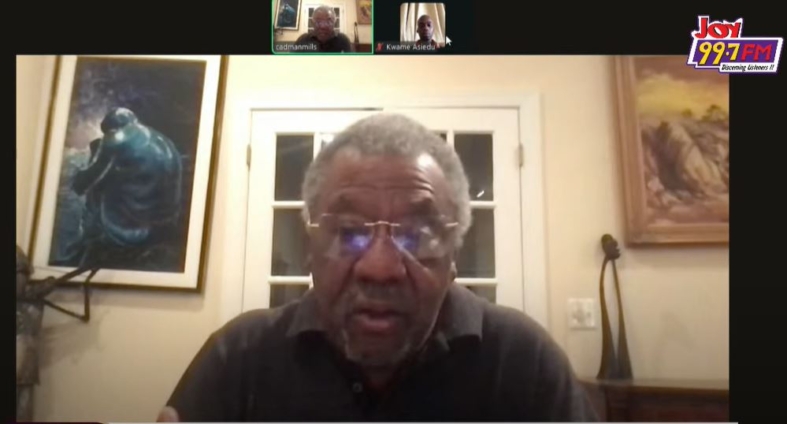
The brother of the late President John Evans Atta Mills, economist Cadman Atta Mills, has provided a stark professional and personal analysis of illegal mining (galamsey), describing it not just as an environmental crisis but a complete breakdown of Ghana's governance system.
Speaking on the Joy FM Super Morning Show on Tuesday, September 23, he stated that the illegal activity is "unacceptable" and a betrayal of the proper, scientific methods of mining.
Mr. Mills, an astute economist with decades of experience from the World Bank, explained the fundamental difference between legitimate mining and the rampant destruction caused by galamsey.
He stated that proper mining requires a meticulous process of scientific exploration to determine the economic viability and size of a mineral deposit.
This is followed by a "plan of development" and a comprehensive "environmental assessment plan" with built-in mitigation measures to protect the land and water.
A license to mine is granted only after these rigorous steps are completed.
"That is not what is happening in Ghana," he said. He lamented that "any bozo just simply goes because he's a party member and he's given a licence to explore, and the exploration licence is being used to actually mine."
This, he argued, is an abuse of the system that is "unacceptable."
Mr Cadman Atta Mills brought the seriousness of the issue to a personal level, sharing a shocking account of his recent visit to Ghana.
Despite being away for only a year, he fell ill from using water in the Central Region.
He disclosed that he experienced a "major upset for almost all the time that I was there" just from using the water to cook and brush his teeth, without even drinking it.
"That was the click to me that look, this thing is not some theory," he said.
His personal anecdote underscores a growing body of scientific evidence. Studies by the Water Resources Commission have shown that major rivers like the Pra and Ankobra are heavily polluted with mercury, cyanide, and other toxic chemicals used in illegal mining.
According to a report by the Ghana Academy of Arts and Sciences (GAAS), the destruction of water bodies and farmlands is a national catastrophe.
The Ghana Water Company Limited (GWCL) has also repeatedly warned that the high turbidity and chemical content of water from these sources make treatment extremely difficult and costly, raising fears of a potential water importation crisis if the issue is not resolved.
Mr. Mills' comments serve as a powerful validation of the ongoing #StopGalamseyNow protests, adding a veteran economist's perspective to the environmental and social calls for action.
He concluded by reiterating that Ghana’s leadership must have the political will to enforce its own laws and stop the destruction, which is being enabled by cronyism and a disregard for proper procedure.
Latest Stories
-
Today’s front pages: Tuesday, October 13, 2026
6 minutes -
Wealth Over Water: How Galamsey Is Threatening Ghana’s Water Security
42 minutes -
LA 2028: Black Queens pumped up for second leg of Mauritius tie
50 minutes -
LA 2028: Black Queens hold final training session ahead of second leg against Mauritius
1 hour -
Standards are not Seasonal: What the EC appointments teach both sides
2 hours -
King Mohammed VI urges private sector to create youth jobs and spread benefits of growth
2 hours -
KGL U17 Colts 2026: Greater Accra win title after penalties win over Western Region
2 hours -
UK Investment Roadshow opens in London to advance UK-Ghana growth partnership
2 hours -
Assemblies of God requires pastors to resign before entering partisan politics – Rev. Wengam
2 hours -
Ghana targets 20% annual reduction in maternal deaths – Health Minister
2 hours -
Cyber attacks in Africa grow faster than global rate, report finds
2 hours -
Ghana signs UAE deal to create 5,000 overseas jobs
2 hours -
One Million Coders Programme targets 100,000 digital jobs in two years – Sam George
2 hours -
John Jinapor, Italian Ambassador explore opportunities for energy sector investment
2 hours -
NHIA seeks legal reforms to support Free Primary Healthcare
2 hours