

Audio By Carbonatix
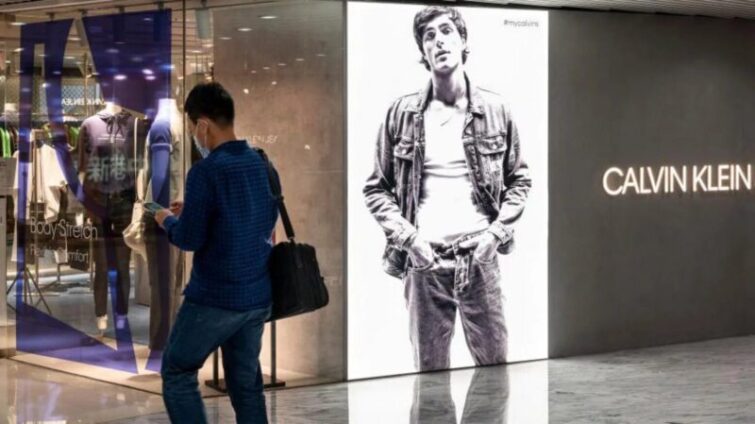
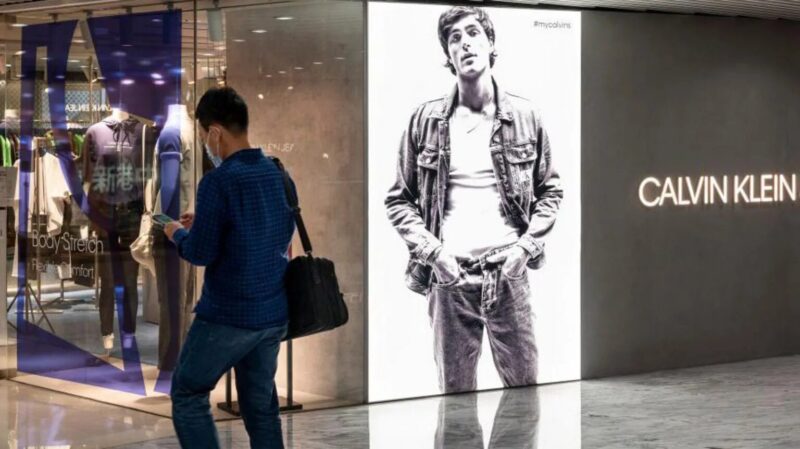
China has announced it is investigating the company that owns US fashion brands Tommy Hilfiger and Calvin Klein for suspected "discriminatory measures" against Xinjiang cotton companies.
The move marks a new effort by Beijing to fight back against allegations from Western officials and human rights activists that cotton and other goods in the region have been produced using forced labour from the Uyghur ethnic group.
The US banned imports from the area in 2021, citing those concerns.
China's Ministry of Commerce accused the firm of "boycotting Xinjiang cotton and other products without any factual basis".
PVH, which owns the two brands and has a significant presence in China as well as the US, said it was in contact with Chinese authorities.
It has 30 days to respond to officials, at which point it could be added to the country's "unreliable entities" list, raising the prospect of further punishment.
"As a matter of company policy, PVH maintains strict compliance with all relevant laws and regulations in all countries and regions in which we operate," the company said. "We are in communication with the Chinese Ministry of Commerce and will respond in accordance with the relevant regulations."
On Wednesday, a Chinese Ministry of Commerce official denied that the probe was linked to US plans to ban certain Chinese electric vehicle technology.
"China has always handled the issue of the unreliable entity list prudently, targeting only a very small number of foreign entities that undermine market rules and violate Chinese laws," they said.
"Honest and law-abiding foreign entities have nothing to worry about."
Cullen Hendrix, senior fellow at the Peterson Institute of International Economics, said it was not clear exactly what prompted the investigation into PVH now.
But he said the announcement was likely to hurt the firm's reputation among Chinese shoppers - and send a wider warning to global firms of the risks of simply bowing to Western concerns.
"China is, to a certain extent, flexing its muscle and reminding, not necessarily Western governments, but Western firms... that actions have consequences," he said.
"This same kind of naming-and-shaming tactic, that human rights organisations in the West have used, can be weaponised here."
The investigation of PVH comes as tensions between China and the West have been growing on a range of issues, including electric cars and manufacturing.
On Monday, the US proposed rules to ban the use of certain technology in Chinese and Russian cars, citing security threats.
China has previously put US firms on its unreliable entities list, which it created as trade tensions heated up between Beijing and Washington.
Those firms were major defence contractors, such as Lockheed Martin and Raytheon, over their business in Taiwan.
Mr Hendrix said the decision to target PVH - a consumer-facing firm with a clearly recognisable US brand - showed the two countries' disputes were widening beyond areas such as defence and advanced technologies.
"These things have a way of spilling over," he said. "It's affecting a growing number of supply chains across different sectors of the economy."
In its annual report, PVH warned investors of revenue and reputational risks stemming from the fight over Xinjiang.
It noted that the issue had been "subject to significant scrutiny and contention in China, the United States and elsewhere, resulting in criticism against multinational companies, including us".
The company was named in a 2020 report by the Australian Strategic Policy Institute that identified dozens of firms that were allegedly benefiting from labour abuses in Xinjiang.
At the time PVH said it took the reports seriously and would continue to work to address the matter.
PVH employs more than 29,000 people globally and does more than 65% of its sales outside of the US.
Latest Stories
-
Huge crowds greet Pope in Paris for open-air Mass
11 minutes -
‘I never said I’ll declare a state of emergency’ – President Mahama on galamsey
51 minutes -
Bobby Banson condemns EOCO’s attempted arrest of Nana Agyei Baffour Awuah
1 hour -
When Kumasi begins to look like somebody is in charge
1 hour -
Parliamentary probe into cocaine seizure would be a waste of time – Inusah Fuseini
1 hour -
Cocaine seizure: Focus on Ghana’s reputation, not partisan blame – Osae-Kwapong
1 hour -
Two Invitations, Three Interrogations: Did Baffour Awuah tell the whole story?
2 hours -
Drug cartels may be seeing Ghana as easy route – Lenin Anane Agyei
3 hours -
Ghana risks gaining notoriety as drug-trafficking hub – Bobby Banson
3 hours -
Government dismissed my drug trafficking warning, then tried to arrest me – Ntim Fordjour
3 hours -
Day Two: 3rd Republic Bank-JoyNews Habitat Fair Clinic underway at Junction Mall
3 hours -
NACOC addressing inherited gaps in fight against drug trafficking – Deputy Director-General
3 hours -
Taekwondo goes to school as GTF launches five-region youth campaign
3 hours -
The issues Mourinho is struggling to fix at Real Madrid
3 hours -
Hundreds throng EducationUSA College Fair in Kumasi in pursuit of abroad studies
3 hours