

Audio By Carbonatix
The New York Stock Exchange has begun delisting three Chinese telecom companies after an executive order from US President Donald Trump in October.
China said Saturday that it would take necessary countermeasures after the New York Stock Exchange (NYSE) began delisting securities of three Chinese telecommunications companies.
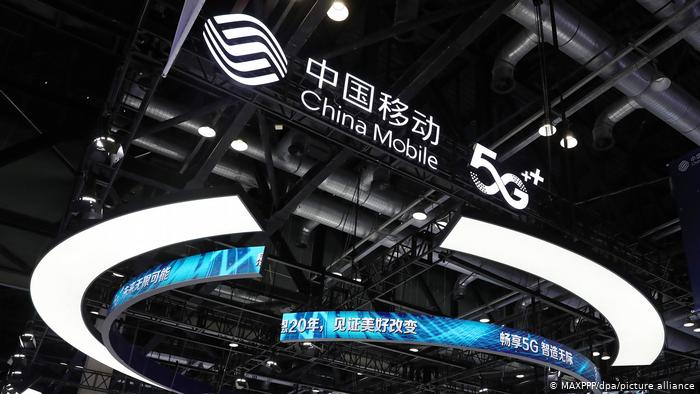
The NYSE announced earlier this week that it would halt the trading in shares of China Mobile Ltd., China Unicom Hong Kong Ltd. and China Telecom Corp Ltd. by January 11.
The stock exchange said it took the decision because of an executive order from US President Donald Trump that barred Americans from investing in firms with ties to the Chinese military.
The move has further strained ties between Washington and Beijing, who have butted heads over trade and the coronavirus pandemic during Trump's time in the White House.
What was China's response?
A Chinese Commerce Ministry spokesperson said in a statement that the NYSE delisting will "greatly weaken all parties' confidence in the US capital market."
The ministry said the decision to delist the three telecom firms was an abuse of national security and inconsistent with market rules.
China "will take the necessary countermeasures to resolutely safeguard the legitimate rights and interests of Chinese companies," the ministry spokesperson said, without naming specifics.
Will the NYSE delisting affect the Chinese firms?
All three telco companies are state-run enterprises that operate under Beijing's firm control. They are the only three companies in China that are allowed to provide broad telecommunication services, an industry the government believes should remain under state control.
Losing their listing will unlikely have much of an effect on the firms. Beside state funds, the three companies can still attract international investment by selling shares in Hong Kong.
But the delisting is another tie severed between the world's two biggest economies. The Trump administration has already blacklisted electronics giant Huawei and has fought to ban the social media platform TikTok.
In December, US Congress passed a bill that would close American markets to Chinese firms that don't comply with US oversight or financial audits.
Latest Stories
-
Video: Immunity should be exercised without creating classism – Inusah Fuseini on cocaine bust
3 minutes -
Ghana Air Force passes out 293 recruits after six months of intensive training
11 minutes -
EOCO vrs Baffour Awuah: EOCO should have secured warrant before arrest attempt at court – Inusah Fuseini
15 minutes -
Triple fibre cuts disrupt telecom services across Northern, Oti regions – Sam George
18 minutes -
Politicisation could undermine parliamentary probe into cocaine seizures – Dr Osae-Kwapong
25 minutes -
EOCO chases MP: Can Section 41 cure lacuna in EOCO Act? – Inusah Fuseini asks
28 minutes -
GNFS, GWL inspect fire hydrants in Ministries enclave; 23 found faulty
33 minutes -
Gov’t directs release of 50,000 bags of grain to ECOWAS
35 minutes -
Ghana, Germany deepen cooperation on railways, labour mobility
40 minutes -
Huge crowds greet Pope in Paris for open-air Mass
51 minutes -
‘I never said I’ll declare a state of emergency’ – President Mahama on galamsey
2 hours -
Bobby Banson condemns EOCO’s attempted arrest of Nana Agyei Baffour Awuah
2 hours -
When Kumasi begins to look like somebody is in charge
2 hours -
Parliamentary probe into cocaine seizure would be a waste of time – Inusah Fuseini
2 hours -
Cocaine seizure: Focus on Ghana’s reputation, not partisan blame – Osae-Kwapong
2 hours