

Audio By Carbonatix
Long the world’s undisputed cocoa powerhouses, accounting for more than 60 percent of global supply, Ghana and its West African neighbour Ivory Coast are both facing catastrophic harvests this season.
Expectations of shortages of cocoa beans – the raw material for chocolate – have seen New York cocoa futures more than double this year alone. They have hit new record highs almost daily in an unprecedented trend that shows little sign of abating.
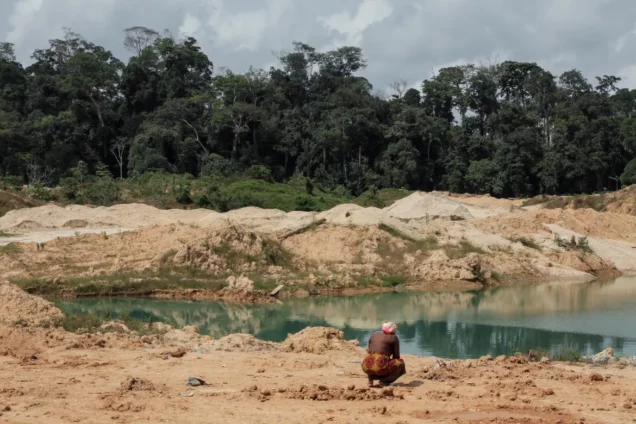
More than 20 farmers, experts and industry insiders told the Reuters news agency that a perfect storm of rampant illegal gold mining, climate change, sector mismanagement and rapidly spreading disease is to blame.
In its most sobering assessment to date, according to data compiled since 2018 and obtained by Reuters, Ghana’s cocoa marketing board Cocobod estimates that 590,000 hectares (1.45 million acres) of plantations have been infected with swollen shoot, a virus that will ultimately kill them.
Ghana today has some 1.38 million hectares (3.41 million acres) of land under cocoa cultivation, a figure Cocobod said includes infected trees that are still producing cocoa.
“Production is in long-term decline,” said Steve Wateridge, a cocoa expert with Tropical Research Services. “We wouldn’t get the lowest crop for 20 years in Ghana and lowest for eight years in Ivory Coast, if we hadn’t reached a tipping point.”
It is an imbroglio with no easy fixes that has shocked markets and could spell the beginning of the end of West Africa’s cocoa supremacy, the experts told Reuters. That may open the door for ascendant producers, particularly in Latin America.
And while millions of cocoa farmers in West Africa are facing a painful watershed moment, it is a shift that will also be felt in wealthy consumer markets, possibly for years to come.
Shoppers buying Easter confections in the United States are discovering that chocolate on store shelves is more than 10 percent more expensive than a year ago, according to data from research firm NielsenIQ.
Since chocolate-makers tend to hedge cocoa purchases months in advance, analysts have said the disastrous crops in West Africa will only really hit consumers later this year.
“The kind of chocolate bar that we’re used to eating, that’s going to become a luxury,” said Tedd George, an Africa-focused commodities expert with Kleos Advisory. “It will be available, but it’s going to be twice as expensive.”
Latest Stories
-
Afoko can unite NPP’s factions, says Charles Owusu Juanah
13 minutes -
Guardiola backing Man City after guilty verdicts
20 minutes -
Annoh-Dompreh questions EOCO’s claim that Manhyia South MP was unavailable for questioning
20 minutes -
Djokovic wins first match since Wimbledon at China Open
33 minutes -
KAIPTC, National Peace Council move to bridge civilian-security trust deficit to counter violent extremism
40 minutes -
Infantino should have no place in future of football – Pinto
42 minutes -
A decade of duty: First Commander recounts the unexpected birth of Ministries Fire Station
45 minutes -
Mfantsipim must cultivate more business leaders, entrepreneurs – Nana Awuah
47 minutes -
MOBA must reduce reliance on donations to protect Mfantsipim’s future – Patrick Kittoe
48 minutes -
GCB extends Customer Service Week into month-long customer engagement
48 minutes -
Africa risks widening inequality if it fails to build AI expertise – Kweku Awotwi
49 minutes -
Women’s Voices Matter Movement petitions Gender Ministry over women’s rights and development
50 minutes -
Ronaldo leaves Portugal camp after coach denies rift
51 minutes -
Huel ad banned for suggesting its products could replace all meals
1 hour -
Digital Customer Service
2 hours