

Audio By Carbonatix
More than 40 percent of the world's electricity was generated without burning fossil fuels in 2024, according to a new report from think-tank Ember.
But carbon dioxide emissions, which warm the planet, have risen to an all time high, the report says, with hot weather pushing up the overall demand for power.
That meant an increase in the use of fossil fuel burning power stations.
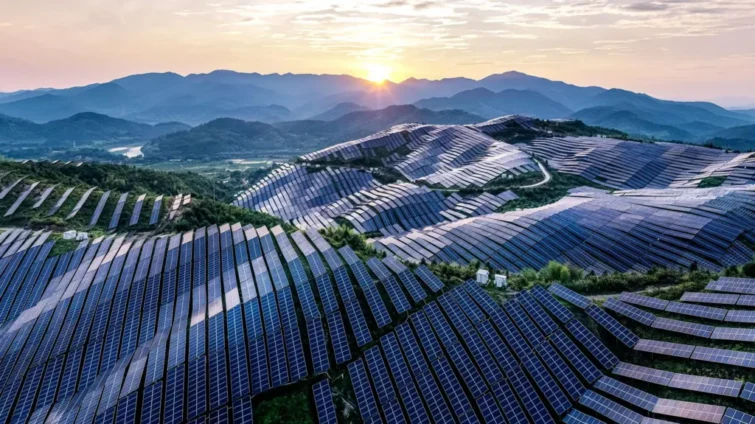
Solar power continues to be the fastest-growing energy source, with the amount of electricity it generates doubling in the last three years.
"Solar power has become the engine of the global energy transition," said Phil Macdonald, the managing director of Ember.
"Amid the noise, it's essential to focus on the real signal. Hotter weather drove the fossil generation increase in 2024, but we're very unlikely to see a similar jump in 2025."
In a separate report, the European Copernicus climate service said March 2025 was the second hottest on record, extending a spell of record or near record breaking temperatures.
Ember is a global energy think tank which has been predicting for several years that emissions of the climate warming gas carbon dioxide were about to start falling.
But this hasn't happened yet due to increasing global demand for electricity.
Solar revolution
Cheap and relatively easy to install, for the twentieth year in a row solar is the fastest growing electricity source. According to Ember, the amount generated by solar panels has doubled every three years since 2012.
China continues to dominate the growth of solar with more than half of the increase taking place there. India's solar capacity doubled between 2023 and 2024.
Though it is growing fast, solar remains a relatively small part of the global energy mix contributing just under 7% of global supply – that's the same as powering the entire country of India.
Wind contributes just over 8%, with hydropower contributing 14% making it the largest source of clean energy. Both hydro-electric and nuclear power (9%) are growing much more slowly than wind and solar.
Back to the 1940s
The report says that clean energy sources contributed more than 40% of global electricity generation for the first time since the 1940s. Back then demand was much lower, and hydroelectric power stations contributed a significant share.
The big picture is that the rise in the global demand for electricity continues to outpace the growth in renewable energy.
That means that though the percentage generated by clean power has risen to 40.9% the amount of greenhouse gases being emitted has yet to start falling.
According to the Ember report global demand for electricity rose by 4% in 2024.
This was partly due to an increased use of air conditioning in what was a particularly hot year. That meant that fossil fuel generation, mostly coal (34%) and gas (22%), increased by 1.4% and global emissions of the climate warming gas CO2 rose to an all time high of 14.6bn tonnes.
In the last five years, fast-growing Asian economies, in particular India and China, have continued expanding their use of fossil fuels to meet rapidly rising demand for electricity.
Latest Stories
-
Eurobond repayment: Ghana faces US$6.4bn repayment burden between 2027 and 2030 – World Bank
12 minutes -
Government to add 100 new ambulances to national fleet in 2027
26 minutes -
Ex-Spurs player Vega set to run for FIFA president
47 minutes -
Arteta signs new contract with champions Arsenal
57 minutes -
Former Man City player Silva comes out of retirement
1 hour -
‘I have a screen in my office’ – Akandoh on real-time emergency bed tracking
1 hour -
Government begins pilot of national emergency bed management system
2 hours -
GRA forms 9-member committee to probe alleged missing containers at Tema Port
2 hours -
Foreign Minister inspects VFS Global Visa Centre, highlights commitment to service quality standards
2 hours -
Declan Rice close to agreeing new Arsenal deal
2 hours -
‘Draining’ few days for Gauff after online racist abuse
3 hours -
Media worker, journalist remanded over alleged GH¢800,000 fraud
3 hours -
PAC sends Ghana Water hearing back, demands Minister and MD appear over financial status
3 hours -
Foreign Affairs Minister inspects 20+ visa centres, demands better conditions for Ghanaian applicants
3 hours -
Guardiola set to attend Man City v PSG next week
3 hours