

Audio By Carbonatix
The acting pro-vice-chancellor of the University of Environment and Sustainable Development (UESD), Prof. Edward Wiafe Debrah wants a balanced approach to managing the country’s natural resources.
Speaking at the 27th Annual General Meeting of the Ghana Institute of Foresters, Prof. Debrah pointed out the short-term economic benefits that mining provides in some communities but warned of its unsustainable nature.
"Gold contributes about 35% to our economy, which is significant, but its value cannot outweigh frogs, trees, and plants that we lose in the process.
If we eliminate these natural resources, no amount of money can bring them back, and the environmental consequences will be devastating," he remarked.
"In mining communities, economic activities may have increased, but I don’t see this prosperity lasting. The social fabric of these areas is being eroded by surface mining activities.
"Our international reputation is at stake, as it becomes evident that we are prioritising short-term gains over long-term environmental sustainability," he added.
Prof. Debrah emphasised the need for engaging local communities to develop sustainable mining practices through education and collaboration.
"As a nation, we must make a concerted effort to restore our lands. Currently, our criticisms outweigh the measures we have put in place to combat illegal mining.
"You cannot regulate something that is illegal. Therefore, we must take steps to legalize galamsey by revising our mining laws to accommodate small-scale miners.
"Only then can we implement proper monitoring, evaluation, and enforcement frameworks," Prof. Debrah proposed.
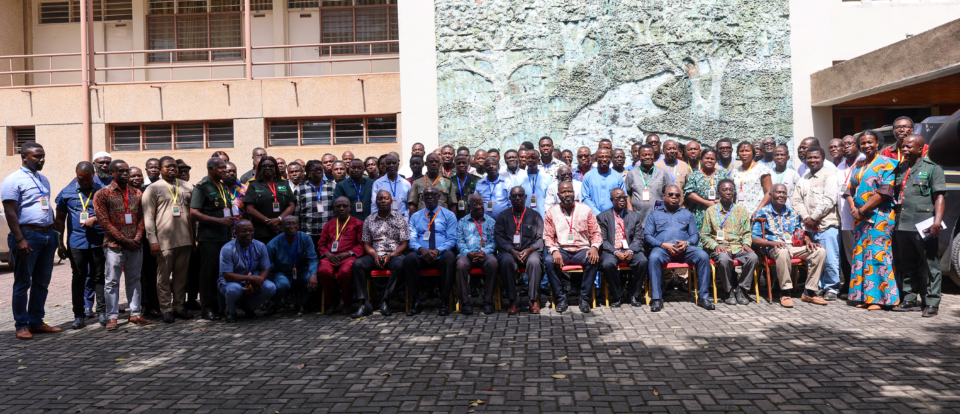
The Annual General Meeting, organised under the theme "Mining in Forest Reserves in Ghana: New Developments and Way Forward," focused on practical solutions to address the destruction of forest reserves.
The Meeting served as a platform for experts, stakeholders, and policymakers to explore actionable steps to balance economic development with environmental conservation, ensuring a sustainable future for Ghana's natural resources.
President of the Ghana Institute of Foresters, Dr. Abubakar Nantogmah Attah, delivered a detailed presentation on the state of the Institute and underscored the importance of safeguarding forest reserves.
"Our forest reserves have significantly contributed to the nation's foreign exchange earnings, GDP, job creation, climate regulation, ecological functions, and the livelihoods of fringe communities. Protecting these reserves is crucial to the country's future," he stated.
Prof. Benjamin Betey Campion, Dean of the Faculty of Renewable Natural Resources and chair of the event, echoed the critical role of forest reserves.
He elaborated on the current state of our environment and outlined strategies for overcoming the challenges threatening sustainability.
Latest Stories
-
Trump says he is considering firing US ambassador to Greece
2 hours -
Man City bananas ‘brought fun back’, says Varadi
2 hours -
Meta releases Muse Wonder AI models to challenge Anthropic and OpenAI
2 hours -
Daily Insight for CEOs: The CEO as Chief Decision Maker
2 hours -
Burnham had formal meeting with Man City chair while mayor
2 hours -
Is Ghana producing too many lawyers? What is the best lawyer-to-citizen ratio?
2 hours -
NDC sinking Ghana’s democracy with Emelia Agbenyo’s appointment – Miracles Aboagye
3 hours -
Seedorf back in football as Corinthians head coach
3 hours -
Hincapié and Zubimendi injured in post-match training session
3 hours -
Fridges in French supermarkets hit by cyberattack
3 hours -
Qantas flight grounded after bedbug outbreak
3 hours -
Reality Zone with Vicky Wireko: International Day of the Girl, shaping today’s girl for tomorrow’s future – ZONTA Clubs lead the way
4 hours -
Global health must be led by countries, not designed for them – Mintah Akandoh
5 hours -
Mahama honoured at 2026 World Health Summit in Berlin for global health leadership
5 hours -
Breast cancer is not a death sentence – Besease Kontire Obaapanin, Magmina Foundation lead awareness campaign
5 hours