

Audio By Carbonatix
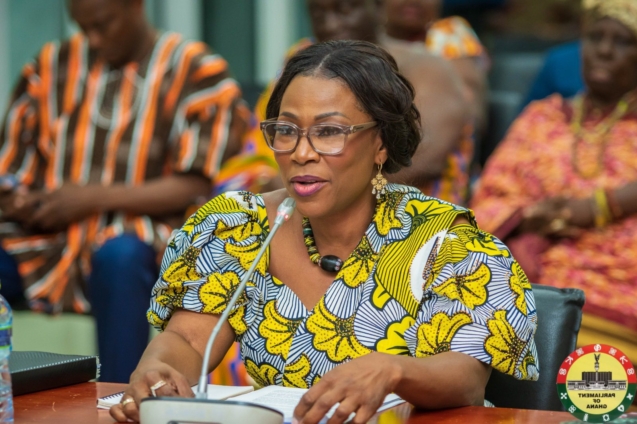
Deputy Health Minister-designate Dr. Grace Ayensu-Danquah has robustly defended her use of the title "Professor", stating she has been teaching surgery for at least 15 years.
Her clarification came in response to probing questions from Minority Leader in Parliament, Alexander Afenyo-Markin, who sought to understand the basis of her professorial title in the context of academic norms when she appeared before Parliament's Appointments Committee on Friday, July 25.
Mr. Afenyo-Markin, noting her "14-page CV", asked Dr. Ayensu-Danquah to clarify whether she should be addressed as "Doctor" or "Professor" and which title matched her rank.
In her response, Dr. Ayensu-Danquah affirmed, "Both do. I am a Professor of Surgery at the University of Utah in the United States."
The Minority Leader then pressed further, drawing a distinction with the Ghanaian academic system, where a PhD typically precedes an Associate Professor rank, followed by a full Professorship, often requiring extensive publications and research.
He asked her to clarify the jurisdiction where she earned the title and whether she held a document from a certified body confirming the conferment, as is customary in Ghana.
Dr. Ayensu-Danquah explained the divergence in academic systems.
"Thank you, Mr. Chair. The American system is completely different from the Ghana system," she stated. "I am a Professor of Surgery. I have been teaching surgery for at least the last 15 years."
She further elaborated on the nature of surgical education, emphasising its practical component.
"Surgery is a skill. So we teach in the theatre. We don't teach only in the classroom. As we are doing classroom work, we are also doing teaching in the theatre. I am a full Professor of Surgery at the University of Utah and a Professor of Global Surgery."
Understanding Academic Titles: Ghana vs. the US System
The exchange highlighted a common point of confusion regarding academic titles across different higher education systems. In Ghana and many Commonwealth countries, the progression to full professorship typically involves:
- Lecturer: Entry-level academic position, usually requiring a PhD.
- Senior Lecturer: Requires more experience, publications, and sometimes administrative roles.
- Associate Professor (or Reader): A significant step, requiring substantial research, publications, and teaching experience, often involving a rigorous review process.
- Full Professor: The highest academic rank, reserved for scholars with an outstanding record of research, publications, teaching, and often significant contributions to their field at national or international levels. The conferment is a formal process by the university.
In the United States, while a similar hierarchy exists, the specific requirements and pathways can vary significantly between institutions and even departments.
In medical education, particularly in clinical fields like surgery, the title of Professor can be granted based on a combination of:
- Clinical Expertise and Teaching: Extensive experience in practising and teaching advanced surgical techniques in a hospital or clinical setting, directly mentoring residents and fellows in operating theatres.
- Research and Publications: While often extensive, the balance between pure academic publications and clinical research or contributions to medical practice can differ.
- Leadership and Service: Contributions to departmental leadership, medical societies, and professional service.
- Years of Service: Significant tenure at a university or teaching hospital.
For clinical professors, teaching is often conducted at the bedside, in operating rooms, and through mentorship, complementing traditional classroom lectures.
Dr. Ayensu-Danquah's assertion of "teaching surgery for 15 years" in a clinical setting aligns with the typical progression for clinical professorships in the American system.
The Appointments Committee's scrutiny of such details is a standard part of the vetting process, ensuring that appointees' credentials are clear and understood by the public, especially given the differing academic terminologies across international jurisdictions.
Dr. Ayensu-Danquah's clarification aims to assure both the committee and the public about the legitimacy of her academic standing.
Latest Stories
-
Chef Abbys: Feeding 50,000 people, putting food security on Ghana’s agenda
3 minutes -
Ho set to host Republic Bank–JoyNews Habitat Fair as multiple firms prepare to showcase housing solutions
11 minutes -
NPP demands public inquiry into alleged $600,000 World Cup visa fraud, wants Sports Minister, GTA CEO summoned
18 minutes -
I want my brand to be bigger than just music – Yaw Wazinga
22 minutes -
Houthi missile attack on Yemeni presidential palace kills two, minister says
22 minutes -
I hoped to win an award; I worked hard – 2026 Best Graduating Law Student
32 minutes -
Fraudsters increasingly target bank customers instead of banking systems – Fraud detection expert
33 minutes -
44 teacher sexual abuse cases tracked since 2015; school heads feature in 40% of recent cases — JoyNews Research
35 minutes -
Unchecked imports and the Middle East crisis threaten Ghana’s fragile food inflation anchor
54 minutes -
Ecobank Junior Saver Big Pitch to reward 10 winners with GH¢2,000 each
58 minutes -
AMA demolishes unauthorised pigsty obstructing Agbogbloshie waste evacuation exercise
58 minutes -
I was filled with disbelief – Akosua Achia Sarpong Esq. shares her first reaction
59 minutes -
Snake Village: A look at Volta Region’s hidden snake village and its tourism potential (Video)
1 hour -
Election Watch Ghana calls for constitutional reforms to strengthen Electoral Commission independence
1 hour -
NACOC, Postal and Courier Services Regulatory Commission intensify efforts to curb drug trafficking
1 hour