


Audio By Carbonatix
The Democratic Republic of Congo has moved to increase taxes on mining firms and increase government royalties from the industry despite fierce opposition from international mining companies.
President Joseph Kabila signed a new mining code into law on Friday.
The country is Africa's biggest producer of copper and cobalt, a vital component in mobile phone batteries.
Foreign mining firms strongly opposed the law, saying their operations in DR Congo would stop being profitable.
Several chief executives flew to the Congolese capital Kinshasa this week in the hopes of persuading Mr Kabila to change his mind.
They argued that the legislation would deter future investment and violate existing agreements, reported Reuters news agency.
The government however has agreed to consider their concerns on a case by case basis, and work with them in executing the new code.
DR Congo has talked for years about changing its 2002 mining code, which it believed put too many profits in the hands of foreign companies, says BBC World Service Africa editor Mary Harper.
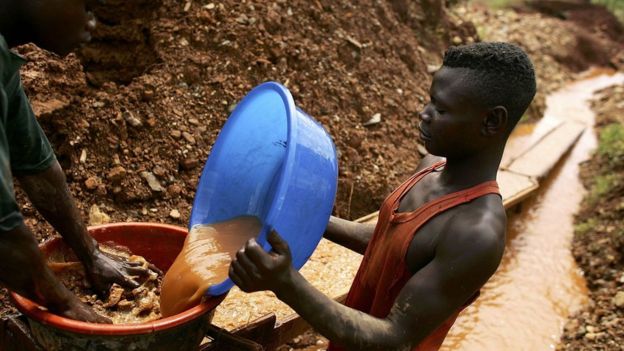 Its mining industry - which also produces diamond, tantalum, tin and gold - is the country's largest source of export income.
The law, which was passed by parliament in January, will double government royalties on all minerals.
The impoverished yet mineral-rich nation provides more than 60% of the world's cobalt. Prices for it more than doubled last year thanks to an increased demand for electric cars, which require cobalt for batteries.
Royalties on cobalt could also more than quadruple if the government labels it a "strategic substance".
Its mining industry - which also produces diamond, tantalum, tin and gold - is the country's largest source of export income.
The law, which was passed by parliament in January, will double government royalties on all minerals.
The impoverished yet mineral-rich nation provides more than 60% of the world's cobalt. Prices for it more than doubled last year thanks to an increased demand for electric cars, which require cobalt for batteries.
Royalties on cobalt could also more than quadruple if the government labels it a "strategic substance".
Its mining industry - which also produces diamond, tantalum, tin and gold - is the country's largest source of export income.
The law, which was passed by parliament in January, will double government royalties on all minerals.
The impoverished yet mineral-rich nation provides more than 60% of the world's cobalt. Prices for it more than doubled last year thanks to an increased demand for electric cars, which require cobalt for batteries.
Royalties on cobalt could also more than quadruple if the government labels it a "strategic substance".DISCLAIMER: The Views, Comments, Opinions, Contributions and Statements made by Readers and Contributors on this platform do not necessarily represent the views or policy of Multimedia Group Limited.
Tags:
DISCLAIMER: The Views, Comments, Opinions, Contributions and Statements made by Readers and Contributors on this platform do not necessarily represent the views or policy of Multimedia Group Limited.
Latest Stories
-
Young woman found dead at Kasoa Peace Town
5 minutes -
Livestream: The Law examines lawful arrest in Ghana
30 minutes -
Mahama urges African governments to treat healthcare as an investment, not budget cost
1 hour -
Bawumia congratulates John Boadu and new NPP executives, pledges support ahead of 2028
1 hour -
‘No talent should be left out’ – Bawumia pledges inclusive NPP campaign for 2028
1 hour -
Prof. Mike Oquaye recounts how he blocked Special Prosecutor’s attempt to arrest Bawku Central MP
1 hour -
Make health sovereignty a priority for Africa – Mahama
2 hours -
Dorimon Naa, Wa West DCE lead massive clean-up exercise; threaten sanctions against recalcitrant residents
2 hours -
Photos from Adom FM Y2K Jam
2 hours -
Praye Tiatia steals the show at Adom FM Y2K Jam [Watch]
2 hours -
Boakye Agyarko congratulates John Boadu, pledges support for NPP leadership
2 hours -
Antwi HiMight thrills fans with Antwi ne Antwi hits at Adom FM’s Y2K Jam [Video]
3 hours -
Amb. Edward Boateng congratulates Boadu, Kodua on election wins
3 hours -
John Boadu pledges to rebuild NPP from grassroots and restore ‘winning machinery’
3 hours -
Ashaiman Assembly deploys monitoring system to curb dumping in storm drain
3 hours