


Audio By Carbonatix
An economist at the Kwame Nkrumah University of Science and Technology is admonishing the government to extensively harness its existing tax sources, rather than introducing new taxes.
Professor Eric Oteng-Abayie observes the already imposed taxes have not generated the needed revenue because successive governments failed to effectively enact tax policies.
He believes the instability in tax implementation over the years has cost the country some whopping revenues.
“If the government is able to develop the permanent sources of taxes including the income tax and the property tax which has not been particularly focused on and actually target the right bases that have to pay these taxes.
“When the government withdraws taxes that it has already introduced, then it means the government is not really researching the places that need to be taxed and that is problematic,” said Prof. Oteng-Abayie.
The government’s passage of the Electronic Transaction Levy of E-Levy bill into law has received backlashes from the citizenry, including the academia.
Speaking at a public forum on E-levy at KNUST, Professor Eric Oteng-Abayie, indicated the issues encircling the implementation of the levy would affect its revenue mobilization.
According to him, the electronic transaction levy is problematic since it lacks neutrality.
“Because of the revenue assurance issues and delays in the e-levy implementation, it is believed that the target revenue may not be actually achieved.
“A good tax policy should have neutrality. That is, it should not only affect a certain group of people or business model, but it should have a broad base such as the Value Added tax,” he said.
The public forum organized by the Faculty of Social Welfare at the KNUST was on the theme “E-Levy and its Implication: A Multidisciplinary Perspective”.
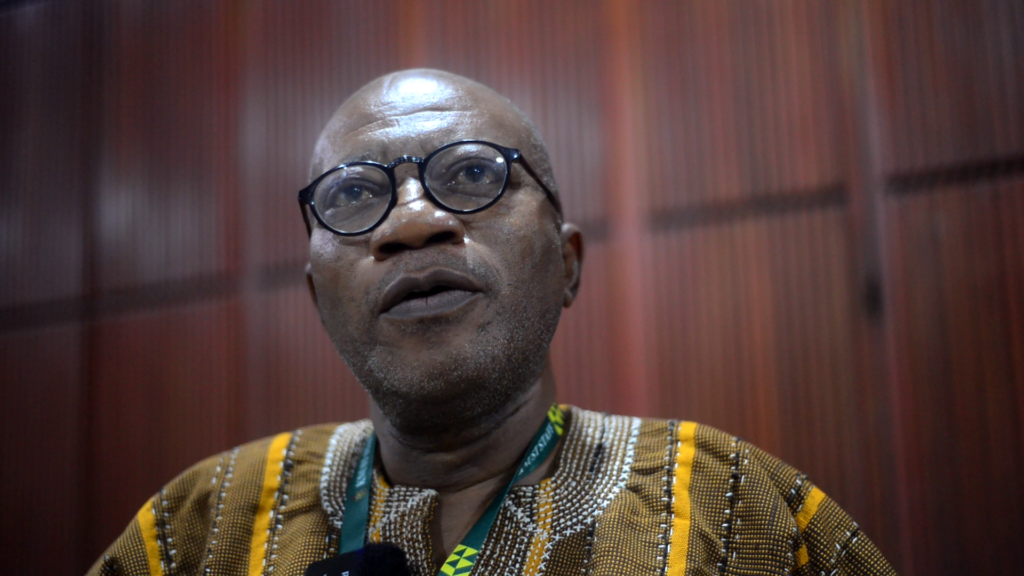
Meanwhile, Dr. Najim Ussiph, is imploring the government to be transparent in the collection of the levy when implemented.
He alluded to past incidents where Ghanaians are not privy to how much revenue is mobilized annually from taxes.
“Since this levy is going to be conducted digitally, the government can leverage the advantage of IT to make the implementation more transparent. With technology, the government can always report monthly on how much has been collected from the various stakeholders and make it known to the public,” he said.
However, Dr. Ussiph, does not consent to the government’s decision to outsource monitoring and assurance of the collection of the levy to a third party.
He believes such capacities could be built internally.
“The Finance Minister revealed a third-party company is going to be hired to monitor the collection but we could’ve used our local resources like the young graduates.
“The government should have planned the e-levy implementation properly by generating the capacity we need internally rather than contracting them to a third party,” he said.
Latest Stories
-
Stakeholders demand action against foreign-led illegal mining in Ahafo Region
30 minutes -
Ghana handed tricky draw at 2026 Amputee World Cup
37 minutes -
2024 Nyankpala election violence: Youth group petitions authorities over slow probe
41 minutes -
Ghana, UNICEF strengthen partnership to advance child protection
1 hour -
Day Two of 3rd Republic Bank-JoyNews Habitat Fair ends with great homeownership offers and financing solutions
1 hour -
Guinness Ghana DJ Awards 2026 Pub Fest celebrates Ghana’s DJ culture as Accra turns up the energy
1 hour -
10th woman found dead in South Africa’s string of killings
1 hour -
French Embassy trains Ghana Police CTU in counter-terrorism operations
2 hours -
UPSA uncovers mass results manipulation involving 178 students, over 500 results compromised
3 hours -
ECG announces planned power outages in parts of Tema from Sept. 29 to October 1
3 hours -
Sylvester Mensah urges Latenu FM to promote trade, export opportunities in Ga
3 hours -
Ga language under threat of decline as children shy away from speaking it – Sylvester Mensah
3 hours -
‘Let every Ga child you raise know the Ga language and story’ – Sylvester Mensah
3 hours -
‘We are not deterred’ – Ablakwa responds to backlash over South Africa evacuation
3 hours -
Day Two: Republic Bank-JoyNews Habitat Fair gains momentum at Junction Mall
4 hours